Key Points
- Reform UK withdrew its planned Senedd debate on freedom of speech hours before it was due to take place.
- The party’s Members of the Senedd remained absent as its boycott continued.
- Joe Martin was barred from speaking after comments about the “demographic replacement” of white British people.
- Presiding Officer Huw Irranca-Davies urged all members to return to plenary proceedings.
- The boycott has affected scrutiny of the Welsh Government budget and First Minister’s Questions.
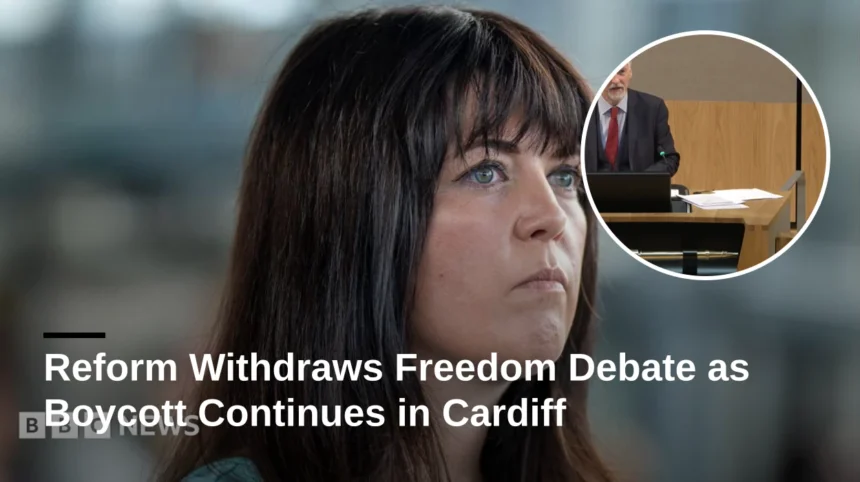
Cardiff (Glasgow Express) November 18, 2026 – Reform UK has withdrawn a planned debate on freedom of speech in the Senedd as its boycott of the Welsh Parliament continues. The motion was cancelled hours before it was scheduled, while Reform Members of the Senedd stayed away from the chamber. The dispute follows the decision by Senedd Presiding Officer Huw Irranca-Davies to prevent Reform Member of the Senedd Joe Martin from speaking until he apologises for remarks described as “unnecessarily provocative and deliberately offensive”.
Why did Reform UK withdraw the freedom-of-speech debate?
As reported by BBC News, Reform UK had tabled the motion after Mr Martin was barred from speaking. The proposed motion said the Senedd believed that the principle of freedom of speech should be upheld and defended.
Plaid Cymru had proposed an amendment stating that freedom of speech must be exercised within the law and that Members of the Senedd should conduct parliamentary business with dignity and respect.
A Reform spokesman said the boycott was “ongoing” but did not comment on the withdrawal of the debate.
Why are Reform Members boycotting the Senedd?
Mr Martin was banned from speaking after asking for a statement about the “demographic replacement of white British people”. Mr Irranca-Davies said the remarks focused on race and ethnicity and were discriminatory and offensive. He said Mr Martin would not be called to speak until he demonstrated that he understood the boundaries of acceptable parliamentary conduct and apologised to the Senedd.
Reform UK Welsh leader Helen Jenner said the party would boycott the Senedd in protest at Mr Martin’s treatment. Reform UK leader Nigel Farage described the ruling as “outrageous”, while Ms Jenner said it represented an infringement of freedom of speech. Mr Martin has said he does not intend to apologise.
What has the Senedd said about the continuing boycott?
Mr Irranca-Davies appealed to all Members of the Senedd to attend plenary sessions, saying parliamentary work was strengthened by the participation of every member and party. He said plenary was central to scrutinising the Welsh Government, debating matters affecting Wales and making decisions on behalf of the public.
Reform members have remained absent from debates, including scrutiny of the Welsh Government budget and weekly First Minister’s Questions, although they have returned to vote. Reform representatives James Evans, Iain McIntosh and Andrew Griffin have defended continuing the boycott.
What is the background to the dispute?
The dispute began after Mr Martin made his remarks during Senedd business questions. Mr Irranca-Davies ordered him to apologise and subsequently restricted his participation in debates. Reform UK responded by withdrawing from most Senedd proceedings and presenting the action as a freedom-of-speech issue. The controversy has also prompted discussion of whether Reform could seek action against the Presiding Officer, although the reported focus remains on the speaking ban and boycott.
How could the dispute affect the freedom-of-speech debate?
The withdrawal leaves the Senedd without the planned Reform-led motion at a time when the party is challenging the limits of parliamentary expression. For Reform supporters, the boycott may reinforce the argument that elected representatives should be able to raise contentious subjects. For other audiences, the dispute highlights the distinction between political expression and parliamentary rules requiring dignity, respect and compliance with procedural standards. Continued absence could also reduce Reform’s participation in scrutiny while keeping the argument over freedom of speech prominent in Welsh politics.