

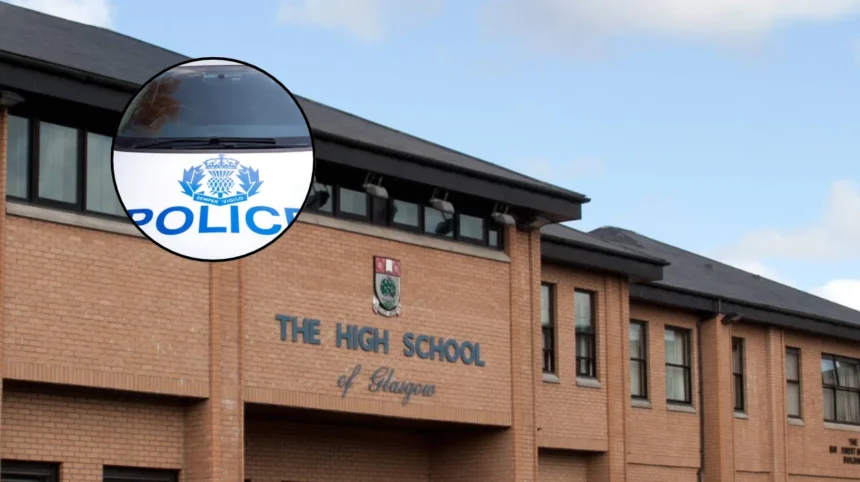
Key Points:
- Hoax Threat Targeted Glasgow Schools: Schools across Glasgow received malicious emails containing bomb threats, prompting swift involvement from local authorities and law enforcement.
- Police Scotland Confirmation: Police Scotland investigated the communications and confirmed that the email threats sent to educational establishments across the region were entirely a hoax.
- Local Authority Response: Glasgow City Council confirmed that officers evaluated the messages alongside law enforcement, concluding there was no viable security risk to pupils or staff.
- Precautionary Safety Protocols: Emergency response protocols were temporarily engaged while authorities verified the credibility of the messages, ensuring minimal disruption to the school day.
- Ongoing Investigation: Cybercrime specialists and local officers are working to trace the origin of the malicious electronic communications to hold the perpetrators accountable.
Glasgow (Glasgow Express) November 11, 2026 – Police Scotland has launched a formal investigation after multiple educational institutions across Glasgow were targeted by malicious emails containing claims of explosive devices on school premises. Law enforcement authorities, working alongside local government officials, quickly evaluated the threat level and confirmed that the mass communication was a deliberate hoax intended to cause widespread alarm.
What Happened During the Security Incident in Glasgow Schools?
As reported by reporting staff of local news outlets, emergency protocols were triggered early in the day when administrative staff at several Glasgow educational facilities flagged suspicious electronic correspondence. The messages contained alarming claims regarding explosive devices, prompting school administrators to contact Police Scotland immediately.
Officers responded to the affected sites to inspect school premises, consult with headteachers, and evaluate the credibility of the claims. Following rapid preliminary assessments, law enforcement officers determined that no physical explosive devices were present and that the messages lacked operational credibility.
As reported by official representatives of Glasgow City Council, the local authority worked in direct synchronization with police command centers throughout the event. Council officials confirmed that the threats were being formally treated as a hoax by Police Scotland, allowing academic activities to continue safely without requiring prolonged site evacuations across the city.
How Did Police Scotland Respond to the Malicious Email Campaign?
As reported by media correspondents monitoring local law enforcement, Police Scotland confirmed that the malicious communications were part of a wider, automated email campaign targeting educational establishments.
Police spokespersons noted that while the threat was assessed as non-credible, every report involving school safety is treated with maximum urgency. Specialized cybercrime units have been tasked with analyzing the digital footprint of the emails, including IP addresses, server routing data, and email headers, to determine the point of origin.
Officers maintained a visible presence around selected campuses throughout the afternoon to provide reassurance to parents, teaching staff, and students affected by the disruption.
Background of School Bomb Hoaxes Across the Region
Threats targeting academic facilities via mass electronic messaging campaigns have emerged as a recurring security challenge for local authorities and law enforcement agencies across the United Kingdom. Over recent years, coordinated hoax campaigns have repeatedly disrupted primary and secondary educational facilities, often originating from offshore servers or proxy networks designed to conceal the identity of the sender.
Law enforcement agencies categorize such malicious communications under public order and malicious communications legislation. Under Scots law, sending false threats intended to cause public distress or divert emergency service resources carries severe criminal penalties, including potential imprisonment. Police Scotland has consistently emphasized that incidents of this nature consume significant operational resources, temporarily redirecting frontline officers away from routine community policing and genuine emergency calls.
How Will This Security Threat Affect Parents, Pupils, and Local Services?
This development directly affects several key groups across the Glasgow community:
- Parents and Guardians: Families face heightened anxiety and immediate schedule uncertainty whenever school security protocols are activated. Continued communication from local councils and clear police verification help mitigate panic, but repeated threats create persistent concern regarding campus safety measures.
- Students and School Staff: The sudden disruption caused by security checks disrupts the learning environment and causes emotional distress, particularly among younger pupils. Teachers and administrative personnel must manage emergency procedures while maintaining calm and ensuring pupil welfare.
- Police Scotland and Emergency Services: Responding to coordinated hoax campaigns strains public resources. Police units, control room operators, and cybercrime specialists must dedicate substantial hours to verifying threats, tracing digital trails, and conducting physical checks across multiple locations simultaneously.


