Key Points
- Police Scotland says a significant investigation is under way after violence in Glasgow city centre on Saturday.
- The force described the disorder as “nothing short of a disgrace” and said those responsible for “deplorable acts” will be traced and arrested.
- Officers have already made 15 arrests in connection with the unrest.
- Police say enquiries are continuing, including work to identify other people involved.
- The disorder broke out around planned protest activity at Glasgow Green and spread into the city centre.
- Police said the incident involved disorder, violence, intimidation, and hate-motivated offences.
- Chief Superintendent Emma Croft said many of those involved were masked and some targeted people because of their skin colour.
- Police said CCTV, public images and videos are being examined as part of the inquiry.
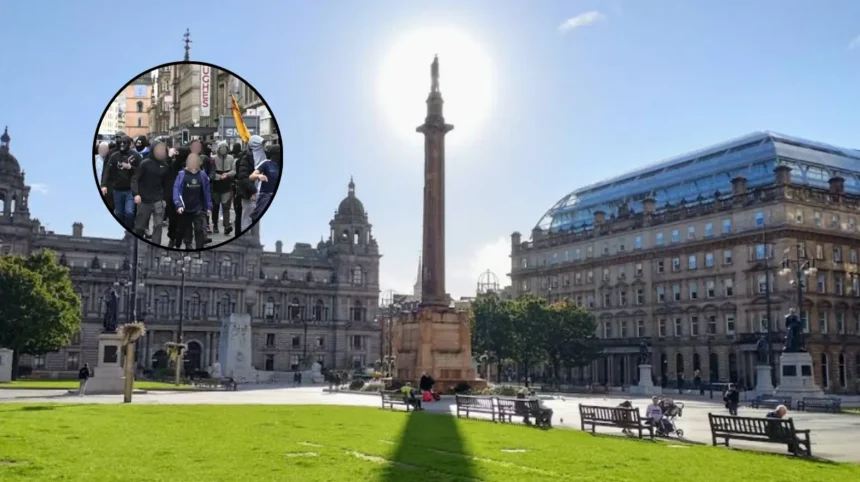
Glasgow (Glasgow Express) July 28, 2026 – Police Scotland has launched a major investigation after violent disorder linked to protest activity in Glasgow uk/local/city-centre/">city centre on Saturday, with officers warning that those involved will be identified and brought before the courts.
What happened in Glasgow?
Police said the incidents began in connection with planned protest activity at Glasgow Green and then moved into the city centre, where disorder spread across several areas.
The force said a large group moved away from Glasgow Green and engaged in further disorder as officers worked to keep people safe and reduce disruption.
As reported by the BBC’s Police Scotland coverage, Chief Superintendent Emma Croft said a dedicated team is reviewing CCTV, along with footage and images submitted by the public, to identify those involved.
She said many suspects were masked and that some appeared to target people based on skin colour during what had been a peaceful anti-racism demonstration.
Why is Police Scotland treating it as serious?
Police Scotland said the behaviour seen on Saturday was “nothing short of a disgrace” and warned that offenders involved in “deplorable acts” would be caught.
The force said the disorder included assault, possession of offensive weapons, breach of the peace, obstruction, resisting arrest, intimidation and hate-fuelled offences.
The BBC reported that officers described the violence as causing “fear and alarm” in the city centre, while STV said police were dealing with
“disorder, violence, intimidation and hate-motivated offences”.
Police have not limited the inquiry to those already arrested, saying further arrests are expected as the investigation develops.
How many arrests have been made?
Police Scotland said 15 people have been arrested so far. According to the force, the arrests relate to a range of offences, including assault, offensive weapons, breach of the peace and resisting arrest.
STV also reported that the arrests came after police responded to significant disorder from different groups in the city centre.
The BBC said the arrests were part of a broader police response to what it described as a “rampage” in the city centre.
What did police say about the investigation?
Police Scotland said “extensive enquiries” are under way to identify more people involved. The force stated that a specialist team is working through CCTV and public submissions of images and videos to build a fuller picture of events.
The police statement also said the protests and associated incidents had now concluded, but that the inquiry remained active. Officers said more arrests would be made as evidence is reviewed and suspects are identified.
What else was reported by other media?
The Times and Star reported that police called the levels of violence “nothing short of disgraceful” and highlighted the force’s warning that offenders would be caught.
STV said police made 15 arrests after anti-immigration and counter-protest activity led to significant disorder.
The BBC’s coverage noted that around 1,700 people were present and that police had mounted a strategic operation to maintain public safety and limit disruption.
Yahoo’s report added that the anti-immigration rally was staged as the “Unite the Clans” event and that the disorder drew an extensive police response.
What does this mean for public safety?
The immediate concern for police is identifying the people who took part in violence and related offences, while reassuring the public that city centre disorder will not go unanswered.
The investigation also signals a focus on hate crime allegations, which police say will be examined alongside public-order offences.
For residents, shoppers and businesses, the most direct impact is likely to be increased police visibility around any future demonstrations or gatherings linked to the same issues.
The force has made clear that it views the disorder as a serious criminal matter rather than a routine protest disruption.
Background of the development
The events followed planned protest activity at Glasgow Green on Saturday, which drew anti-racism activists and an anti-immigration counter-protest.
Police said the situation escalated after a large group moved into the city centre, where disorder spread across several streets and officers put containments in place, including on Oswald Street.
Media coverage indicated that the day involved a substantial police operation, with officers trying to keep different groups apart and minimise disruption to the public.
The disorder sits within a wider period of tension around protests and counter-protests in Glasgow, with police previously warning about similar hate-related incidents in the city.
Prediction
For Glasgow residents, commuters and city-centre businesses, the most likely short-term effect is a tougher policing approach at any future protest linked to immigration or anti-racism issues.
That could mean more cordons, more officers on duty, and faster intervention if gatherings turn disorderly.
For people taking part in lawful demonstrations, the development may also lead to closer monitoring and a stronger emphasis on public-order conditions.
For the wider public, police hope the investigation and likely follow-up arrests will reduce the chance of similar violence being repeated in busy parts of the city.