The average electricity bill in Glasgow depends on household size, annual electricity consumption, heating systems, property efficiency, tariff type and payment method. Glasgow households receive electricity through the UK energy market, where suppliers charge for each kilowatt-hour (kWh) consumed and apply a daily standing charge to cover account and network costs.
- What Is the Average Electricity Bill in Glasgow?
- How Much Does Electricity Cost per Month in Glasgow?
- What Are the Current Electricity Rates in Glasgow in 2026?
- Why Does the Electricity Bill Differ Between Glasgow Households?
- Household size and occupancy
- Heating system
- Property age and insulation
- Appliance efficiency
- Tariff and meter type
- How Does Winter Affect Electricity Bills in Glasgow?
- How Is an Electricity Bill Calculated in Glasgow?
- Is Electricity More Expensive Than Gas in Glasgow?
- How Can Glasgow Residents Reduce Their Electricity Bills?
- Replace inefficient lighting
- Reduce standby consumption
- Use heating equipment efficiently
- Improve insulation and draught control
- Compare electricity tariffs
- Monitor consumption regularly
- What Does Electricity Consumption Data Reveal About Scottish Households?
- What Is Fuel Poverty and How Does It Affect Glasgow Households?
- How Can Glasgow Residents Check Whether Their Electricity Bill Is Correct?
- What Should Glasgow Residents Expect From Electricity Prices in the Future?
Electricity costs also depend on whether a property uses gas central heating, electric storage heaters, direct electric heating or a heat pump. A flat occupied by one person typically uses less electricity than a family home with several occupants, frequent appliance use and electric heating.
Understanding the average electricity bill in Glasgow requires separating electricity costs from combined gas and electricity bills. It also requires distinguishing official price-cap rates from the actual amount an individual household pays. These differences help residents estimate realistic costs, compare tariffs and identify practical ways to reduce energy expenditure.
What Is the Average Electricity Bill in Glasgow?
The average electricity bill in Glasgow depends on annual consumption, the applicable Scottish electricity tariff and the supplier’s standing charge. Scotland’s median household electricity consumption was 2,400 kWh in 2024, providing a useful baseline for estimating typical household electricity costs. GOV.UK+1
The most reliable starting point is official household consumption data combined with the current electricity rates for the relevant Scottish energy region. The Department for Energy Security and Net Zero publishes the National Energy Efficiency Data-Framework (NEED), which measures domestic energy consumption across Great Britain.
According to the 2026 NEED summary, the median annual domestic electricity consumption in Scotland was 2,400 kWh in 2024. The mean was higher, at 3,300 kWh, because some properties consume substantially more electricity than typical homes.
For an illustrative calculation, consider a household using 2,400 kWh annually on a single-rate direct debit tariff with a unit rate of 26.11p per kWh and a daily standing charge of 61.41p. These are the October–December 2026 Southern Scotland rates reported in the Scottish Government’s price-cap modelling.
The calculation is:
- Annual electricity consumption: 2,400 kWh.
- Electricity usage cost: 2,400 × £0.2611 = £626.64.
- Annual standing charge: 365 × £0.6141 = approximately £224.40.
- Estimated annual electricity cost: approximately £851.
- Estimated monthly average: approximately £70.92.
This is an illustrative estimate, not an official Glasgow household average. It assumes the stated tariff rates remain unchanged throughout the year, although the price cap changes quarterly. Electricity VAT is also temporarily zero from 1 October 2026 to 31 March 2027, so the current-period calculation must not be treated as a full-year forecast without adjusting for subsequent rates and tax rules.
A household using electric heating, a tumble dryer or other energy-intensive equipment regularly generally consumes more electricity than a home using gas central heating and efficient appliances.
How Much Does Electricity Cost per Month in Glasgow?
Monthly electricity costs in Glasgow depend on the number of kilowatt-hours consumed and the tariff’s standing charge. A household using 2,400 kWh annually has an illustrative monthly cost of about £71 at the October–December 2026 Southern Scotland direct debit rates.
Electricity bills are not fixed monthly charges for most standard variable tariffs. Suppliers calculate charges from recorded or estimated consumption, apply the relevant unit rate and add the daily standing charge. Direct debit customers often pay a regular monthly amount based on expected annual use rather than the precise cost of that month’s electricity.
The following estimates use the Southern Scotland rates of 26.11p per kWh and 61.41p per day. They represent annual consumption spread evenly across 12 months, not a prediction of seasonal bills.
Estimates calculated from the cited October–December 2026 Southern Scotland rates. Actual bills vary with tariff changes, meter type, payment method and consumption.
These figures illustrate why electricity consumption matters more than household size alone. A person living in a small flat with electric heating can spend more than a couple living in a well-insulated home with gas central heating.
Monthly expenditure also varies with the billing method. A customer paying for actual consumption receives higher bills during periods of greater use. A customer on a budget direct debit usually pays a more consistent amount, with the supplier reviewing the account balance and monthly payment periodically.
What Are the Current Electricity Rates in Glasgow in 2026?
Electricity rates in Glasgow follow the applicable Ofgem price-cap rules for the household’s tariff and Scottish energy region. For Southern Scotland, the October–December 2026 direct debit benchmark is 26.11p per kWh, with a daily electricity standing charge of 61.41p. gov.scot+1
Ofgem, the Office of Gas and Electricity Markets, regulates the maximum unit rates and standing charges suppliers can apply to customers on default tariffs covered by the Energy Price Cap. The cap does not set one universal electricity bill for every home.
For the period from 1 October to 31 December 2026, Ofgem reports an average electricity unit rate of 26.32p per kWh and a daily standing charge of 54.83p across England, Scotland and Wales for direct debit customers. These are Great Britain averages rather than Glasgow-specific rates.
The regional Southern Scotland figures differ from the national average. Scottish Government modelling reports a direct debit electricity rate of 26.1p per kWh and an annual standing charge of £224.14 for Southern Scotland during October–December 2026. The regional rate is the more appropriate benchmark for a Glasgow estimate, subject to checking the property’s postcode and actual tariff. gov.scot
Three charges and pricing mechanisms are important:
Electricity unit rate
The unit rate is the amount charged for each kilowatt-hour consumed. A kilowatt-hour represents the energy used by a 1,000-watt appliance operating for one hour.
For example, a 2,000-watt electric heater running for three hours uses 6 kWh. At 26.11p per kWh, the electricity usage cost is approximately £1.57, excluding the standing charge.
Daily standing charge
The standing charge is a fixed daily cost for maintaining the electricity supply and associated services. It applies even when a household consumes little or no electricity, provided the account remains connected under a tariff that includes the charge.
At 61.41p per day, the annual charge is approximately £224. This explains why reducing consumption does not eliminate the entire electricity bill.
Energy Price Cap
The Energy Price Cap limits the unit rates and standing charges on covered default tariffs. Ofgem reviews it every three months, with the October–December 2026 cap representing a 4% increase for a typical dual-fuel direct debit household compared with the previous quarter.
The cap does not limit the total bill to a fixed amount. A household using twice as much electricity generally pays more for the units consumed, even when both homes are on the same capped tariff.
Why Does the Electricity Bill Differ Between Glasgow Households?
Electricity bills differ between Glasgow households because properties have different heating systems, insulation levels, appliance use, occupancy patterns and tariffs. Annual consumption is the main driver of usage charges, while regional standing charges and payment arrangements influence the final amount payable.
A flat in Glasgow’s West End, a tenement in the Southside and a detached house on the city’s outskirts can have very different energy requirements. Floor area alone does not determine consumption because heating technology, building efficiency and household routines also affect electricity use.
Household size and occupancy
A single occupant generally uses fewer appliances and less hot water than a larger household. However, electricity consumption does not increase at a fixed rate for every additional person.
A couple sharing a flat can use less electricity per person than two people living separately because they share lighting, refrigeration and other household equipment. Families with children often operate more devices and washing equipment, but the actual difference depends on daily routines.
Heating system
Heating is one of the most important factors in electricity consumption. A household with gas central heating normally uses electricity for lighting, cooking, refrigeration and other appliances, while gas supplies most of the heating energy.
A property relying on direct electric heaters or electric storage heaters uses electricity for space heating as well. This increases electricity demand, particularly during colder months.
Heat pumps use electricity to transfer heat rather than generate it entirely through electrical resistance. Their consumption depends on the property’s insulation, outdoor temperatures, system design and operating efficiency.
Property age and insulation
Glasgow has a substantial stock of traditional tenement flats, older terraced houses and newer residential developments. These buildings have different construction methods and thermal characteristics.
A poorly insulated property loses heat faster and requires more heating to maintain a comfortable indoor temperature. Draught-proofing, suitable loft insulation and properly maintained windows reduce heat loss where those improvements are appropriate for the building.
Appliance efficiency
Appliances with high energy consumption increase bills when used frequently. Electric showers, tumble dryers, portable heaters and older refrigeration equipment are common examples.
A modern, efficient appliance generally uses less electricity to provide the same service. However, actual savings depend on the appliance’s efficiency rating, capacity and frequency of use.
Tariff and meter type
Households on different tariffs pay different rates. A single-rate tariff charges one price for electricity throughout the day, while a multi-rate tariff, such as Economy 7, applies different rates during specified periods.
Payment method also matters because price-cap rates and standing charges vary by payment type. Customers should compare the rates on their own bills rather than assume every Glasgow property receives identical pricing.

How Does Winter Affect Electricity Bills in Glasgow?
Winter electricity bills in Glasgow often rise when households spend more time indoors, use additional lighting and operate electric heating more frequently. The increase depends on the heating system, property insulation, daylight hours and household behaviour rather than a separate winter electricity tariff.
Glasgow experiences shorter daylight hours during winter and generally cooler conditions than during summer. Households therefore often use lights for longer periods and rely more heavily on heating equipment.
The seasonal effect is strongest in properties where electricity provides the primary source of heat. Homes with gas central heating still consume electricity for lighting, appliances and controls, but their winter electricity increase is often smaller than that of electrically heated properties.
A portable 2 kW electric heater operating for four hours daily uses 8 kWh per day. At 26.11p per kWh, that equals approximately £2.09 daily or £62.66 over 30 days, before any standing charge.
This example demonstrates the cost of repeated heater use. It does not represent the average additional winter expense for every Glasgow household.
Heating schedules, thermostat settings and insulation affect consumption. Closing curtains after dark, keeping doors closed between heated and unheated rooms, and preventing unnecessary draughts help retain warmth. Any improvements to insulation should also account for ventilation and the building’s condition.
Households using electric heating should compare tariffs designed for their equipment and daily routine. Economy 7 tariffs, for example, offer different peak and off-peak unit rates. They are useful only when a sufficient proportion of electricity use can be shifted into cheaper hours.
How Is an Electricity Bill Calculated in Glasgow?
An electricity bill is calculated by multiplying the electricity consumed in kilowatt-hours by the applicable unit rate, then adding standing charges and any relevant adjustments. Meter readings, tariff conditions, billing periods and applicable taxes determine the amount the supplier charges.
The calculation follows a straightforward process. Suppliers use actual or estimated meter readings to establish consumption during a billing period. They then apply the unit rate specified by the customer’s tariff and add the standing charge for the days covered.
For example, a household consuming 250 kWh in a 30-day period at 26.11p per kWh would pay £65.28 for electricity units. A standing charge of 61.41p per day adds £18.42, bringing the illustrative total to £83.70.
This calculation excludes additional adjustments, discounts or account credits. The electricity VAT treatment also needs to reflect the applicable period. From 1 October 2026 to 31 March 2027, electricity is temporarily subject to a zero rate of VAT under the announced arrangements.
Actual and estimated meter readings
An actual reading records the electricity shown on the meter. An estimated reading is calculated by the supplier when an actual reading is unavailable.
Estimated bills sometimes overstate or understate consumption. Submitting regular readings, where required, helps suppliers issue more accurate bills and reduces the risk of a large adjustment later.
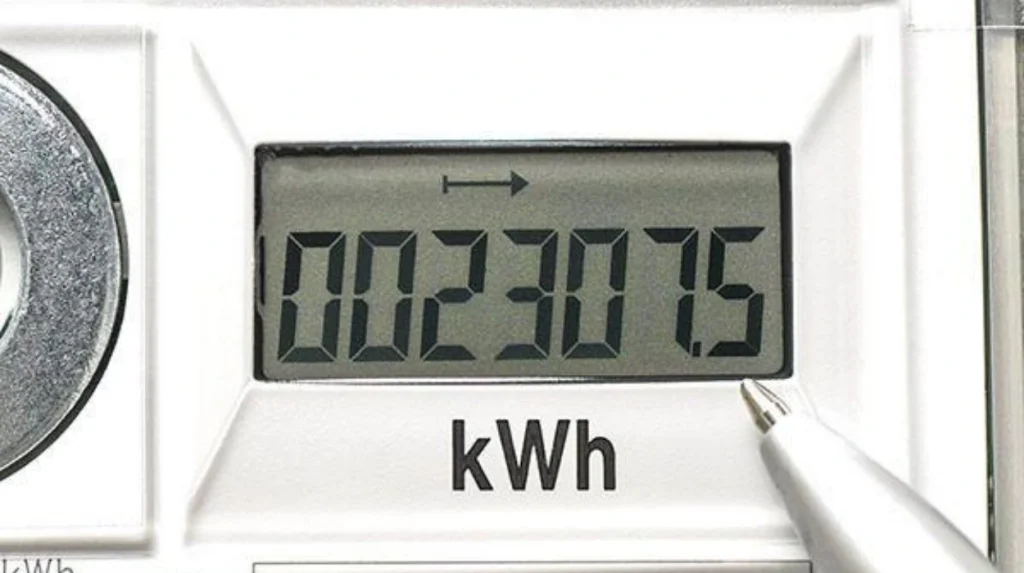
Smart meters automatically send consumption data to suppliers under their configured settings. They also provide households with information about electricity use, helping residents identify unusually high consumption.
Monthly direct debit
A monthly direct debit spreads expected annual costs across regular payments. The amount is usually based on estimated annual consumption, the tariff and the account’s existing balance.
A direct debit is not necessarily the same as the electricity used during that month. Winter consumption can exceed the payment while summer consumption falls below it, resulting in a changing account balance.
Prepayment meters
A prepayment meter requires customers to pay for electricity before or as they use it, depending on the meter arrangement. It helps households monitor available credit but does not remove the need to budget for standing charges and consumption.
The applicable prepayment tariff differs from the direct debit tariff. Households should compare the unit rate and standing charge shown for their meter type.
Is Electricity More Expensive Than Gas in Glasgow?
Electricity generally costs more per kilowatt-hour than mains gas in the UK, although the total cost depends on appliance efficiency and the amount of energy required. Scottish households using electricity as their primary heating fuel face particular affordability challenges, according to official housing statistics.
Electricity and gas serve different purposes in many Glasgow homes. Electricity powers appliances, lighting and electronic equipment, while gas commonly supplies central heating and hot water.
For October–December 2026, Ofgem’s Great Britain direct debit averages are 26.32p per kWh for electricity and 7.97p per kWh for gas. These are national benchmarks, not the precise rates for every Glasgow address. Ofgem
The unit price difference does not automatically mean an electric appliance costs more to operate in every situation. Efficiency determines how much useful heat or work an appliance produces from each unit of energy.
For example, a direct electric resistance heater converts electricity into heat at the point of use. A heat pump transfers heat from its surroundings and typically delivers more heat energy than the electricity it consumes. Its running costs depend on the electricity tariff, operating conditions and system efficiency.
The Scottish Government’s 2024 Scottish House Condition Survey found that 42% of households using electricity as their primary heating fuel were in fuel poverty, compared with 27% of households using gas. Fuel poverty means that a household struggles to afford the energy required to maintain an adequate standard of warmth and meet its domestic energy needs.
These figures cover Scotland, not Glasgow alone. They nevertheless demonstrate why the electricity bill must be considered alongside heating requirements, household income and property efficiency.
How Can Glasgow Residents Reduce Their Electricity Bills?
Glasgow residents can reduce electricity bills by cutting unnecessary consumption, improving energy efficiency, comparing tariffs and monitoring meter readings. The most effective measures depend on the household’s current usage, heating system and tariff, with savings determined by the electricity actually avoided.
Reducing consumption lowers the variable part of an electricity bill. A household that reduces annual usage by 300 kWh saves approximately £78.33 in electricity charges at a unit rate of 26.11p per kWh, assuming the rate remains unchanged.
The standing charge normally remains payable even when consumption falls. This makes it important to target avoidable electricity use rather than expect the entire bill to decline in proportion to every reduction.
Replace inefficient lighting
LED bulbs consume substantially less electricity than traditional incandescent bulbs while providing comparable light output. Replacing frequently used older bulbs with suitable LEDs reduces lighting consumption.
The saving depends on the wattage difference and operating hours. A 60 W incandescent bulb replaced with a 9 W LED saves 51 watts whenever both provide the required light level. Used for five hours daily, that difference saves approximately 93 kWh annually.
Reduce standby consumption
Some televisions, games consoles, computers and kitchen appliances consume electricity while not actively being used. Switching off equipment that does not need to remain on reduces this background consumption.
Smart plugs and suitable switched extension leads help manage groups of devices. Essential equipment, including medical devices and appliances requiring continuous operation, should remain connected according to its operating instructions.
Use heating equipment efficiently
Portable electric heaters can consume substantial electricity because they draw high power for extended periods. Using them only where necessary, following manufacturer instructions and improving heat retention helps control costs.
Households should avoid heating unoccupied rooms unnecessarily. Thermostats and timers help align heating schedules with occupancy, provided the settings remain appropriate for health, comfort and building protection.
Improve insulation and draught control
Insulation reduces the rate at which heat escapes from a property. Suitable improvements include loft insulation, draught-proofing and measures addressing poorly insulated walls or floors.
Traditional Glasgow tenements and other older buildings require building-appropriate solutions. Ventilation and moisture management remain important because poorly planned insulation work can contribute to condensation and damp problems.
Compare electricity tariffs
Households should compare unit rates, standing charges, exit fees and payment conditions rather than selecting a tariff solely because it advertises a low headline price.
A fixed tariff establishes agreed rates for a specified period, subject to its contract terms. A standard variable tariff changes according to the supplier’s pricing arrangements and applicable regulatory limits.
A time-of-use tariff offers different rates at different times. It suits households able to shift activities such as laundry or electric vehicle charging into cheaper periods. The savings depend on the tariff’s actual peak and off-peak rates.
Monitor consumption regularly
Smart meter displays and supplier applications show how electricity use changes during the day. Monitoring consumption helps identify appliances that run for longer than expected or use more power than necessary.
Recording meter readings and comparing bills over similar periods also helps identify unexplained changes. Seasonal comparisons should account for weather, occupancy and the number of days covered by each bill.
What Does Electricity Consumption Data Reveal About Scottish Households?
Official Scottish consumption data provides a more reliable basis for estimating electricity costs than unsupported citywide averages. In 2024, median domestic electricity consumption was 2,400 kWh annually, while mean consumption reached 3,300 kWh, reflecting differences between households and properties.
The distinction between mean and median is important when interpreting average electricity bills. The mean adds together consumption across the measured properties and divides by the number of properties. The median identifies the midpoint, with half of measured properties consuming less and half consuming more.
A smaller number of high-consumption homes can raise the mean above the median. Properties with electric heating, large floor areas or intensive electricity use contribute to this difference.
The Department for Energy Security and Net Zero reported that Scotland’s median domestic electricity consumption fell from 2,500 kWh in 2023 to 2,400 kWh in 2024. Median gas consumption also decreased over the same period, from 10,700 kWh to 10,600 kWh.
These statistics describe domestic properties across Scotland rather than individual Glasgow households. They do not establish an exact average bill for Glasgow because the final charge depends on local tariff rates, payment methods and consumption patterns.
The figures are still useful for household budgeting. A Glasgow resident can compare their annual electricity consumption with the Scottish median, then calculate the likely cost using the rates on their own tariff.
A household using 4,000 kWh annually, for instance, consumes considerably more electricity than the Scottish median. At a constant rate of 26.11p per kWh, its annual unit charges would be £1,044.40 before the standing charge. This comparison identifies higher consumption but does not, by itself, prove that the property wastes energy.
What Is Fuel Poverty and How Does It Affect Glasgow Households?
Fuel poverty occurs when a household cannot afford the energy needed to meet its domestic requirements at an adequate standard. Scotland’s official 2024 survey estimated that 28.7% of households experienced fuel poverty, highlighting the importance of affordable electricity and efficient housing. gov.scot+1
The Scottish House Condition Survey is an official assessment of housing conditions, energy efficiency and household circumstances. Its 2024 findings estimated that approximately 732,000 Scottish households were in fuel poverty, down from approximately 859,000 in 2023.
The survey also estimated that 357,000 households were experiencing extreme fuel poverty in 2024. This represented 14% of all Scottish households, compared with 19.4% in 2023.
These figures reflect Scotland as a whole and should not be presented as Glasgow-specific rates. They show that energy affordability remains a significant issue even when national indicators improve.
Several factors contribute to fuel poverty, including low household income, high energy requirements, inefficient properties and energy prices. A household in a poorly insulated flat can need more energy to maintain suitable indoor temperatures than a household in an efficient property of similar size.
Households struggling to pay electricity bills should contact their supplier promptly. Suppliers can discuss repayment arrangements and available support. Residents can also seek guidance from Citizens Advice Scotland and Home Energy Scotland about energy efficiency, grants, eligibility and managing energy costs.
Support eligibility depends on the scheme, household circumstances and current rules. Residents should check official guidance before relying on a particular payment, discount or home-improvement grant.
How Can Glasgow Residents Check Whether Their Electricity Bill Is Correct?
Glasgow residents can check electricity bills by comparing meter readings, unit rates, standing charges and billing dates with their energy contract. Reviewing these details helps identify estimated readings, incorrect tariff information, unexplained consumption changes and discrepancies between payments and actual electricity use.
Start by checking the billing period and confirming whether the supplier used actual or estimated meter readings. Compare the readings against the meter display or smart meter records where available.
Next, verify the electricity unit rate and standing charge. A tariff change, price-cap adjustment or contract renewal can change the cost even when consumption stays similar.
Review the account balance if paying by monthly direct debit. Regular payments do not always match the precise cost of electricity consumed during an individual month. A credit or debit balance can therefore build up over time.
If the bill appears incorrect, contact the supplier and request an explanation of the calculation. Provide relevant meter readings and ask for a corrected bill when the evidence supports an adjustment.
For unresolved complaints, Ofgem provides information about energy regulation, while the Energy Ombudsman handles eligible complaints against participating energy suppliers after the required complaint process. Consumers should follow the current eligibility and referral requirements.
What Should Glasgow Residents Expect From Electricity Prices in the Future?
Future electricity costs in Glasgow will depend on wholesale energy prices, network investment, government policy, supplier pricing and household consumption. Ofgem reviews the Energy Price Cap quarterly, so residents should check current rates rather than rely on a fixed annual electricity-price forecast.
Electricity pricing changes over time as suppliers’ costs, network charges and regulatory arrangements evolve. The price cap provides a framework for covered default tariffs, but it does not guarantee that bills remain unchanged.
Energy efficiency remains important for controlling household expenditure. Better insulation, efficient appliances and appropriate heating systems reduce the amount of energy needed to maintain a comfortable home.
The transition towards electric heating and electric vehicles also affects household consumption. Residents who install heat pumps or charge electric vehicles at home need to assess their expected electricity use and compare tariffs designed for those activities.
Smart meters and time-of-use tariffs provide additional ways to manage consumption. Their value depends on the household’s schedule, the equipment installed and the difference between peak and off-peak rates.
Glasgow households can prepare for changing costs by reviewing annual consumption, maintaining accurate meter readings and checking tariff terms regularly. These steps provide a clearer basis for budgeting than relying on a single headline average.
The average electricity bill in Glasgow depends primarily on electricity consumption, tariff rates, standing charges and household circumstances. Scotland’s median annual domestic electricity consumption was 2,400 kWh in 2024, offering a useful reference point for estimating household costs.
Using the reported October–December 2026 Southern Scotland direct debit benchmark, a household consuming 2,400 kWh annually would pay approximately £851 a year, or £71 a month, before accounting for changes in rates over the full year.
Residents should treat this as an estimate rather than a guaranteed Glasgow average. Checking postcode-specific rates, comparing tariffs, improving energy efficiency and monitoring consumption provides a more accurate understanding of individual electricity costs.
What is the average electricity bill in Glasgow?
The average electricity bill in Glasgow depends on household consumption, tariff rates and standing charges. Using the October–December 2026 Southern Scotland direct debit rates, a household consuming 2,400 kWh annually would pay approximately £71 per month on average.