Key Points
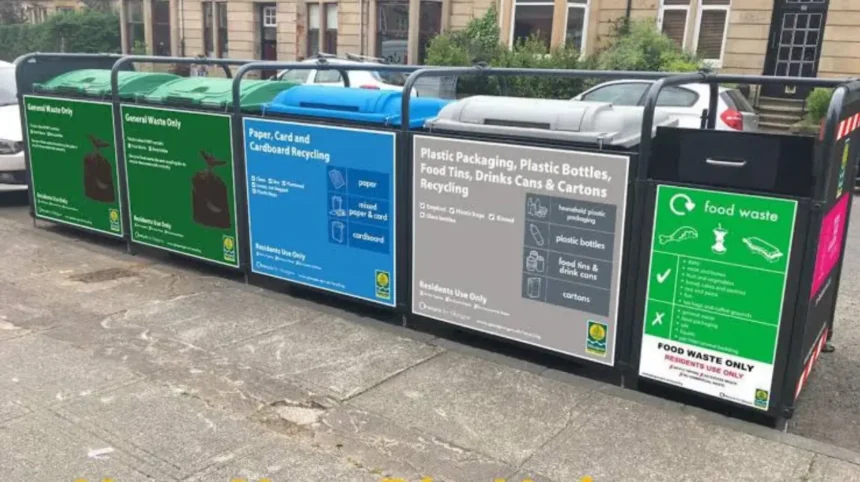
- Rollout Resumption: Glasgow City Council is scheduled to recommence the installation of purpose-built bin hubs across the city starting in April.
- Infrastructure Investment: A Freedom of Information (FOI) disclosure confirmed that over £2.5 million has been spent on the supply and delivery of bin hubs since the programme’s inception.
- Current Progress: Approximately 700 hubs have been installed in pilot areas, with official figures confirming 628 hubs fully operational across the city to date.
- Resident Reach: As of July 2026, around 21,000 properties are benefiting from increased waste collections due to the newly assigned back court bins and street hubs.
- Service Objectives: The initiative aims to elevate recycling rates, improve waste management accessibility, lessen safety hazards for collection personnel, lower missed collection rates, and maintain cleaner back court spaces.
- Hub Capacity: Each purpose-built bin hub is positioned at the front of properties and is designed to service an average of 40 flat units.
Glasgow (Glasgow Express) October 20, 2026 – Glasgow City Council is preparing to resume the expansion of its controversial bin hub scheme from April, following updates published in a new municipal report. The initiative, designed to modernise domestic waste management across the city, has already incurred costs exceeding £2.5 million for supply and delivery. According to council documentation, the purpose-built street hubs are intended to streamline recycling processes for flat residents, address health and safety risks experienced by refuse crews in traditional back courts, and substantially reduce instances of uncollected waste across high-density residential areas.
- Key Points
- Why is Glasgow City Council expanding the bin hub scheme?
- How much has the Glasgow bin hub project cost to date?
- How will the April resumption impact local residents?
- What is the background of the Glasgow bin hub development?
- How is this development predicted to affect Glasgow residents and municipal services?
To date, the local authority has deployed 700 hubs across designated pilot locations, with confirmed data verifying that 628 hubs are actively operational. Located on public streets at the front of properties, each bin hub unit is calibrated to handle domestic waste and recyclable materials for an average of 40 residential flats. A Freedom of Information (FOI) request revealed that as of July 2026, approximately 21,000 properties have been integrated into the revised collection scheme, receiving enhanced service schedules alongside newly allocated waste receptacles within property back courts.
Why is Glasgow City Council expanding the bin hub scheme?
The rationale behind expanding the street bin hub network centers on long-standing operational challenges associated with tenement waste collection. Council officers highlight that traditional back court setups in historic tenement buildings often present severe physical hazards for collection staff, who are required to maneuver heavy wheeled bins through narrow, uneven, or stepped alleyways. By transferring primary collection points to purpose-built structures on the front street, the council seeks to eliminate these manual handling risks and improve overall operational efficiency.
Furthermore, the local authority aims to significantly boost the city’s overall recycling performance to meet statutory targets. The installation of dedicated, multi-stream bin hubs at the front of properties provides tenement residents with direct, accessible facilities for separating recyclable materials, dry mixed recyclables, and general waste. Council reports indicate that the simplified access is expected to reduce clutter and pest infestation risks in tenement back courts, leading to tidier communal spaces and a measurable decrease in missed bin collections across dense urban zones.
How much has the Glasgow bin hub project cost to date?
Financial figures obtained via Freedom of Information disclosures show that the local authority has expended more than £2.5 million on the procurement and delivery of the physical hub units since the project’s launch. This capital outlay covers the manufacturing, transport, and structural securing of the hubs, alongside the provision of upgraded bins for communal areas.
Supporters of the expenditure argue that the initial capital outlay will produce long-term cost reductions by cutting down on lost working hours caused by crew injuries, lowering vehicle maintenance costs associated with navigating restricted lanes, and minimizing penalties or processing fees tied to contaminated recycling streams.
How will the April resumption impact local residents?
The planned resumption in April will mark the next major phase in converting Glasgow’s residential waste infrastructure. For residents transitioning to the system, daily waste disposal will move from internal back court stores to communal hubs situated on street pavement areas directly outside their buildings. Each unit is designed to serve roughly 40 residential properties, requiring shared responsibility among neighbors to maintain cleanliness around the hub perimeter.
While the city council notes that 21,000 households have already experienced positive outcomes—including more frequent collections and reduced back court accumulation—the broader rollout continues to generate discussions regarding kerbside parking spaces, street aesthetics, and long-term maintenance of the public hubs.
What is the background of the Glasgow bin hub development?
Glasgow’s residential architecture is heavily characterized by late 19th and early 20th-century stone tenements, featuring shared private back courts accessible primarily through narrow ground-floor closes or rear lanes. For decades, municipal waste collection relied on refuse collectors manually retrieving metal or plastic bins directly from these rear court areas, navigating steps, narrow passageways, and uneven paving.
As Scottish national waste standards shifted toward multi-stream recycling—requiring separate containers for paper, cardboard, plastics, metals, food waste, and residual landfill material—the physical capacity of traditional back courts proved insufficient. The sheer volume of individual bins led to severe overcrowding, increased pest infestations, higher rates of missed collections, and heightened risk of strain and injury for municipal cleansing staff.
In response to these systemic issues, Glasgow City Council conceptualized the Bin Hub Scheme as part of a broader citywide waste strategy. Initial pilot trials were introduced to test the viability of moving communal waste containment from hidden rear courts to accessible, high-capacity containers permanently sited on public roads or pavements. Despite early logistical delays, operational tweaks, and ongoing debates regarding lost kerbside parking, municipal evaluations concluded that street-sited hubs yielded higher recycling participation and safer working conditions for staff, leading directly to the decision to secure funding, execute pilot phases, and schedule full rollout resumption.
How is this development predicted to affect Glasgow residents and municipal services?
The scheduled resumption of the bin hub rollout in April is predicted to directly alter the daily routines and immediate living environments of thousands of tenement residents across Glasgow.
Impact on Tenement Residents
For residents moving onto the new system, the primary daily shift will be the relocation of waste disposal from private rear courts to shared kerbside hubs. This change is anticipated to clear space in communal back courts, potentially enabling property owners to repurpose rear yards for green space, bike storage, or leisure. However, residents living immediately adjacent to newly installed street hubs may experience altered street views and localized adjustments to available on-street parking spaces, as kerbside allocation is reconfigured to accommodate the heavy-duty hub structures. The long-term success for residents will largely depend on council adherence to strict collection schedules to prevent street-level overflow.
Impact on Municipal Waste Workers and City Operations
For Glasgow City Council’s cleansing workforce, the wider deployment of front-of-property hubs is projected to significantly lower occupational safety hazards. Eliminating the requirement to drag heavy bins through narrow tenement closes is predicted to reduce workplace injuries, decrease sickness absence rates, and improve overall staff retention within the environmental services department. Operationally, fixed street collection points allow refuse vehicles to complete routes faster and more predictably, reducing fuel consumption and operational expenditure per household served.
Impact on Environmental Targets and Local Infrastructure
From an environmental perspective, increasing the accessibility of multi-stream recycling containers outside flat entrances is predicted to improve Glasgow’s municipal recycling percentage, bringing the city closer into alignment with national Scottish waste reduction targets. However, the concentration of waste on public footpaths will require continuous monitoring by city environmental health teams to prevent fly-tipping around hub perimeters and ensure that street cleanliness standards are strictly maintained across all participating wards.