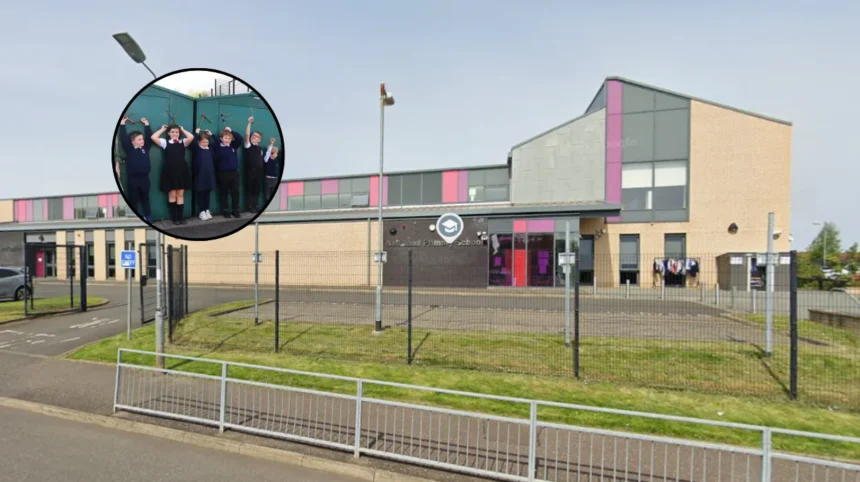
Key Points
- Complete Gap Elimination: Neilsland Primary School in Hamilton has successfully eliminated the attainment gap in listening and talking among its pupils, as highlighted in a recent inspection report.
- Sector-Leading Strategy: His Majesty’s Inspectorate of Education (HMIE) evaluated the educational establishment and praised its “sector-leading” strategy and “relentless focus” on sustained improvement in literacy and numeracy.
- Top Performance Ratings: The 176-pupil school earned “Very Good” and “Excellent” evaluations across the board for its overall performance and curriculum management.
- Literacy and Numeracy Success: Beyond completely closing the listening and talking gap, the school’s attainment gaps in literacy and numeracy are now significantly lower than the local authority averages.
- National Standards Met: Almost all pupils in Primary 1, Primary 4, and Primary 7 reach national standards in listening and talking, while almost all Primary 1 pupils reach national standards in numeracy.
- Attendance and Inclusion: School attendance figures remain consistently above the national average, demonstrating year-on-year improvement over the past five years.
- Targeted Funding: Inspectors commended the creative deployment of the Pupil Equity Fund and participatory budgeting, which removed barriers to participation for children and lowered the cost of the school day.
Hamilton (Glasgow Express) October 14, 2026 – Neilsland Primary School in Hamilton has achieved an outstanding educational benchmark by entirely eliminating the poverty-related attainment gap in listening and talking, according to the latest published findings from education inspectors.
The inspection team from His Majesty’s Inspectorate of Education (HMIE) commended the 176-pupil primary school for implementing a “sector-leading” framework that maintains a “relentless focus” on literacy and numeracy. The inspectors rated key areas of the school’s performance as “Excellent” and “Very Good”, highlighting that learning gaps in core subjects are now significantly below local authority and national averages.
How Did Neilsland Primary Achieve an Excellent Rating from HMIE Inspectors?
The latest published evaluation by HMIE inspectors reveals a comprehensive assessment of Neilsland Primary School’s staff, leadership, and learning methodologies. The inspection team singled out the headteacher and senior leadership for establishing an inclusive, ambitious environment that prioritises equitable educational opportunities for every pupil regardless of socio-economic background.
As documented in the official HMIE inspection report published on the Education Inspectorate portal, inspectors commended the school’s ability to drive sustained academic progress across all year groups. The report notes that almost all children in Primary 1, Primary 4, and Primary 7 achieve expected national standards in listening and talking. Furthermore, in Primary 1, almost all pupils achieve standard national benchmarks in numeracy, establishing a strong foundation early in their educational journeys.
As reported by reporting staff at South Lanarkshire View, inspectors identified that “attainment gaps in both areas are significantly below local authority averages, with ‘no attainment gap present’ in listening and talking.” This assessment confirms that children from disadvantaged backgrounds are achieving the same levels of verbal communication and listening comprehension as their peers.
The inspectors highlighted that the primary factors driving these metrics include highly structured classroom interventions, continuous monitoring of pupil progress, and a school culture built upon nurture and high expectations. The learning environment ensures that individual support plans are crafted to meet the specific requirements of pupils facing potential attainment barriers.
What Key Factors Contributed to Closing the Attainment Gap in Hamilton?
The elimination of the attainment gap at Neilsland Primary School has been attributed to a combination of tailored funding strategies, enhanced extracurricular engagement, and outdoor play initiatives.
As detailed by journalism staff writing for South Lanarkshire View, the HMIE evaluation drew particular attention to the school’s strategic deployment of funding mechanisms. The inspection team noted the effective use of the Pupil Equity Fund (PEF) along with participatory budgeting strategies to lower the overall cost of the school day for families. By removing financial obstacles associated with resources, trips, and essential classroom materials, the school ensured equal access to educational activities for all pupils.
The inspection findings further emphasised the following operational pillars:
- Extracurricular Participation: A broad selection of lunchtime and after-school clubs has been established, enabling almost all pupils in the school to participate in at least one activity outside standard learning hours.
- Outdoor Learning: Inspectors praised the “strong and committed focus on outdoor teaching and learning through play,” which has been shown to boost pupil confidence, collaboration, and verbal interaction.
- Sustained Attendance Improvement: School attendance figures at Neilsland Primary have risen steadily over the last five years, consistently remaining above the national average.
As covered by local news updates on Labour Home, Councillor Lynsey Hamilton expressed her support for the primary school’s outcome, welcoming the “Excellent inspection for Neilsland Primary” and acknowledging the dedication shown by the staff, headteacher, pupils, and wider school community in earning such an evaluation.
The collaborative approach between teaching staff, support personnel, and local authority support networks has been cited as a model for other educational settings seeking to address disparities in pupil performance.
Background of the Particular Development
The closing of the attainment gap in Scottish primary schools has been a central pillar of national education policy for over a decade. The Scottish Attainment Challenge, launched by the Scottish Government in 2015, was designed to foster equity in education by ensuring that every child has an equal opportunity to succeed, regardless of their socio-economic background. A central component of this strategy involves targeted funding directly allocated to schools via the Pupil Equity Fund (PEF), enabling headteachers to make context-specific financial decisions tailored to their pupil demographics.
Historically, the attainment gap across literacy, numeracy, and communication skills has posed a persistent challenge across South Lanarkshire and Scotland as a whole. Studies consistently indicated that pupils from lower-income postcodes entered primary education behind their peers in early language development, listening comprehension, and foundational numeracy.
HMIE inspections evaluate schools on a six-point scale ranging from “Unsatisfactory” to “Excellent”. Achieving an “Excellent” rating for an attainment strategy, alongside a complete eradication of the gap in a primary subject area such as listening and talking, represents an uncommon benchmark in Scottish state education. Neilsland Primary School’s journey reflects years of targeted intervention, data-driven pupil monitoring, and community-focused educational policy designed to neutralize poverty-related learning disadvantages.
Prediction: How This Development Can Affect Local Communities, Educators, and Educational Policy
This development is likely to have significant short-term and long-term implications for educational leadership, local families, and national policy figures across Scotland.
Impact on Local Families and the School Community
For parents, carers, and pupils within the Neilsland Primary School catchment area, this rating provides strong reassurance regarding educational equality and standards. The complete removal of the attainment gap in listening and talking indicates that children attending the school receive equitable language development support irrespective of family income. The continued focus on reducing the cost of the school day will likely ease financial pressures on low-income households while boosting pupil participation in extracurricular and outdoor learning initiatives.
Impact on Teaching Staff and Educational Leaders
For teachers, headteachers, and educational administrators in South Lanarkshire and across Scotland, Neilsland Primary School now serves as a practical model for intervention strategies. Educational leaders are likely to examine the school’s precise usage of the Pupil Equity Fund, participatory budgeting, and outdoor play methodologies to replicate these outcomes in other settings. Staff at Neilsland Primary may also be called upon by local authority leaders to share best practices, lead professional development workshops, and assist peer schools struggling with literacy and numeracy gaps.
Impact on National Policy and Inspectorate Benchmarks
At a national level, His Majesty’s Inspectorate of Education and the Scottish Government are expected to reference Neilsland Primary School’s framework in future attainment guidance. Demonstrating a verified, sector-leading method for eliminating the attainment gap in core literacy areas provides evidence that targeted, school-level funding can directly resolve structural educational inequalities. This success could influence future decisions regarding the allocation and preservation of the Pupil Equity Fund across Scottish councils.