Key Points
- Talks between Glasgow City Council and trade union Unison have broken down again following a dispute over plans regarding 23,000 workers.
- The local authority previously proposed to dismiss and re-engage non-teaching staff after equal pay negotiations failed.
- The council aimed to implement a new pay and grading system to replace a previous framework found to discriminate mostly against female workers, though some staff faced wage cuts of nearly £11,000.
- Deputy First Minister Jenny Gilruth intervened previously to pause the proposals and bring parties back to the negotiating table.
- The council secured funding for an additional year of pay protection but stated that Unison refused to put the offer to its members in a ballot.
- While Unison withdrew its support and faced the resumption of letters to its members, the council continues to work with Unite and GMB to prevent their members from being dismissed and re-engaged.
- Council leader Ricky Bell expressed deep disappointment over Unison’s refusal to ballot members and confirmed detailed discussions with Unite and GMB.
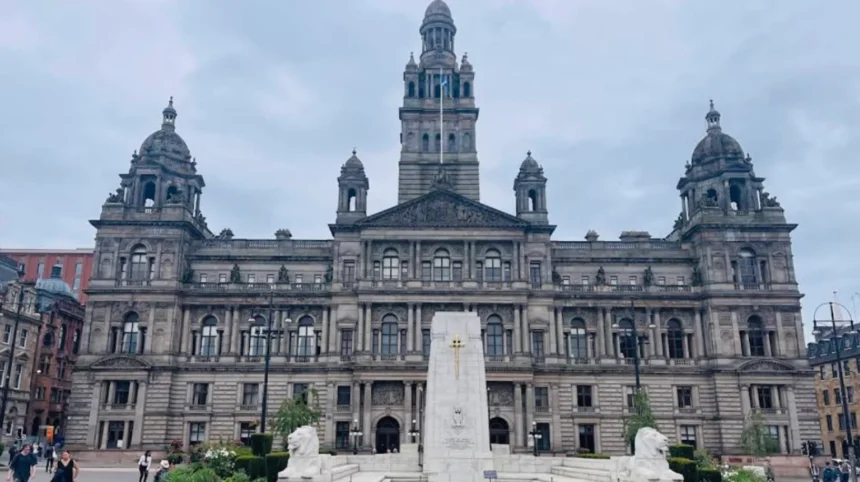
Glasgow City Council (Glasgow Express) October 1, 2026 – Talks between Glasgow City Council and trade union Unison have once again broken down following the temporary suspension of controversial plans to fire and rehire 23,000 workers. The developments follow a series of intensive negotiations aimed at resolving a long-running equal pay dispute within the local authority.
- Key Points
- Why did Glasgow City Council propose fire and rehire plans for 23,000 workers?
- How did the Scottish Government intervene in the Glasgow pay dispute?
- What caused the latest breakdown in talks between the council and Unison?
- What have council leaders said about the collapsed negotiations?
- Background of the particular development
- Prediction
Why did Glasgow City Council propose fire and rehire plans for 23,000 workers?
The local authority initially revealed proposals to dismiss and re-engage all of its non-teaching staff after previous negotiations concerning an equal pay dispute failed to reach a comprehensive settlement. The council sought to implement a brand new pay and grading system because the previous framework was found to discriminate predominantly against female workers. However, these structural changes meant that certain staff members faced potential wage reductions of nearly £11,000, triggering immediate industrial concern and public anxiety.
How did the Scottish Government intervene in the Glasgow pay dispute?
The initial announcement generated a substantial public backlash across Scotland. Consequently, the proposals were temporarily put on hold after Deputy First Minister Jenny Gilruth intervened directly in the dispute. This political intervention successfully brought all relevant parties back around the negotiating table to seek a viable compromise before structural measures could be formally enforced against the local government workforce.
What caused the latest breakdown in talks between the council and Unison?
Following a round of renewed discussions, the local authority issued an update stating that talks between council representatives and Unison had broken down once more. According to the council, administration officials successfully secured funding to provide an additional year of pay protection for affected staff. Nevertheless, the local authority asserted that the union refused to put this revised financial offer to its members in a formal ballot.
Consequently, the council announced that the temporary pause on issuing formal dismissal letters to Unison members has now ended. Simultaneously, local government representatives confirmed they are continuing constructive discussions with Unite and GMB to ensure that members affiliated with those specific unions will not face dismissal and re-engagement.
What have council leaders said about the collapsed negotiations?
Detailing the administration’s position, Glasgow City Council leader Ricky Bell stated that detailed discussions with Unite and GMB would proceed to finalise operational details.
Ricky Bell stated that
“I’m deeply disappointed that, despite the council putting a further year of pay protection on the table, Unison has once again chosen not to put this offer to its members.”
Expanding on the financial scope of the negotiations, Ricky Bell added that
“Taken together with the improvements made since August, this represents a package well over a hundred million in extra pay for our staff.”
Addressing the complexity of the bargaining process, Ricky Bell noted that
“We listened carefully throughout these negotiations and went the extra mile to address concerns and improve the offer.”
Commenting on unaccepted demands, Ricky Bell mentioned that
“However, some of the remaining demands were simply unworkable. In particular, proposals for additional allowances would in fact have had a detrimental impact on some employees.”
Expressing regret over the membership outcome, Ricky Bell stated that
“I am disappointed that Unison members have been denied the opportunity to have their say on a deal which would have delivered significant improvements for many employees, additional protections for those facing detriment, and a clear route to finally ending pay discrimination in Glasgow.”
Concluding on staff welfare during the administrative process, Ricky Bell acknowledged that
“This is an understandably difficult and uncertain time for staff, and support will continue to be available through the council for those directly affected by this decision.”
Background of the particular development
The underlying conflict stems from historic equal pay grievances within Glasgow City Council. For years, the local authority has faced legal and institutional challenges regarding a grading and pay structure that disproportionately affected female employees, leading to massive financial liabilities and compensation claims. Efforts to rectify these historical inequalities required a complete overhaul of the municipal pay architecture.
However, restructuring wages across tens of thousands of local government employees inevitably created friction. While leveling up underpaid sectors is essential for legal compliance and fairness, standardising pay scales without adequate transitional financial protections risked reducing the take-home pay of other workers. This dynamic created an intricate balancing act between rectifying historical gender discrimination and protecting current workers from severe financial detriment, ultimately leading to the deployment of controversial workforce restructuring tools like fire and rehire.
Prediction
The collapse of talks between Glasgow City Council and Unison significantly escalates industrial tensions and creates profound administrative uncertainty for approximately 23,000 local government employees in Scotland’s largest city. For the affected workforce, the immediate resumption of dismissal and re-engagement procedures for Unison members introduces acute financial anxiety, heightening the distinct possibility of imminent industrial action, strikes, or work-to-rule campaigns across essential council services.
Conversely, the divergence in strategy between Unison and other trade unions such as Unite and GMB could fracture labour solidarity, potentially isolating Unison members while separate deals are formalised for other council departments. For Glasgow City Council, prolonged industrial disputes threaten significant disruption to public services, schools support, and municipal administration, placing intense political pressure on local leaders and the Scottish Government to find an emergency legislative or financial compromise before industrial fallout impacts the wider Glasgow community.