
Key Points
- Glasgow City Council officials are requesting an additional £5 million in capital funding, bringing the municipality’s total project contribution to £20.9 million.
- The expected total refurbishment bill for the People’s Palace and Winter Gardens has escalated by 42 per cent, moving from an initial estimate of £36 million to £50 million.
- The target reopening date for the historic site has been officially pushed back from 2027 to late 2029 due to complex structural restoration and construction inflation.
- The Scottish Government recently pledged a conditional £14 million towards the project, lifting secured funding to £33 million.
- An active Stage 2 application to the National Lottery Heritage Fund seeks £9.15 million, which, if approved alongside the local authority grant, would leave the project 94 per cent funded.
- The UK Government was formally approached for capital assistance but declined to contribute to the restoration scheme.
- The adjacent Winter Gardens glasshouse structure has remained inaccessible to the public since 2018 after structural glazier sealant failed.
Glasgow (Glasgow Express) September 1, 2026 – Glasgow City Council members will be urged at an upcoming City Administration Committee meeting to approve a further £5 million capital injection for the landmark complex. If authorized, the decision will elevate the local authority’s direct contribution to £20.9 million, offsetting a substantial cost surge that has seen the overall restoration quote rise to £50 million. The fresh financial request follows an announcement from the Scottish Government committing up to £14 million in conditional support. However, the ballooning price tag and complex structural engineering demands mean the historic venue will not open its doors until 2029.
Why Has the Reopening of the People’s Palace Been Delayed to 2029?
The historic social history museum situated in Glasgow Green officially ceased operations in April 2024 to facilitate a planned £36 million conservation project.
Early project schedules anticipated a public reopening in 2027. However, project administrators at Glasgow Life—the municipal charity managing the city’s cultural infrastructure—subsequently confirmed that the timeframe had been postponed as technical surveys, structural evaluations, and cost projections evolved.
The projected total expenditure has risen by approximately 42 per cent to £50 million. Technical updates delivered to local representatives indicate that the financial adjustment stems from updated specialist guidance regarding the intricate repair demands of the Victorian glasshouse.
Furthermore, broader macro-economic pressures across the UK construction sector, persistent material inflation, and the necessity of an extended development schedule have contributed to the revised figure.
As reported by Brian Ferguson of The Herald, representatives for Glasgow Life indicated that full clarity on ultimate expenditure remains subject to ongoing design refinements. A spokesperson for Glasgow Life stated that
“as the detailed design and technical work has progressed, we have developed a much clearer understanding of the scale of the restoration and the costs involved, which cover all aspects of the project including detailed design development, structural repairs, environmental improvements, new visitor facilities”.
The spokesperson further noted that
“our reopening timetable has changed because the detailed development of a project of this scale and complexity has given us a clearer understanding of the work required, and the time needed to deliver it properly”.
How Will the £50m Refurbishment Plan Be Funded?
Of the £50 million overall projection, £33 million in capital commitments has been successfully identified, leaving approximately £17 million currently unsecured. The financial gap includes the proposed £5 million contribution from Glasgow City Council scheduled for committee discussion.
To address the remainder, project directors submitted a Stage 2 application to the National Lottery Heritage Fund, requesting £9.15 million in Delivery Phase funding. Heritage Fund representatives conducted an official site assessment in August 2026, with a final decision expected by late September 2026.
As documented in official reports presented to city councillors, the UK Government was formally approached for capital assistance regarding the venue’s redevelopment. However, Whitehall officials declined the invitation to provide financial backing to the project.
Should Glasgow City Council approve the pending £5 million request and the National Lottery Heritage Fund grant the £9.15 million application, the conservation effort will reach 94 per cent of its full funding target. The final 6 per cent gap is slated to be sourced via a public fundraising initiative overseen by Glasgow Life, targeting public bodies, philanthropic trusts, corporate entities, and community fundraising drives.
As reported by Scottish Construction Now, Scottish Culture Secretary Màiri McAllan highlighted the government’s conditional £14 million contribution, stating:
“The People’s Palace has welcomed generations of Glaswegians as well as visitors from further afield, and this investment will ensure they can continue to enjoy it for decades to come”.
McAllan added that the investment
“will also protect historic collections which tell the story of Glasgow’s working people, safeguard the much-loved Winter Gardens as a space for the whole community, and support jobs and footfall in the city’s east end”.
Background of the Development
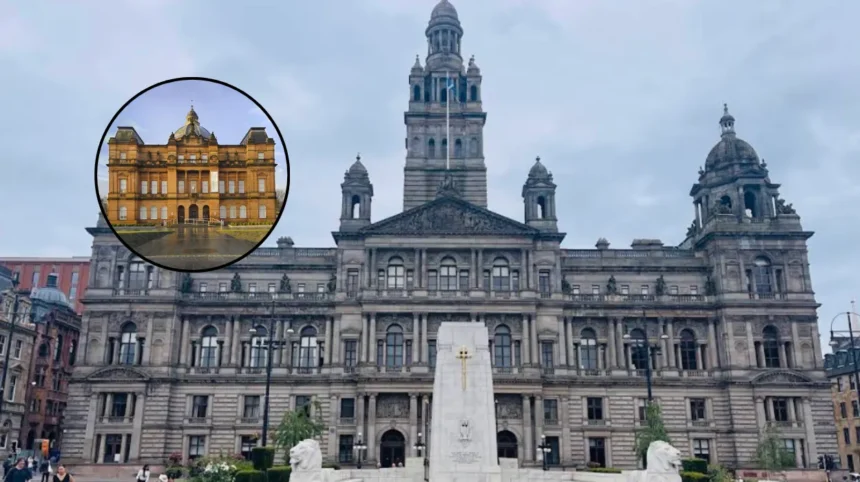
Opened in May 1898 by the Earl of Rosebery, the People’s Palace and Winter Gardens was conceived as a cultural and recreational center tailored specifically to the working-class populations of Glasgow’s East End. Designed by city architect Alexander B.
McDonald, the sandstone museum housed social history exhibits depicting the civic development and daily lifestyle of Glaswegians, while the adjoining iron-and-glass conservatory offered a botanical retreat.
Over the past two decades, the structural condition of the complex deteriorated, leading to repeated partial closures for emergency structural maintenance.
In late 2018, municipal inspectors ordered the public closure of the Winter Gardens glasshouse after discovering that the flexible mastic sealant used to anchor the glass panes to the cast-iron framework had reached the end of its functional life, presenting falling glass risks. Initial assessments conducted in 2019 suggested that rectifying the glasshouse structure alone would require between £5 million and £7.5 million.
By April 2024, the entirety of the People’s Palace complex was shuttered to allow contractors and curators to clear the historic collections into secure storage.
That step enabled invasive structural testing, revealing underlying masonry issues, outdated mechanical and electrical systems, and environmental control deficiencies that ultimately pushed the scope and cost of the refurbishment to £50 million.
Prediction: How Will This Development Affect the Local Community and Culture Sector?
The delay of the reopening to 2029 and the reliance on additional public capital carry notable implications for local residents, the regional economy, and the Scottish cultural landscape.
- Impact on East End Businesses and Footfall: The continued closure of the venue over the next three years deprives Glasgow’s East End of a primary cultural anchor. Nearby hospitality and retail establishments around Glasgow Green can anticipate lower footfall, missing out on the estimated 600,000 annual visitors and projected £8 million economic boost expected upon full site reactivation.
- Pressure on Local Authority and Heritage Budgets: Glasgow City Council’s commitment of £20.9 million in public funds—set against broader municipal financial constraints—may compress capital allocations for other community infrastructure projects across the region.
- Preservation and Educational Continuity: The physical relocation of the museum’s social history artifacts into long-term storage limits public access for educational groups, researchers, and tourists. However, securing the full £50 million funding package ensures the long-term conservation of a Category A-listed building that might otherwise face structural abandonment.
- Precedent for UK Heritage Projects: The budget expansion illustrates broader systemic challenges facing UK heritage sector developments. Complex Victorian conservation projects remain highly vulnerable to supply chain fluctuations, specialist labor shortages, and inflation, likely forcing future civic restoration schemes across the UK to build larger contingency margins into early projections.