Key Points
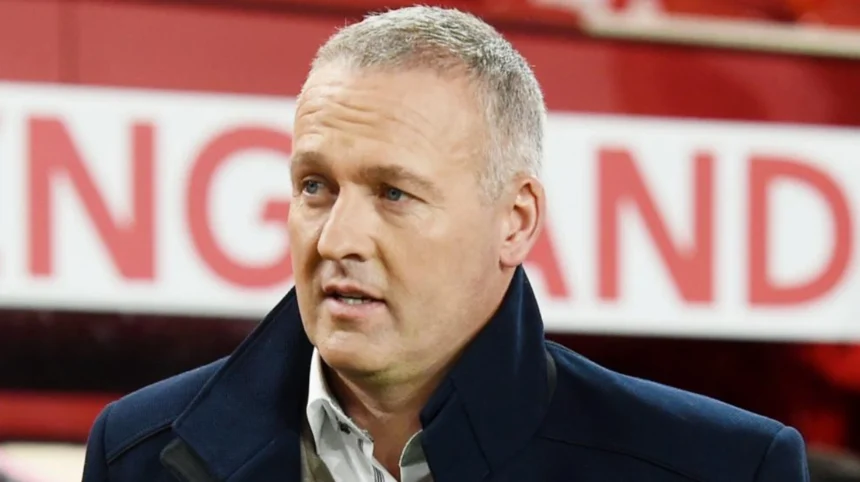
- Former Celtic captain Paul Lambert has drawn direct comparisons between Rangers‘ historic 2012 demotion in Scottish football and the potential sporting sanctions facing Manchester City.
- Manchester City have faced extensive scrutiny regarding a multitude of charges relating to alleged breaches of top-flight financial regulations.
- Commenting on the ongoing regulatory saga, Paul Lambert emphasised that financial penalties alone are entirely ineffective against wealthy club owners.
- Additional football figures, including former Tottenham Hotspur striker Darren Bent and former England winger Chris Waddle, have also voiced strong opinions supporting severe sporting penalties such as lower-league relegation or heavy points deductions.
- Industry insiders note that while the public and rival clubs anticipate major sporting sanctions, the ultimate severity of the penalties remains a subject of intense debate across the wider footballing landscape.
Glasgow (Glasgow Express) September 26, 2026 — As football governance faces one of its most critical historical crossroads, former Celtic captain Paul Lambert has spoken out regarding the severity of potential sanctions hanging over Manchester City, explicitly drawing parallels to the unprecedented demotion experienced by Rangers in 2012.
- Key Points
- Could Rangers’ 2012 administrative descent serve as a direct template for Manchester City’s regulatory outcome?
- Why do football experts argue that traditional fines are entirely insufficient for elite clubs?
- What specific lower-league demotion scenarios have pundits proposed for Manchester City?
- What is the background of this particular development?
- How can this development affect stakeholders across the footballing pyramid?
Could Rangers’ 2012 administrative descent serve as a direct template for Manchester City’s regulatory outcome?
As reported by Paul Lambert during an interview with BoyleSports, football authorities face an exceptionally complex challenge when determining the exact nature of any formal punishment. The former midfielder noted that governing bodies must carefully evaluate whether the ultimate sanction should involve a massive financial hit, a severe deduction of league points, or outright relegation to the bottom tier of the football pyramid, much like what happened to Rangers over a decade ago.
Expanding on the broader implications across the domestic game, Paul Lambert warned that any definitive ruling handed down to Manchester City is bound to create a profound ripple effect. As stated by Paul Lambert,
“Whatever happens, I think it’s going to snowball to a lot of clubs.”
Why do football experts argue that traditional fines are entirely insufficient for elite clubs?
Addressing the core debate surrounding financial penalties, former England winger Chris Waddle argued that a mere fine would fail to achieve any meaningful deterrent effect. Speaking on Betpack, Chris Waddle insisted that authorities must take uncompromising action to prevent other elite institutions from attempting similar infractions.
As reported by Chris Waddle,
“It’s unacceptable to break the rules the way they have supposedly done, and therefore you have to be strong with them. You have to take serious action, in order to prevent other clubs from trying to do similar, and to make a statement.”
Furthermore, Chris Waddle pointed out the practical limitations of monetary sanctions when applied to extraordinarily wealthy ownership groups. As stated by Chris Waddle,
“The problem is, if the punishment is just a fine, it doesn’t do anything. The club are so rich, that it’s difficult to hurt those owners in their pockets, so I think it needs to go beyond a fine. We’ve seen with other clubs who have been fined for other punishments, it hasn’t really impacted them.”
While acknowledging an appreciation for Manchester City as a football institution and highlighting their passionate fanbase, Chris Waddle maintained that sporting consequences remain unavoidable. As reported by Chris Waddle,
“I like Manchester City. Like Newcastle, they have great fans, so I don’t want them to suffer, but they have to face the consequences. A points deduction for example would have a serious impact, so they should maybe look at that rather than just a fine. You have to take the punishment, as a fine will be a waste of time.”
What specific lower-league demotion scenarios have pundits proposed for Manchester City?
Adding further momentum to the debate over extreme sporting sanctions, former Tottenham Hotspur striker Darren Bent argued that standard disciplinary measures would fall short of addressing the scale of the alleged rule violations. Speaking on talkSPORT, Darren Bent pointed toward historic precedents set by clubs such as Juventus in Italy alongside the Scottish precedent set by Rangers to justify a severe drop through the divisional structure.
As reported by Darren Bent,
“When you look at what happened to Juventus, when you look at what happened to Rangers – what did they go down, like four divisions? They are going to have to get relegated.”
Outlining his perspective on the exact tier appropriate for such a sanction, Darren Bent asserted that a simple drop into the second tier would be inadequate. As stated by Darren Bent,
“They should be relegated to League Two, and a transfer ban for like five years, six years. It’s going to have to be. The Championship is not enough.”
What is the background of this particular development?
The ongoing discourse surrounding Manchester City’s regulatory standing stems from a lengthy investigation launched by the Premier League back in February 2023, following a comprehensive probe that began in 2018. The club faced well over 100 separate charges alleging failures to provide accurate financial information across multiple seasons, omissions of full remuneration details within player and managerial contracts, and a lack of cooperation with investigators over a five-year period. Throughout the process, Manchester City have strenuously denied all allegations of wrongdoing, maintaining their position that they have consistently respected due process while anticipating a formal appeals process if necessary. The prolonged nature of the case has continuously drawn commentary from former players, managers, and financial analysts, turning every milestone in the legal and regulatory timeline into a major flashpoint for English football governance.
How can this development affect stakeholders across the footballing pyramid?
The eventual outcome of the disciplinary proceedings against Manchester City carries profound implications for the entire football ecosystem. For Manchester City, any severe sporting sanction—ranging from a heavy points deduction to compulsory relegation—would fundamentally disrupt their sporting operations, commercial stability, and status at the summit of European football. Conversely, for rival clubs across the Premier League and the English Football League, a landmark ruling could establish a powerful precedent for financial regulation enforcement, assuring competing teams that elite status does not exempt participants from strict regulatory compliance. Ultimately, the resolution of this case will redefine the boundaries of financial governance, influencing how clubs manage their accounts, how governing bodies enforce compliance, and how supporters view the integrity of domestic competition for years to come.