Key Points
- Event Overview: The Great Scottish Run 2026 is scheduled to take place in Glasgow over the weekend, featuring junior races on Saturday and major events on Sunday, 4 October 2026.
- Race Schedule: The 10k event kicks off at 8:30am on Sunday, followed by the Great Scottish Run half marathon.
- Core Objective: Thousands of participants are expected to take part to achieve personal bests and raise vital funds for various charities.
- Traffic Restrictions: Extensive road closures, parking prohibitions, and vehicle movement bans are being implemented across major routes in the city centre, Finnieston, Anderston, Gorbals, Saltmarket, and the south side.
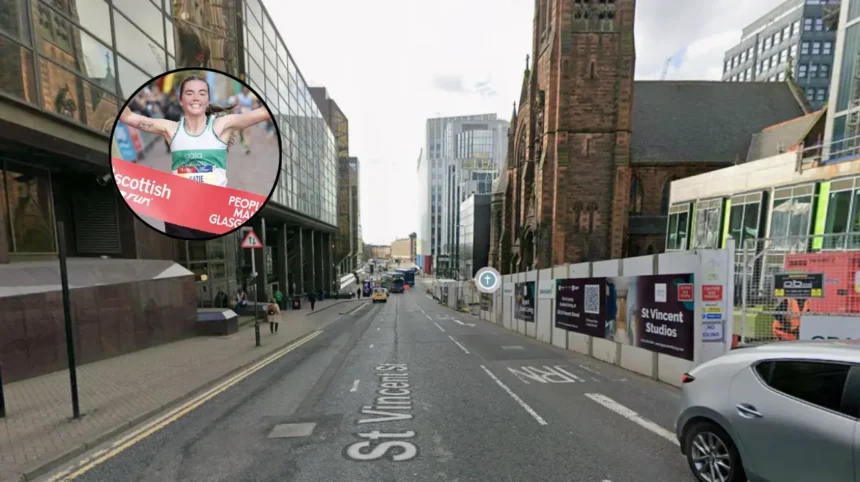
- Key Infrastructure Affected: Major thoroughfares including St Vincent Street, George Square, Argyle Street, the Broomielaw, and sections of the Kingston Bridge and Clyde Arc will experience restrictions starting from Friday afternoon through Sunday evening.
Glasgow (Glasgow Express) September 24, 2026 — Tens of thousands of runners, spectators, and local residents are preparing for Scotland’s biggest mass-participation race weekend as the Great Scottish Run returns to Glasgow on Sunday, 4 October 2026. Alongside the excitement of personal milestones and charity fundraising efforts, the high-profile sporting event brings a sweeping series of comprehensive road closures, parking bans, and traffic restrictions across multiple major corridors within the city.
What Are the Key Timings and Major Routes Affected by the Event Closures?
Significant road restrictions and prohibitions on vehicle movements are scheduled to take effect to secure the race route and ensure public safety. According to operational plans detailed by local authorities and event organisers, restrictions begin building from 3:00pm on Friday, 2 October, affecting parking, loading, and unloading on a wide array of city streets.
Vehicle movement restrictions will scale up substantially from 4:00am on Sunday, 4 October, with specific enforcement times varying by location, and many remaining in place until 5:00pm. Key areas heavily impacted include George Square and surrounding city-centre streets, St Vincent Street, St Vincent Place, West George Street, Argyle Street, and Bothwell Street. Furthermore, extensive closures will encompass the Broomielaw, Clyde Street, the Clyde Arc, Finnieston, Anderston, the Gorbals, Saltmarket, Govan Road, Pacific Drive, and Paisley Road West.
How Will Motorists and Public Transport Users Navigate Strategic Crossings and Motorways?
With the race route traversing key river crossings, critical arterial links are subject to temporary partial closures. The Kingston Bridge and its associated M8 slip roads, including the northbound North Street and Stobcross Street off-ramps alongside the West Street on-ramp, will experience strategic lane restrictions and closures during peak morning hours. Additional motorway impacts involve slip-road restrictions on the M74 northbound junction 1 off-ramp towards Carnoustie Street, the M8 westbound junction 23 off-ramp to Dumbreck Road, and the M77 junction 1 southbound off-ramp to Dumbreck Road.
Event logistical updates indicate that the iconic Clyde Arc—frequently referred to as the “Squinty Bridge”—will also close as runners cross the River Clyde for a second time heading toward the city’s south side. Authorities advise drivers to avoid the immediate city centre and surrounding urban zones entirely unless absolutely necessary, urging commuters to rely on advanced travel planning via official transport channels.
Background of the Particular Development
The Great Scottish Run has evolved into a premier fixture on Scotland’s sporting calendar, drawing international participants and spectators to Glasgow annually. Mass-participation events of this scale require intricate multi-agency planning involving Glasgow City Council, event promoters, and emergency services. In recent years, urban athletic showcases have increasingly relied on comprehensive traffic management frameworks to balance community accessibility with the stringent safety requirements of high-capacity endurance races. Implementing city-wide traffic restrictions ensures that thousands of athletes can safely navigate complex urban courses—spanning iconic landmarks from the city centre to Glasgow Green—while minimizing logistical friction for local neighbourhoods.
Prediction of Impact on the Particular Audience
For local residents, motorists, and business owners operating within Glasgow, the extensive grid of road closures will introduce notable logistical challenges, temporary parking suspensions, and localized traffic delays throughout the race weekend. Commuters attempting to cross the city center or access south-side residential districts will face mandatory diversions and extended journey times during peak restriction hours on Sunday. Conversely, hospitality businesses, transport operators, and local vendors situated near the course footprint and the Glasgow Green finish line can anticipate a substantial surge in foot traffic, boosting local economic activity as spectators gather to support the participants.