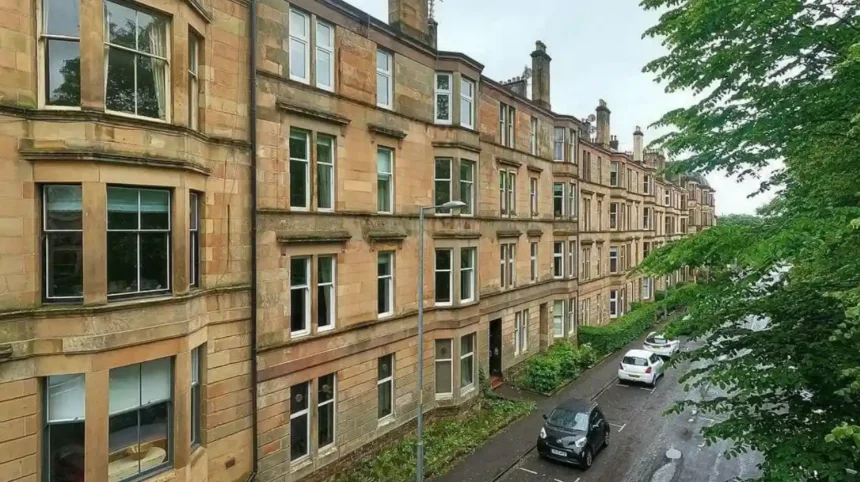
Buying a first home in Glasgow depends on purchase budget, property type, transport access, monthly housing costs, and long-term plans. Areas such as Shawlands, Dennistoun, Southside neighbourhoods, Knightswood, Scotstoun, and parts of the East End offer different combinations of price, amenities and connectivity.
- What makes an area suitable for a first-time buyer in Glasgow?
- Which Glasgow areas offer different first-time buyer options?
- Shawlands and the wider Southside
- Dennistoun and the East End
- Scotstoun and Knightswood
- Govan and the south-west
- Partick and the West End fringe
- How much should a first-time buyer budget for a Glasgow property?
- Which Glasgow property types are practical for first-time buyers?
- How does Glasgow’s transport network affect first-time buyer decisions?
- What should first-time buyers check in a Glasgow Home Report?
- How does buying a Glasgow property work for a first-time buyer?
- What Scottish Government support is available to Glasgow first-time buyers?
- How should a first-time buyer compare Glasgow neighbourhoods?
- What are the main risks first-time buyers should consider in Glasgow?
- How could Glasgow’s property market affect future first-time buyers?
- Which Glasgow area should a first-time buyer consider first?
For a first-time buyer, there is no single objectively “best” Glasgow neighbourhood. The suitable area depends on how much you can borrow, the deposit available, the type of property required and the distance you need to travel for work or study.
Glasgow City had an average house price of £185,801 in the four quarters to Q1 2026, according to the Scottish Government’s analysis of official UK House Price Index data. That compared with £187,421 across Scotland. Glasgow City prices increased by 2.5% over the period.
Registers of Scotland also reported that Glasgow recorded the largest 10-year increase in median residential property price among Scotland’s eight cities, with a 57% rise between 2015-16 and 2025-26.
These figures describe Glasgow City as a whole. Individual neighbourhoods operate at very different price points. Property type also creates substantial differences. A traditional tenement flat, modern apartment, terraced house and semi-detached house have different prices, running costs and maintenance requirements.
For first-time buyers, neighbourhood selection therefore works best as a combination of affordability, transport, property condition, local amenities and future housing needs.
What makes an area suitable for a first-time buyer in Glasgow?
A suitable first-time buyer area combines a manageable purchase price with reliable transport, everyday amenities, acceptable property condition and housing costs that fit the buyer’s mortgage budget. Glasgow offers several neighbourhood types, from inner-city tenements to suburban flats and houses.
Affordability is the starting point. The Scottish Government recorded an average first-time buyer purchase price of £154,000 across Scotland in Q1 2026, up 1.9% annually. Glasgow’s city-wide average for all property types was higher at £185,801 over the four quarters to Q1 2026.
The difference matters because first-time buyers frequently purchase smaller properties. Flats and maisonettes form an important part of the entry-level Glasgow market. Nationally, flats and maisonettes recorded only 0.3% annual price growth in the Scottish Housing Market Review for Q1 2026.
Transport also affects affordability. Glasgow’s Subway operates 15 stations across a 10-mile circular route serving the West End and City Centre, with stations including Hillhead, Kelvinbridge, Partick, Govan, Ibrox, Kinning Park and Buchanan Street.
An area with good public transport can reduce dependence on car ownership. That changes the overall monthly cost of living, particularly for buyers commuting into the city centre.
Property condition is another major consideration. Scotland’s Home Report system provides a Single Survey, Energy Report and Property Questionnaire before a residential property is marketed.
For first-time buyers, the Home Report is particularly important because the purchase price does not represent the full financial commitment. Repairs, factoring charges, insurance, council tax, mortgage payments and maintenance all affect affordability.
Which Glasgow areas offer different first-time buyer options?
Glasgow’s first-time buyer market includes established Southside neighbourhoods, inner-city East End districts, West End alternatives and northern or western suburbs. Each provides a different balance of property prices, transport, amenities, housing types and proximity to central Glasgow.
Shawlands and the wider Southside
Shawlands is a Southside neighbourhood centred around Shawlands Cross and Pollokshaws Road. It forms part of a wider group of established residential districts including Strathbungo, Battlefield, Pollokshields and Langside.
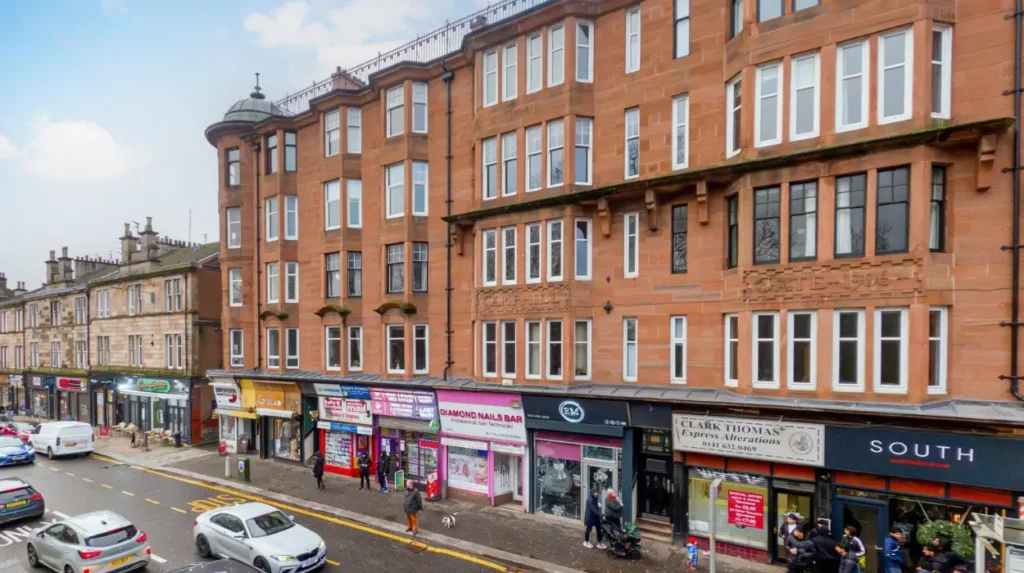
The Southside contains substantial tenement housing alongside newer developments and houses. Traditional tenement flats provide an important route into home ownership, although purchase prices vary substantially between streets, building condition and property size.
The area has strong access to independent shops, restaurants, cafés and local services. Rail connections from stations such as Shawlands and Pollokshaws East provide access towards Glasgow city centre and the wider rail network.
For a first-time buyer, the Southside requires careful property-by-property comparison. Tenement properties have shared roofs, stairwells, external walls and other common elements. Factoring arrangements and common repair liabilities therefore deserve close examination.
Dennistoun and the East End
Dennistoun is an inner-city residential area east of Glasgow city centre. It contains substantial traditional tenement housing and has direct access to city-centre employment, education, retail and leisure facilities.
Its location gives first-time buyers a relatively central option without requiring a property directly within the city centre. Alexandra Parade provides local retail and services, while nearby rail stations connect the area with central Glasgow and surrounding districts.
The wider Inner East is also subject to significant regeneration activity. Glasgow City Council identifies the Inner East as strategically important because it connects the City Centre, Glasgow North, the University of Strathclyde and sports and leisure facilities.
Clyde Gateway covers 840 hectares across parts of Glasgow’s East End and South Lanarkshire. The regeneration programme includes Bridgeton, Dalmarnock and Rutherglen and has involved infrastructure, housing and land remediation investment.
For buyers considering Dennistoun and neighbouring East End districts, the key issue is distinguishing established housing from areas undergoing redevelopment. Property condition, exact street location and transport access remain more useful indicators than a broad “East End” label.
Scotstoun and Knightswood
Scotstoun and Knightswood sit in Glasgow’s west and north-west. They provide a different housing profile from the dense tenement districts closer to the city centre.
The area contains flats, terraces, semi-detached properties and other suburban housing. Its location gives access to employment areas in western Glasgow and neighbouring districts, while rail and bus services provide connections towards the city centre.
These neighbourhoods can suit buyers whose priority is additional space rather than immediate access to the most central locations.
Property buyers should compare the cost of a larger suburban property against commuting expenses and maintenance. A cheaper purchase price does not automatically produce a lower overall monthly housing cost.
Govan and the south-west
Govan is located on the south bank of the River Clyde and has a long industrial and shipbuilding history. It combines established residential streets with major regeneration and waterfront development.
The Subway provides a direct connection through Govan towards the city centre and West End. SPT lists Govan among the 15 Subway stations on the circular network.
Govan’s location also places it within the wider Govan-Partick regeneration context. Buyers should distinguish between current property condition and planned development activity when assessing individual homes.
For a first-time buyer, the important checks include the Home Report, building condition, local amenities, transport distance and any relevant planning information.
Partick and the West End fringe
Partick is a major transport and commercial district in Glasgow’s West End. It provides access to rail, Subway and bus services and sits close to the University of Glasgow and established West End neighbourhoods.
The wider West End includes higher-value residential markets, particularly around areas such as Hillhead and Hyndland. First-time buyers working with a tighter budget often examine the edges of the West End rather than focusing exclusively on its most expensive streets.
Partick is particularly significant because the Subway, rail and bus networks converge around the area. SPT lists Partick among the stations on the 10-mile Subway circuit.
The main consideration is the relationship between purchase price and accessibility. A property with excellent transport links can have different value characteristics from a similarly sized property farther from the network.
How much should a first-time buyer budget for a Glasgow property?
A first-time buyer should calculate affordability from the complete purchase cost rather than the asking price alone. Deposit, mortgage payments, LBTT, legal costs, Home Report information, insurance, council tax, repairs and factoring charges all form part of the ownership budget.
The Scottish Government recorded a £154,000 average first-time buyer purchase price across Scotland in Q1 2026. Glasgow City recorded an average property price of £185,801 across all property types in the four quarters to Q1 2026.
These figures are useful benchmarks, not neighbourhood price guides. Individual Glasgow properties vary according to size, tenure, condition, building type, location and transport access.
The deposit is another major factor. A 5% deposit on a £180,000 property is £9,000. A 10% deposit is £18,000. Mortgage availability and interest rates determine the resulting monthly repayment.
First-time buyers should also calculate cash requirements beyond the deposit. Solicitor costs, mortgage-related charges, moving costs, insurance and initial repairs can create significant additional expenditure.
Land and Buildings Transaction Tax
Scotland uses Land and Buildings Transaction Tax, commonly abbreviated to LBTT, instead of Stamp Duty Land Tax.
Revenue Scotland states that first-time buyer relief increases the residential nil-rate band from £145,000 to £175,000.
This means an eligible first-time buyer purchasing a property at £175,000 does not pay LBTT on that transaction under the relief rules. Purchases above the threshold can still receive the benefit of the increased nil-rate band, subject to the applicable rules.
The exact tax calculation should be confirmed with a solicitor or Revenue Scotland because transaction circumstances affect the liability.
Which Glasgow property types are practical for first-time buyers?
Flats are a major entry point into Glasgow home ownership because the city has extensive tenement and apartment housing. Houses provide additional space but generally require a larger budget. Property condition and shared maintenance obligations remain critical in both categories.
Traditional tenement flats
Glasgow is internationally recognised for its sandstone tenement architecture. Traditional tenements remain a major part of the city’s housing stock.
They provide relatively spacious flats compared with some modern apartment layouts. Many contain high ceilings, large windows and established communal areas.
The important financial issue is common maintenance. Owners can share responsibility for roofs, stairwells, external walls, gutters and other building elements.
A first-time buyer should inspect the Home Report and ask the solicitor about title conditions, factoring arrangements and known common repairs.
Modern apartments
Modern apartments provide different maintenance characteristics. They often include communal entrances, lifts, controlled access and shared facilities.
The monthly cost can include factoring or management charges. These charges need to be added to mortgage and council-tax calculations.
New-build properties can also involve developer warranties and different maintenance arrangements. Buyers should examine the specification, warranty documentation, service charges and Home Report or relevant valuation documentation.
Terraced and semi-detached houses
Houses offer private entrances and, in many cases, gardens. They generally provide more space than entry-level flats.
Neighbourhoods such as Knightswood and other western or northern suburban districts contain different forms of family housing. The price difference between a flat and a house can therefore determine which part of Glasgow fits a first-time buyer’s budget.
House buyers should account for roof maintenance, boiler replacement, garden maintenance and external repairs.
How does Glasgow’s transport network affect first-time buyer decisions?
Transport access affects both daily convenience and household costs. Glasgow’s Subway, rail and bus networks connect many residential districts with the city centre, West End and wider metropolitan area, making transport proximity an important part of first-time buyer affordability calculations.
Glasgow Subway provides 15 stations across a 10-mile circular route. Stations include Hillhead, Kelvinbridge, Partick, Govan, Ibrox, Kinning Park, Shields Road and Buchanan Street.
Rail access provides another important layer. Neighbourhoods such as Shawlands, Dennistoun, Partick and Scotstoun have access to railway stations or nearby rail connections.
The practical calculation is straightforward. A property that costs less but requires regular car travel has a different household budget from a property with strong public transport access.
Transport also affects resale considerations because employment patterns and commuting requirements influence buyer demand.
First-time buyers should therefore map the journey from a prospective home to their workplace, university, major family commitments and preferred services before making an offer.
What should first-time buyers check in a Glasgow Home Report?
The Glasgow Home Report provides essential information about a property’s condition, energy performance, valuation and seller information. First-time buyers should examine the Single Survey, valuation, Energy Report and Property Questionnaire before deciding how much to offer.
The Scottish Home Report framework was established through the Housing (Scotland) Act 2006 and associated regulations. The report consists of the Single Survey, Energy Report and Property Questionnaire.
The Single Survey describes the property’s condition and identifies defects requiring attention.
The valuation provides a professional assessment of market value.
The Energy Report provides information about energy efficiency and heating.
The Property Questionnaire supplies information provided by the seller about matters affecting the property.
For tenement flats, buyers should pay particular attention to roof condition, external masonry, communal staircases, windows, damp, gutters and evidence of common repairs.
For houses, the survey should be checked for roof condition, damp, structural movement, windows, heating systems and external maintenance.
Energy efficiency also has financial relevance. A property with poor insulation or inefficient heating can have higher running costs.
How does buying a Glasgow property work for a first-time buyer?
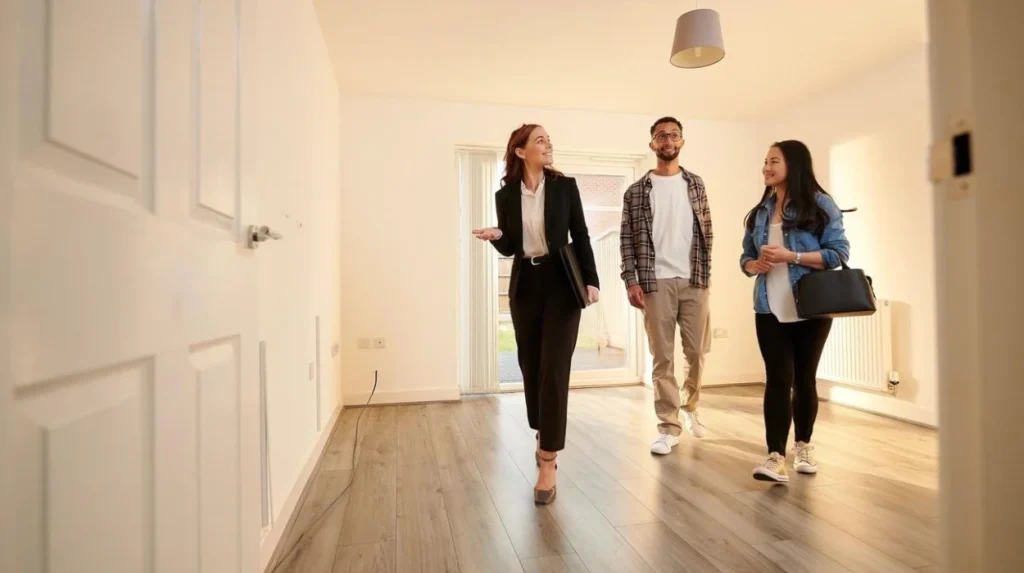
The Scottish buying process normally involves mortgage preparation, property searches, Home Report review, a solicitor, an offer, missives and settlement. Understanding each stage reduces the risk of committing to a property before its legal and financial position is clear.
The first step is normally establishing a realistic mortgage budget. A mortgage adviser can assess income, existing debt, deposit and lender criteria.
The buyer then identifies suitable properties and reviews their Home Reports.
In Scotland, the buyer’s solicitor submits the formal offer. Citizens Advice Scotland explains that an offer normally identifies the property, proposed price, entry date and other conditions.
Properties advertised as “offers over” have a minimum advertised price. A closing date can be established when multiple buyers express interest. The seller does not have to accept the highest offer.
Once the parties agree the contractual conditions, missives are concluded. This creates the binding contract.
Settlement then takes place on the agreed date of entry. The purchase price is paid, the disposition transfers ownership and the buyer receives the keys.
What Scottish Government support is available to Glasgow first-time buyers?
The Scottish Government’s First Homes Fund currently provides eligible first-time buyers with up to £10,000 towards a property costing up to £300,000. Open Market Shared Equity also provides support for qualifying first-time buyers who meet its income and priority-group requirements.
The First Homes Fund reopened in June 2026. It provides up to £10,000 towards the purchase of a home worth up to £300,000. The Scottish Government takes an equity stake based on its contribution.
The scheme applies to existing properties and new builds. Applicants must have never owned a home anywhere in the world and must use the property as their main and only home in Scotland.
The mortgage must be a capital repayment mortgage covering at least 25% of the purchase price or valuation, whichever is lower. Applicants typically provide around 5% deposit, subject to lender requirements.
The First Homes Fund has a £300,000 property-value limit. This creates a practical budget ceiling for buyers considering more expensive Glasgow neighbourhoods.
The Open Market Shared Equity Scheme, known as OMSE, supports qualifying first-time buyers and priority groups purchasing homes on the open market. The Scottish Government published updated property price thresholds for OMSE in August 2026.
Eligibility and price limits differ between schemes. Buyers should check the current Scottish Government rules before relying on either programme.
How should a first-time buyer compare Glasgow neighbourhoods?
A practical comparison should examine purchase price, property condition, transport, council tax, factoring, energy costs, local services and future housing requirements. Comparing these factors at individual-property level produces a more useful assessment than choosing a neighbourhood from reputation alone.
A buyer with a limited deposit can begin with areas containing substantial flat stock. Traditional tenement neighbourhoods provide a broad range of one- and two-bedroom properties.
A buyer prioritising additional space can examine suburban districts where terraced and semi-detached housing forms a larger proportion of the market.
A buyer prioritising public transport can focus on areas around Subway and railway stations.
A buyer seeking access to universities and central employment can compare districts around the West End, City Centre fringe and Inner East.
A buyer planning to remain in the property for many years should also assess bedroom requirements, outdoor space, schools where relevant, commuting patterns and potential maintenance expenditure.
The key point is that “best area” is not a fixed property-market category. A neighbourhood suitable for a £150,000 flat search is different from a neighbourhood suitable for a £250,000 house search.
What are the main risks first-time buyers should consider in Glasgow?
The main risks include overpaying relative to valuation, underestimating common repairs, ignoring factoring charges, overlooking energy costs and buying without understanding local market conditions. Home Reports and professional legal advice provide important protection during the purchasing process.
Traditional tenements require particular attention to communal repairs. A low purchase price can become less attractive if major roof, masonry or common-area works are required.
Flats also require buyers to understand factoring arrangements. Factor charges can cover communal cleaning, maintenance, insurance administration and other services.
Buyers should also compare the asking price with the Home Report valuation. A substantial difference can affect mortgage requirements and the amount of cash required to complete the purchase.
The Scottish Government’s current First Homes Fund guidance also states that buyers remain responsible for maintenance, insurance, repairs and running costs. Flats can carry shared maintenance charges or factor fees.
Mortgage affordability is another important consideration. Scottish Government data shows that first-time buyer mortgage capital and interest payments represented 19.7% of income in Q1 2026, within a broadly stable 18-month period to March 2026.
Individual affordability differs substantially because income, deposit size, debt and mortgage terms differ between households.
Explore More Area Guide
Glasgow Property Prices vs Scotland: 2026 Trends
How Much Deposit Do You Need to Buy a Glasgow Flat?
How could Glasgow’s property market affect future first-time buyers?
Glasgow remains a major Scottish housing market with continuing residential demand, regeneration activity and substantial differences between neighbourhoods. Future buyers will encounter changing prices, mortgage conditions, housing supply and development patterns across the city.
Official data shows that Glasgow’s housing market has experienced significant long-term price growth. Registers of Scotland reported a 57% increase in Glasgow’s median residential property price over the decade to 2025-26, the largest increase among Scotland’s eight cities.
More recent data presents a slower annual growth environment. Glasgow City’s average property price increased by 2.5% over the four quarters to Q1 2026. Scotland’s average increased by 3.3% over the same longer comparison period.
Scotland recorded 104,408 residential property sales in 2025-26, 5% more than the previous year, according to Registers of Scotland.
Glasgow City Council’s housing strategy also focuses on new housing, existing-home investment, building condition, sustainability and housing affordability.
Regeneration projects such as Clyde Gateway demonstrate how infrastructure and redevelopment can change parts of the city’s built environment over time.
For first-time buyers, the practical implication is to assess the individual property and its immediate neighbourhood, rather than assuming that every property within a broad district has the same price, condition or future prospects.
Which Glasgow area should a first-time buyer consider first?
First-time buyers should match the neighbourhood to their budget and priorities rather than relying on one universal “best area”. Shawlands, Dennistoun, Scotstoun, Knightswood, Govan, Partick and other districts provide distinct combinations of price, housing type and transport access.
Shawlands and surrounding Southside districts provide established tenement housing, local services and rail connections.
Dennistoun and the wider Inner East provide proximity to the city centre, traditional housing and access to major regeneration areas.
Scotstoun and Knightswood provide suburban housing options and western Glasgow connectivity.
Govan combines established housing with Subway access and major regeneration activity.
Partick provides extensive public transport connectivity and proximity to West End employment, education and amenities.
The most appropriate choice depends on the buyer’s actual purchasing position. A first-time buyer should establish the maximum sustainable monthly housing cost, identify the deposit available, determine the required property size and then compare Glasgow neighbourhoods against those requirements.
The 2026 market provides a useful reference point. Glasgow City’s average property price was £185,801, while Scotland’s average first-time buyer purchase price was £154,000 in Q1 2026.
The strongest buying process therefore starts with affordability and property requirements, followed by neighbourhood selection. That approach allows first-time buyers to compare Glasgow’s Southside, East End, West End fringe and suburban districts using measurable factors rather than a single area label.
What is the best area in Glasgow for a first-time buyer?
There is no single best area for every buyer. Shawlands, Dennistoun, Govan, Scotstoun, Knightswood and parts of the Southside offer different combinations of property prices, transport links, amenities and housing types.