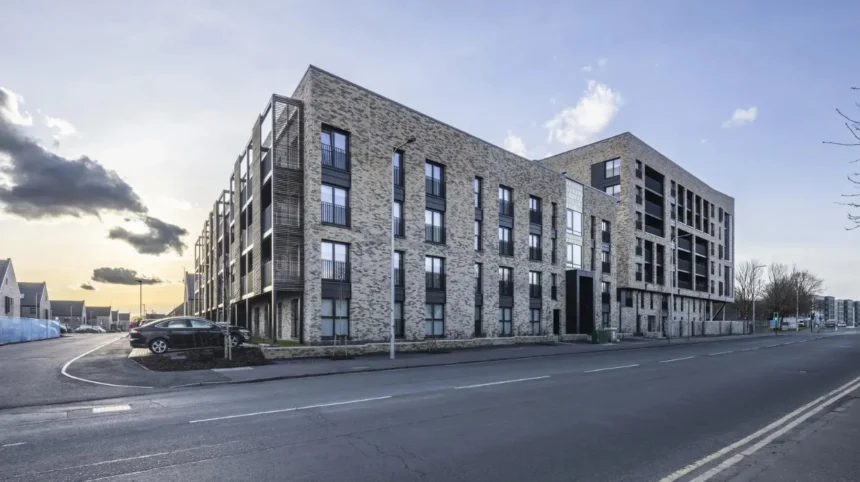
Glasgow’s East End has changed substantially over the past two decades. Areas including Calton, Bridgeton, Dalmarnock, Parkhead, Gallowgate, Shettleston and Tollcross have experienced regeneration, new housing, improved public spaces and major investment. At the same time, residents continue to identify antisocial behaviour, violent crime, drug activity, littering and property crime as important community-safety issues.
- Do locals consider Glasgow East End safe today?
- What safety problems concern residents most?
- Has crime in Glasgow actually fallen compared with the past?
- Why does Glasgow East End still have a reputation for crime?
- Does regeneration make the East End feel safer?
- Are antisocial behaviour and disorder still major concerns?
- How does drug activity affect perceptions of safety?
- Do residents feel safe walking around the East End at night?
- Do locals trust the police to keep Glasgow East safe?
- Are young people and youth violence still part of the safety debate?
- How much does deprivation affect perceptions of safety?
- Is Glasgow East End becoming safer or simply changing?
- What does the evidence actually say about safety in Glasgow East End now?
The most accurate answer to what locals think about safety is therefore not simply that the East End is “safe” or “unsafe”. Official evidence shows a more detailed picture. Police Scotland’s current Glasgow East priorities include antisocial behaviour and disorder, housebreaking, violent crime, drug dealing or misuse, and littering or fly-tipping.
National Scottish evidence also shows that perceptions of crime do not always match recorded crime. In the 2024/25 Scottish Crime and Justice Survey, 72% of adults believed their local crime rate had stayed the same or fallen during the previous two years, while 76% felt very or fairly safe walking alone in their local area after dark.
Do locals consider Glasgow East End safe today?
Locals’ views are mixed rather than uniformly negative, with everyday safety shaped by neighbourhood, time, street activity and personal experience. Police priorities confirm continuing concerns about disorder, violence, drugs, housebreaking and environmental problems, while regeneration has changed many parts of the East End.
Glasgow East is a defined Police Scotland area command within Greater Glasgow. Its policing priorities are based on crime data, strategic assessment, partner information and feedback from residents through the Your Police survey.
This makes the current policing priorities particularly useful when assessing local safety concerns. They show that safety remains an active community issue, but they do not establish that every East End neighbourhood experiences the same conditions.
The Inner East also contains a wide range of neighbourhoods. Glasgow City Council identifies areas including Calton/Barras, Gallowgate, Parkhead, Bridgeton, Dalmarnock, Shettleston and Tollcross within its Inner East spatial development framework.
A resident in a busy commercial area therefore experiences the East End differently from someone living on a residential street. Transport hubs, shopping areas, nightlife, football crowds and major roads also create different patterns of activity throughout the day.
The strongest conclusion is that safety is localised. The East End cannot accurately be judged as one uniform neighbourhood.
What safety problems concern residents most?
Current Police Scotland priorities identify antisocial behaviour, disorder, housebreaking, violent crime, drug dealing or misuse, and littering or fly-tipping as important concerns in Glasgow East. These priorities reflect operational assessment and resident feedback rather than a simple reputation about the whole East End.
Police Scotland explicitly lists five priorities for Glasgow East: antisocial behaviour and disorder; homes being broken into; violent crime; drug dealing and drug misuse; and littering or fly-tipping.
These concerns cover different types of risk.
Antisocial behaviour includes conduct that causes alarm, distress or nuisance without necessarily amounting to serious violence. Disorder can involve groups gathering, threatening behaviour, public disturbances and other incidents requiring police attention.
Housebreaking is a property crime involving unlawful entry to a building. Its inclusion among local policing priorities demonstrates that residential security remains relevant to the area’s safety agenda.
Violent crime represents another distinct concern. It includes offences involving violence or threats of violence. The presence of violent crime within local priorities does not mean that residents regularly experience violent incidents, but it demonstrates that preventing violence remains a policing objective.
Drug dealing and drug misuse also feature prominently. Glasgow has historically faced significant drug-related harm, and Police Scotland continues to combine enforcement with partnership and public-health approaches.
Environmental conditions matter as well. Littering and fly-tipping affect how residents perceive streets, public spaces and neighbourhood management.
These concerns explain why local perceptions can remain cautious even when wider crime trends improve.
Has crime in Glasgow actually fallen compared with the past?
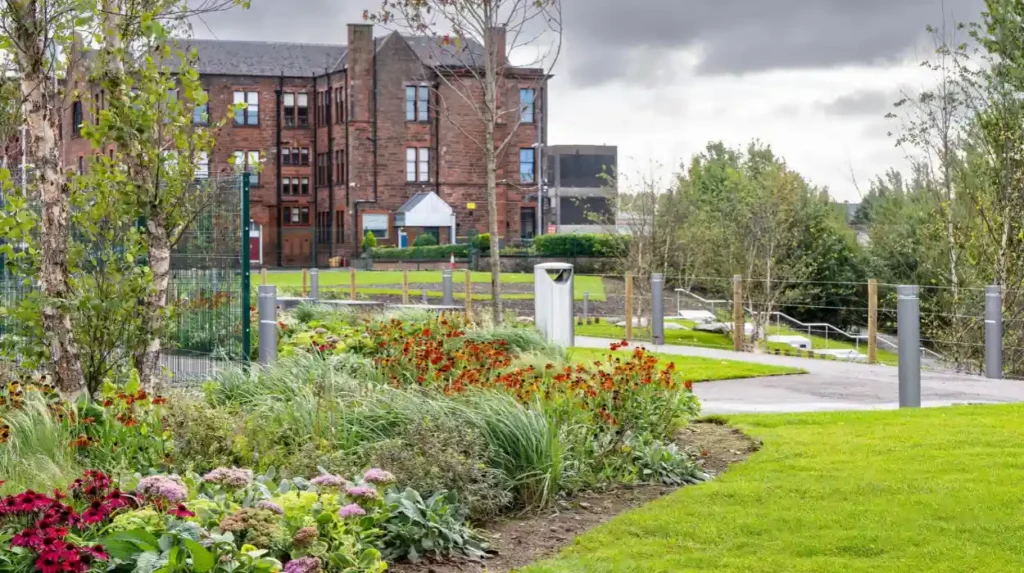
Scotland’s long-term crime picture is substantially lower than its historic peak, although recent figures show increases in several categories. Recorded crime fell 51% from its 1991 peak by 2024/25, while Glasgow City recorded Scotland’s highest local-authority crime rate.
The long-term trend provides important context.
Official Scottish Government statistics show that police-recorded crime in Scotland was 51% below its 1991 peak in 2024/25. Total recorded crime was 299,111 during that financial year, compared with substantially higher levels during the early 1990s.
The more recent picture is less straightforward.
For the year ending December 2025, Police Scotland recorded 308,532 crimes across Scotland, representing a 3% increase from 298,306 in the year ending December 2024. Non-sexual crimes of violence increased by 5%, sexual crimes by 10%, crimes of dishonesty by 2%, and crimes against society by 6%. Damage and reckless behaviour decreased by 3%.
The figures demonstrate why a simple “crime is falling” statement is incomplete. Long-term crime has declined significantly, while some categories have increased in recent years.
There is also a major geographical difference. In 2024/25, Scotland recorded 545 crimes per 10,000 population, while Glasgow City recorded 829 per 10,000, the highest rate among Scottish local authorities.
This figure applies to Glasgow City as a local authority, not specifically to Glasgow East End. It therefore should not be presented as an East End crime rate.
That distinction is essential for accurate reporting.
Why does Glasgow East End still have a reputation for crime?
The East End’s reputation reflects a long industrial and urban history, historic deprivation, older housing conditions and longstanding associations with violence and disorder. Current regeneration has changed the physical environment, but reputations often persist after neighbourhood conditions have changed.
Glasgow’s East End developed through industrial expansion, dense housing and employment associated with manufacturing and transport.
Bridgeton provides a clear historical example. Historic Environment Scotland records that Bridgeton began as a weaving village on the Barrowfield lands in 1705. It became an industrial suburb as textile production expanded, while the area was incorporated into Glasgow in 1847.
The physical environment changed dramatically during the nineteenth century. Historic Environment Scotland records that existing housing around Bridgeton Cross was compulsorily purchased and cleared during the 1860s and 1870s, followed by new housing construction.
Dalmarnock developed later than Bridgeton. Industrial development accelerated there after 1860, leaving substantial industrial heritage along Dalmarnock Road and surrounding streets.
These historical patterns produced dense urban neighbourhoods with industrial employment, working-class housing and significant population movement.
The twentieth century brought further changes to industry, housing and employment. Deindustrialisation removed many traditional jobs, while regeneration replaced some older industrial land and housing with new developments.
Public perceptions do not automatically update at the same speed as the built environment. A neighbourhood can receive new housing, transport investment and public-space improvements while retaining a decades-old reputation.
This helps explain why some perceptions of Glasgow East End safety remain stronger than current conditions in individual streets suggest.
Does regeneration make the East End feel safer?
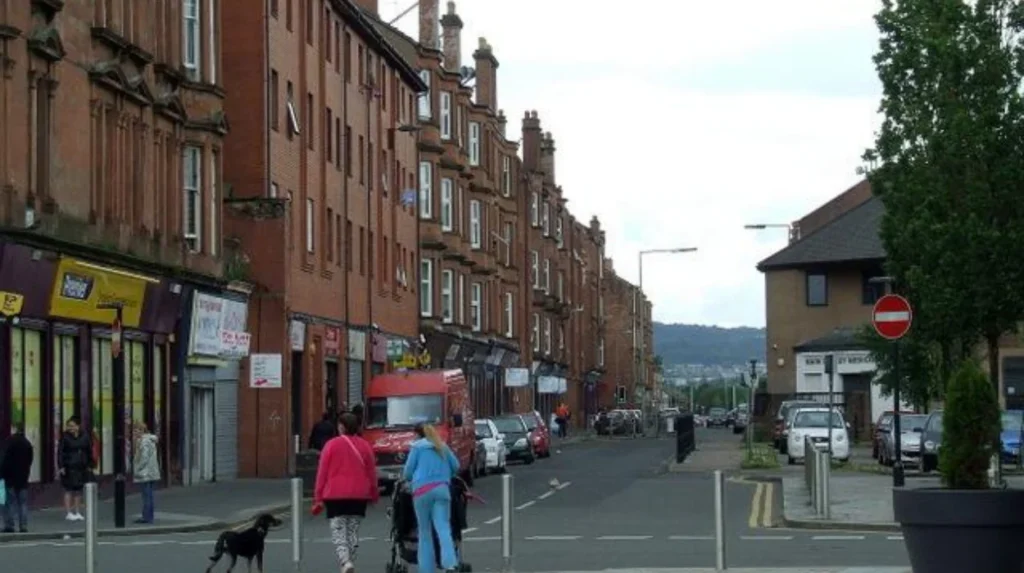
Regeneration has changed important parts of Glasgow East End through new housing, public-space improvements, infrastructure and redevelopment of former industrial land. These changes improve the physical environment and support community activity, although regeneration does not remove every crime or safety concern.
Clyde Gateway has been one of the most important regeneration programmes affecting the East End.
Glasgow City Council documents describe investment in areas including Dalmarnock, Bridgeton and the Calton/Barras area. Earlier regeneration programmes included improvements around Dalmarnock Station, the Clyde Walkway and surrounding public realm.
The Inner East continues to receive housing investment. Glasgow City Council’s Strategic Housing Investment Plan identifies significant housing-led regeneration opportunities across Calton/Barras, Dalmarnock, Gallowgate, Parkhead, Shettleston and Tollcross.
The plan includes the Calton Village development, with 254 new affordable homes planned as part of a wider programme expected to deliver more than 500 affordable and energy-efficient homes in the area.
Regeneration affects safety through several mechanisms.
New housing replaces vacant or underused sites. Improved lighting and public realm can increase visibility. New commercial and community uses create more regular activity. Better connections encourage pedestrian movement. Occupied buildings provide natural surveillance.
These changes do not constitute proof that crime has disappeared. They demonstrate a change in the physical and social conditions surrounding safety.
Residents therefore assess regeneration through everyday experience: whether streets are busy, whether public spaces are maintained, whether homes feel secure and whether antisocial behaviour is addressed quickly.
Are antisocial behaviour and disorder still major concerns?
Yes. Police Scotland continues to identify antisocial behaviour and disorder as a Glasgow East priority. Recent policing operations have targeted groups involved in disorder, with officers using patrols, local problem-solving teams and partnership work to respond to reported problems.
In June 2024, Police Scotland reported partnership activity addressing antisocial behaviour in Glasgow. Officers described incidents involving groups of young people, including violence and disorder, and increased patrol activity in areas reporting higher levels of this behaviour.
The response demonstrates an important feature of modern community safety: police enforcement operates alongside partnership work.
Antisocial behaviour is not synonymous with serious crime. Loud disturbances, threatening conduct, public disorder and environmental nuisance can affect residents’ sense of safety even when they do not involve serious criminal offences.
This distinction matters because perception is influenced by repeated low-level incidents.
A street with frequent noise, groups gathering, litter or disorder can feel less secure than another street with similar recorded crime but stronger maintenance and community presence.
Police Scotland’s local priorities therefore provide a useful indicator of the issues requiring attention, while they do not measure every resident’s personal experience.
How does drug activity affect perceptions of safety?
Drug dealing and drug misuse remain listed among Glasgow East’s policing priorities, reflecting ongoing enforcement and public-health concerns. Drug-related activity affects safety perceptions through visible dealing, disorder, vulnerable people and associated criminal behaviour rather than through one single type of incident.
Drug-related harm has been a major issue across Glasgow for decades.
Police Scotland has increasingly combined enforcement with public-health approaches. Glasgow East was among the Police Scotland areas involved in the rollout of naloxone, a medicine that reverses opioid overdose. Officers in Glasgow East began carrying naloxone in 2021.
This approach illustrates how community safety operates beyond arrests.
Drug misuse can create several connected problems. These include public disorder, vulnerable people requiring emergency assistance, exploitation, acquisitive crime and community concerns about visible drug markets.
Residents can therefore interpret drug activity as a broader neighbourhood-safety issue.
At the same time, recorded drug offences do not measure the total scale of drug use. Official crime statistics reflect incidents known to and recorded by police.
The Scottish Index of Multiple Deprivation also treats crime as one component of wider deprivation. SIMD ranks Scottish data zones across domains including income, employment, health, education, access to services, crime and housing.
This wider framework matters because community safety is connected to housing, employment, health and social conditions.
Do residents feel safe walking around the East End at night?
National Scottish survey evidence shows that most adults feel safe walking alone locally after dark, but this does not provide a specific East End result. In Glasgow, individual perceptions depend on location, lighting, transport activity, disorder, personal experience and the time of night.
The Scottish Crime and Justice Survey provides the strongest current evidence about public perceptions of safety.
In 2024/25, 76% of Scottish adults said they felt very or fairly safe walking alone in their local area after dark. A much higher 96% felt safe alone in their home at night.
The survey also shows that fear of different crimes varies substantially.
Around 18% of adults reported being worried about physical assault or attack in a street or other public place. Fourteen percent were worried about sexual assault. Fraud-related concerns were considerably higher, with 52% worried about someone using their financial details and 43% worried about identity theft.
These figures demonstrate that safety perception is broader than street violence.
For Glasgow East End residents, night-time experience also depends on transport stations, bus routes, main roads, retail areas and the presence of other people.
A quiet residential street and a busy transport corridor create different perceptions of safety even within the same neighbourhood.
Do locals trust the police to keep Glasgow East safe?
Public confidence in policing remains an important part of community safety, but Scottish survey results show a mixed picture. Police Scotland received 18,229 responses to its 2025/26 Your Police consultation, providing substantial community feedback on policing and local safety concerns.
Police Scotland’s Your Police consultation is designed to capture public perceptions and expectations about local policing.
For 2025/26, Police Scotland reported 18,229 responses from across Scotland, including more than 55,000 free-text responses.
The survey is not a statistically controlled population sample. Police Scotland states that participation is voluntary and that people can potentially complete the survey more than once, which can influence findings.
That limitation is important when interpreting claims about what “locals” think.
The survey nevertheless provides a direct channel for residents to raise concerns about their communities.
The Scottish Crime and Justice Survey adds another measure. In 2024/25, 43% of adults were confident in the police preventing crime. The Scottish Government reported that confidence in police effectiveness had declined from its higher 2014/15 level.
This means public confidence should not be described as universally high.
For Glasgow East, police priorities explicitly incorporate resident feedback alongside crime intelligence.
That creates a practical link between local perceptions and policing priorities.
Are young people and youth violence still part of the safety debate?
Youth violence remains part of Glasgow’s wider community-safety strategy, but current prevention work focuses on early intervention, schools, youth services and partnership agencies rather than treating all young people as a safety problem. East End programmes include violence-prevention education and targeted youth support.
Glasgow City Council has continued to support programmes addressing youth violence and knife crime.
Council documentation records work involving education services, Police Scotland, the Violence Reduction Unit and community organisations. A Streetwyse programme operates in secondary schools in Glasgow’s East End, while other initiatives provide education about knife crime and violence prevention.
This approach reflects Scotland’s wider violence-prevention model.
Prevention focuses on identifying risk early and providing support before violence becomes entrenched. Schools, community groups, youth workers, police and health services all contribute.
This is particularly relevant to public perceptions.
A community can have concerns about groups of young people while simultaneously supporting youth services and prevention programmes. These positions are not contradictory.
The objective is to reduce violence without defining an entire generation of young residents as dangerous.
How much does deprivation affect perceptions of safety?
Deprivation is an important part of the wider safety picture because Scottish deprivation measures combine crime with income, employment, health, education, housing and access to services. Safety concerns therefore exist within broader social and economic conditions rather than operating independently.
The Scottish Index of Multiple Deprivation ranks 6,976 Scottish data zones according to multiple forms of disadvantage. Its seven domains include income, employment, health, education, skills and training, geographic access to services, crime and housing.
Crime is therefore only one part of a wider measurement framework.
This matters particularly in historically industrial areas.
The East End has experienced major economic and physical change since the decline of traditional manufacturing. Regeneration has introduced new homes, businesses, transport connections and public spaces.
However, economic regeneration does not immediately remove all social inequalities.
Residents’ perceptions of safety can be influenced by housing quality, household income, employment opportunities, public services and the condition of shared spaces.
Police Scotland’s own public-health approach recognises these connections. Its Greater Glasgow public-health work links community safety with issues including income, debt, poor housing, mental health and health inequalities.
Safety is therefore best understood as part of neighbourhood wellbeing rather than as a standalone crime statistic.
Explore More Area Guide
Glasgow Crime Rate vs Manchester: 2026 Comparison
Safest Southside Glasgow Postcodes to Live in 2026
Is Glasgow East End becoming safer or simply changing?
The evidence shows both long-term improvement and continuing challenges. Glasgow East End has undergone substantial regeneration and Scotland’s long-term crime level is far below its 1991 peak, while current policing priorities confirm that antisocial behaviour, violence, drugs and property crime remain active concerns.
The phrase “becoming safer” requires careful definition.
If safety means long-term national crime levels, Scotland has experienced substantial improvement since the early 1990s. Recorded crime in 2024/25 was 51% below the 1991 peak.
If safety means recent trends, the picture is more complicated. Scotland recorded 308,532 crimes in the year ending December 2025, 3% above the previous year.
If safety means local perception, most Scottish adults continue to report feeling safe walking alone after dark, but concerns about particular forms of crime remain.
If safety means neighbourhood conditions, the East End has changed substantially through regeneration, housing investment and public-realm improvements.
These four measures produce a more accurate conclusion than a simple safe-or-unsafe label.
The East End is not a single uniform environment. Calton, Bridgeton, Dalmarnock, Parkhead, Gallowgate, Shettleston and Tollcross have different housing, transport, commercial and public-space characteristics.
What does the evidence actually say about safety in Glasgow East End now?
The evidence shows a changing East End rather than a uniformly unsafe area. Residents still face genuine concerns about antisocial behaviour, violence, drugs, housebreaking and environmental disorder, while regeneration, policing and community programmes continue to reshape local conditions.
The strongest evidence comes from several sources.
Police Scotland identifies current priorities for Glasgow East using crime intelligence and resident feedback. Those priorities include antisocial behaviour, housebreaking, violent crime, drug activity and environmental disorder.
Scottish Government statistics show that Glasgow City has the highest recorded crime rate among Scotland’s local authorities, at 829 crimes per 10,000 population in 2024/25. That figure applies to the whole city rather than the East End specifically.
National crime data show that Scotland’s long-term crime level remains dramatically below its early-1990s peak, but some crime categories have risen during the latest reporting periods.
Public perception data show that 76% of Scottish adults felt very or fairly safe walking alone locally after dark in 2024/25, while 72% believed their local crime rate had stayed the same or fallen during the previous two years.
Regeneration evidence shows substantial investment across the Inner East, including new affordable housing and development in neighbourhoods such as Dalmarnock, Calton/Barras, Gallowgate, Parkhead, Shettleston and Tollcross.
The overall picture is therefore clear.
Glasgow East End has real safety issues, but its present-day identity cannot accurately be reduced to its historic reputation. Local safety varies by neighbourhood and circumstance. Residents continue to demand action on visible disorder, violence, drugs, property crime and environmental problems. At the same time, investment, regeneration, community initiatives and modern policing have materially changed the area.
For anyone assessing the East End today, the most reliable approach is to examine the specific neighbourhood, current policing priorities and recent official statistics rather than relying on historic stereotypes.
Is Glasgow East End safe?
Glasgow East End is not uniformly unsafe. Safety varies between neighbourhoods such as Dalmarnock, Bridgeton, Parkhead, Calton, Gallowgate, Shettleston and Tollcross. Police Scotland continues to prioritise antisocial behaviour, violent crime, drug activity, housebreaking and environmental disorder in Glasgow East.