Key Points
- Suspect Deceased: Police Scotland have confirmed that a 38-year-old man found dead beneath George V Bridge on 17 August would have been arrested in connection with the double murder of Paul Lafferty and Gary Beaton.
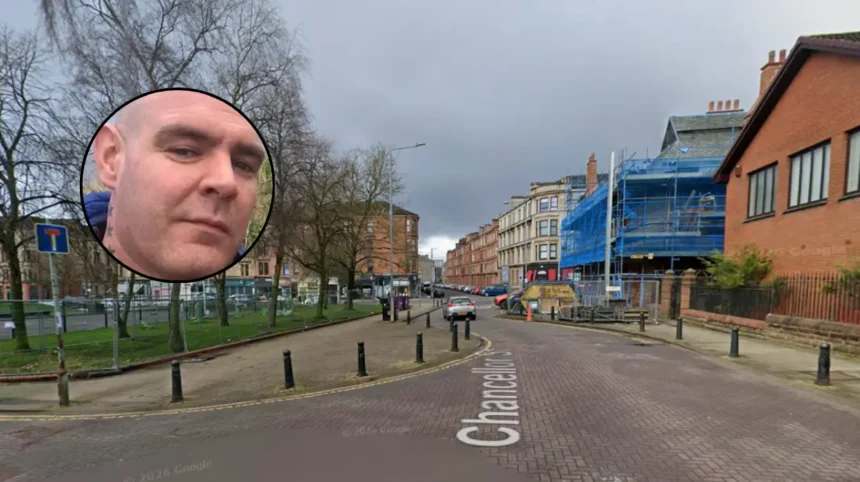
- The Victims: Paul Lafferty, 50, and Gary Beaton, 54, were discovered with fatal stab wounds inside a flat on Chancellor Street in Partick on 16 August.
- Non-Suspicious Death: The 38-year-old suspect was found seriously injured at the Broomielaw beneath the bridge just 21 hours after the victims were discovered, with emergency services pronouncing him dead at the scene; his death is not being treated as suspicious.
- Extensive Enquiry: Code-named Operation Highbar, the investigation saw detectives visit more than 170 properties and collect over 4,000 hours of public and private CCTV footage.
- Official Findings: Police established that both victims knew each other and were attacked inside the property owned by Paul Lafferty. A formal report is being prepared for the Procurator Fiscal.
Glasgow (Glasgow Express) September 1, 2026 – A 38-year-old man who was discovered fatally injured underneath a city centre bridge in Glasgow would have been arrested in connection with the horrific double murder of two men in the West End, law enforcement authorities have officially confirmed.
The victims, identified as 50-year-old Paul Lafferty and 54-year-old Gary Beaton, were found with fatal stab wounds inside a flat situated on Chancellor Street in the Partick area around 4.40 pm on Sunday, 16 August. Emergency services rushed to the scene following initial reports, but both men were pronounced dead where they lay, prompting Police Scotland’s Major Investigation Team to initiate a high-profile double murder inquiry code-named Operation Highbar.
In a significant update released on Tuesday, 1 September, police revealed that just 21 hours after the victims were discovered, emergency services responded to reports of a man suffering severe injuries at the Broomielaw, directly beneath the George V Bridge spanning the River Clyde, at approximately 1.40 pm on Monday, 17 August. Medical personnel attended the scene immediately, but the 38-year-old individual died from his injuries.
Following intensive investigative work over two weeks, officers have formally linked the two incidents, stating that had the 38-year-old survived, he would have been formally arrested on suspicion of murdering both Mr Lafferty and Mr Beaton.
What Led Police to Identify the Deceased Suspect in the Partick Stabbing Probe?
As reported by STV News, detectives established during the preliminary stages of Operation Highbar that both victims were known to one another and were fatally stabbed inside the Chancellor Street flat, which was owned by Paul Lafferty.
A Police Scotland spokesperson confirmed that the death of the 38-year-old suspect at the Broomielaw is not being treated as suspicious by investigating officers.
In an official public statement quoted across national news outlets, Police Scotland declared:
“The death is not being treated as suspicious. Following extensive enquiries, officers have since established if this man was alive today, police would have sought to arrest him in connection with the murders of Paul Lafferty and Gary Beaton in Glasgow.”
The force added that while a primary suspect has been identified, the wider investigation into the precise circumstances surrounding all three deaths remains open, and a full, formal report regarding the sequence of events will be submitted to the Procurator Fiscal.
How Did Operation Highbar Uncover the Events Surrounding Chancellor Street?
The double murder investigation saw an extraordinary deployment of national police resources across the West End and central corridor of the city.
As detailed by crime reporting in The Independent, lead investigator Detective Superintendent Cheryl Kelly of Police Scotland’s Major Investigation Team explained the massive scale of the police operation in the days following the initial discovery. She stated that
“this is a very difficult time for the families of both Paul and Gary, and they continue to be supported by specialist officers,”
noting that dedicated teams worked around the clock exploring complex forensic opportunities and cross-referencing movement patterns across Glasgow.
Detective Superintendent Kelly revealed that officers conducted extensive door-to-door enquiries, visiting more than 170 individual properties surrounding Chancellor Street. Furthermore, specialist officers seized and reviewed in excess of 4,000 hours of public and private CCTV footage.
This painstaking digital review allowed detectives to trace the timelines of both victims and map the movements of the suspect leading up to the incident at the George V Bridge.
Superintendent Craig Brady, of the Greater Glasgow Division, acknowledged the severe distress caused to the local community in Partick, stating:
“My thoughts remain with the family and friends of Paul and Gary. This was a shocking incident for the Partick community, and I understand there will be concerns for those living in the area.”
He assured members of the public that high-visibility uniformed patrols were maintained throughout the district to offer community reassurance while forensics teams scoured the crime scene.
Background of the Particular Development
The sudden double homicide on Chancellor Street sent shockwaves through Partick, a traditionally vibrant residential and tenement district in Glasgow’s West End. When officers first responded to calls at 4.40 pm on 16 August, the residential street was quickly cordoned off, bringing forensic teams and major incident command units to the neighbourhood for days.
Initial public fear was heightened due to the unknown whereabouts of the perpetrator, leading Police Scotland to set up a dedicated Major Incident Public Portal (MIPP) to collect anonymous tips, dashcam footage, and CCTV submissions from residents.
Behind the scenes, however, detectives were already investigating the discovery of the seriously injured 38-year-old man under the George V Bridge on 17 August.
The George V Bridge, which sits approximately two miles east of Chancellor Street in central Glasgow, crosses the River Clyde near the Broomielaw. When emergency services were called to the riverside on Monday afternoon, the identity of the man was established, but the physical and forensic links tying him directly to the crime scene in Partick required two weeks of exhaustive analysis, forensic evaluation, and CCTV mapping before Police Scotland could formally announce that the deceased suspect was indeed the individual sought for the double murder.
Prediction: How This Development Can Affect the Local Community and Public Perception
The formal identification and closure regarding the primary suspect in this case will have a direct and immediate impact on the local community in Partick, as well as the families involved and the wider Glasgow public.
- Relief of Immediate Security Concerns: For the residents of Partick and the surrounding West End, the police confirmation that the sole suspect is dead eliminates the looming fear of an active, unidentified killer roaming the streets. This closure will allow the heightened police presence and high-visibility patrols in Chancellor Street to wind down, restoring a sense of physical safety to the neighbourhood.
- Closure vs. Unanswered Questions for the Families: While the families of Paul Lafferty and Gary Beaton now have clarity regarding who committed the violent act, the death of the suspect means there will be no criminal trial. This deprives the bereaved families of the opportunity to hear a judicial cross-examination or receive a direct explanation of the motives behind the tragic killings, potentially leaving long-term psychological distress and unanswered questions.
- Impact on Legal and Judicial Processes: Because the suspect is deceased, legal proceedings will transition entirely from a criminal prosecution to a administrative review handled by the Crown Office and Procurator Fiscal Service. A Fatal Accident Inquiry (FAI) or formal fiscal investigation will likely be required to officially review the suspect’s cause of death and the timeline of events, placing a temporary administrative burden on municipal and legal authorities in Glasgow to ensure all evidence is archived correctly without a trial verdict.