Key Points
- Celtic first-team player Donovan has spoken publicly about his personal connection with the club’s ultras group.
- The footballer revealed that several of his close personal friends are active members within Celtic’s Bhoys section at Parkhead.
- Donovan routinely identifies and interacts with his friends in the stands while competing during home fixtures.
- The player described feeling strong support from the fans, viewing them as on-field comrades during matches.
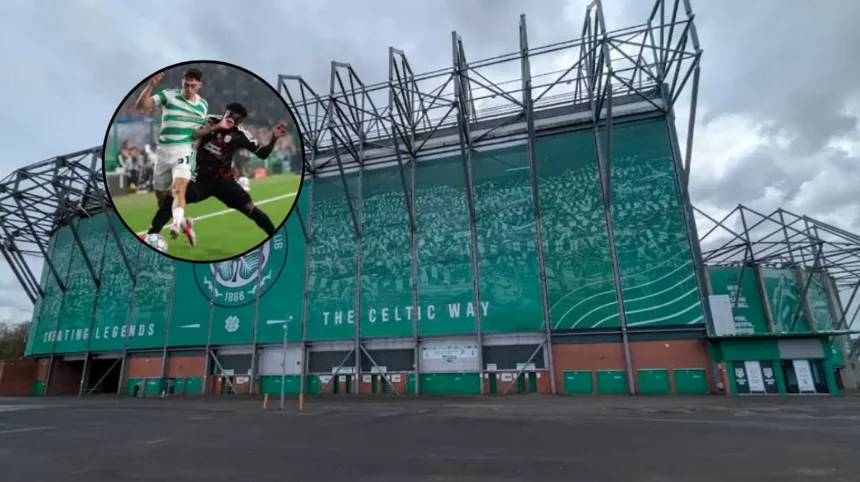
Glasgow (Glasgow Express) August 22, 2026 — Celtic first-team player Donovan has opened up regarding his close personal ties to the club’s active supporter groups, revealing that several of his personal friends stand directly within the ultras sections during matches at Parkhead. The player explained that competing in front of the home crowd carries a personal resonance due to the presence of his friends amongst the most vocal section of the Celtic support, known as the Bhoys.
What did Donovan reveal about his connection to the Celtic ultras?
Speaking about his experience playing at Parkhead, Donovan confirmed that his link to the crowd goes beyond standard supporter backing. The player stated that he regularly spots his personal friends standing within Celtic’s Bhoys ultras group while he is on the pitch. According to the player, having long-standing acquaintances in the stands gives him a unique vantage point during home matches, creating a direct bridge between the dressing room and the terraces.
Donovan noted that the vocal backing provided by the section serves as a direct morale boost during games. He explained that recognizing familiar faces among the active support reinforces his connection to the club’s core fan base, framing the relationship as one of mutual backing between the players on the park and the diehard supporters in the stands.
How do the Bhoys ultras support their on-field comrade?
The relationship between the playing squad and the active fan groups at Parkhead remains a focal point during matchdays. Donovan described the supporters in the Bhoys section as on-field comrades, emphasizing that their constant backing provides a tangible energy to the team during competitive fixtures.
By regularly acknowledging his friends and the wider section during matches, Donovan highlighted how the intensity generated in the ultras corner directly translates to the atmosphere experienced by the players on the pitch. The mutual recognition between the player and his friends in the section reflects a shared passion for the team’s performance and results.
Background of the Celtic ultras section development
The active fan movement at Celtic, which includes groups such as the Bhoys and the Green Brigade, has developed over several decades to become a central feature of the matchday environment at Parkhead. Located in specific sections of the stadium, these groups organize displays, non-stop vocal support, and visual banners to encourage the team.
While the club management and footballing authorities have occasionally faced friction with organized fan groups over specific displays or matchday conduct, the ultras remain an integral component of the atmosphere at Celtic Park. Players frequently reference the impact of the active support, with Donovan’s personal connections illustrating a direct human link between the squad and the organized fan base.
Prediction: How will this development affect Celtic supporters and matchday dynamics?
Donovan’s public comments detailing his personal link with members of the Bhoys section are likely to further strengthen the rapport between the active fan groups and the current Celtic playing squad. For the general Celtic fanbase and the ultras in particular, seeing a first-team player explicitly validate their presence and view them as comrades on the pitch reinforces their sense of identity and importance within the stadium structure.
Moving forward, this strong connection may lead to increased vocal backing for Donovan specifically, while setting a precedent for how modern players interact with organised supporter groups. For the wider footballing audience, it demonstrates how personal relationships off the pitch can blend into matchday performances, potentially encouraging stronger integration between professional players and local fan communities across Scottish football.