Glasgow is the largest city in Scotland, with a population of 650,300 residents within the Glasgow City council area as of mid-2024 data from the National Records of Scotland. Despite the city’s global reputation for friendliness—often encapsulated by the local marketing slogan “People Make Glasgow”—structural realities of urban relocation present distinct friction points. Academic studies on social integration, such as research published by urban economists Phil Kearns and Alison Whitley, highlight that newcomers frequently encounter difficulties breaking into entrenched neighborhood networks.
The historical continuity of Glasgow’s neighborhoods means that many residents live near extended family and childhood friends throughout their adult lives. Consequently, local social capital is dense but closed. Outsiders moving from other parts of the United Kingdom or international locations often lack the institutional touchpoints—such as attendance at local secondary schools like Hyndland Secondary or Shawlands Academy, or regional universities like the University of Glasgow and the University of Strathclyde—that form the baseline of native social circles.
Furthermore, demographic shifts compound these challenges. According to the Scottish Household Survey, rates of reported loneliness in urban Scottish centers consistently hover above twenty percent, disproportionately impacting working-age migrants and young professionals moving independently. The macro-level context reveals a city undergoing rapid population growth driven by net migration, yet municipal infrastructure and social venues often fail to automatically bridge the gap between indigenous populations and mobile outsiders. Navigating this environment requires understanding specific linguistic barriers, spatial segregation patterns, and structured community mechanisms.
How Do Cultural and Linguistic Barriers Impact Social Integration in Glasgow?
Language barriers in Glasgow stem primarily from dense local dialects, rapid speech cadences, and distinct Scots vocabulary like “wee,” “bonnie,” or “outwith,” which complicate conversational fluency and delay the establishment of rapport for non-native English speakers.
While English is the primary language spoken across Glasgow, the linguistic reality includes regional variations of Scots and Glaswegian slang known locally as “Glasgow Patter.” For international outsiders and internal migrants from southern England, the phonetic shifts and idiomatic phrasing create a cognitive load during initial social interactions. Research into functional integration factors conducted among migrant cohorts in Glasgow demonstrates that English language proficiency directly dictates the speed of social reliance, trust building, and community integration.
Beyond lexicon, conversational style in Glasgow relies heavily on self-deprecating humor, quick banter (“slagging”), and directness. Outsiders frequently misinterpret this robust banter as hostility or unfriendliness. Sociolinguistic assessments indicate that local humor functions as a primary social gatekeeping mechanism; individuals who fail to respond with reciprocal wit find themselves excluded from deeper social circles.
Statistically, Glasgow hosts the most ethnically diverse population in Scotland, with 19 percent of residents belonging to an ethnic minority group as of the 2022 census data. This diversity has fostered multicultural hubs, yet systemic integration gaps persist. Migrants frequently report that linguistic confidence is a prerequisite for entering local workplaces, neighborhood associations, and recreational clubs. Without mastery of local communicative norms, outsiders experience prolonged isolation, restricting their social networks to other expatriates rather than integrating into the wider civic fabric of the city.
Explore More Area Guide
Glasgow Tenement Flats: What to Know Before Moving In
How Long Does NHS GP Registration Take? Glasgow 2026
What Role Do Neighborhoods and Geography Play in Meeting People in Glasgow?
Geographic segregation and the socio-economic status of residential areas directly dictate the availability of social infrastructure, community groups, and safe public spaces necessary for organic relationship building among newcomers.
Glasgow is divided into distinct administrative and historic sectors, including the West End, the Southside, the East End, and the North. Each area offers vastly different socioeconomic environments that influence social cohesion. Studies on urban regeneration indicate that outsiders—particularly refugees, asylum seekers, and low-income economic migrants—are frequently housed in specific regeneration zones. These zones historically exhibit lower baseline social integration metrics compared to affluent commercial districts.
For example, neighborhoods like Hillhead and Partick in the West End feature high population turnovers, dense student concentrations, and numerous cafes, libraries, and community hubs that facilitate casual interactions. Conversely, peripheral housing estates or heavily deprived data zones often lack commercial social venues, public transit connectivity, and civic centers. The Scottish Index of Multiple Deprivation identifies that historical spatial inequalities limit the mobility of residents, restricting the geographical range within which outsiders build social ties.
When newcomers settle in areas with high residential stability, neighbors are less inclined to interact with transient or newly arrived inhabitants. Conversely, vibrant gentrifying districts like Govanhill or Finnieston provide higher densities of independent arts venues, community gardens, and co-working spaces. These physical environments act as catalysts for spontaneous encounters, proving that postal code selection is a decisive variable in overcoming isolation during the initial months of relocation.
Which Local Institutions and Activities Offer the Best Pathways to Friendship?
Structured social pathways in Glasgow require participation in organized interest groups, such as amateur sports clubs, volunteering programs, and university-affiliated continuing education courses that bypass traditional barriers to entry.
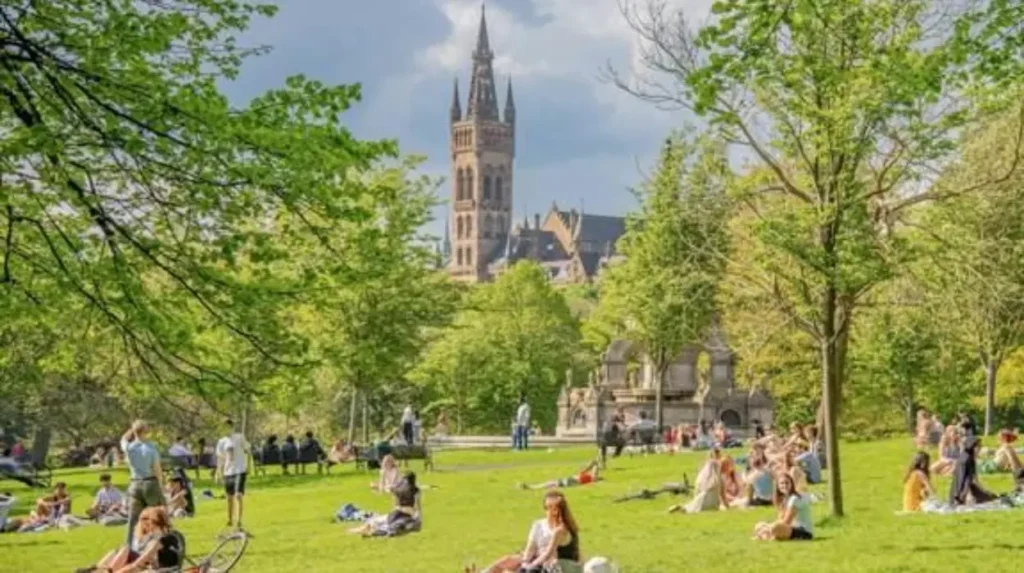
Because spontaneous street-level socialization is rare outside of licensed premises like pubs and music venues, newcomers must utilize formal organizational frameworks. Glasgow City Council oversees numerous community facilities, including libraries, sports complexes like the Emirates Arena, and public parks such as Kelvingrove Park and Queen’s Park, which host structured group activities.
Participation in team sports represents one of the most reliable mechanisms for integration. Organizations such as the Glasgow FrontRunners, local football leagues, and hillwalking clubs create recurring, goal-oriented contact hours that accelerate bonding. Similarly, volunteering with registered charities—such as the Glasgow Compassionate City initiative or local food banks—places outsiders alongside civic-minded locals, neutralizing cultural differences through shared labor.
Adult education centers and creative workshops also serve as vital social infrastructure. Enrolling in evening classes run by institutions like Kelvin College or community art spaces provides a predictable weekly forum for interaction. Research confirms that repeated, low-stakes interactions over a sustained duration are mathematically proven to transition acquaintances into stable friendships. By embedding oneself within structured routines, the outsider transcends the initial superficial phase of acquaintance and integrates into reliable local networks.
Is Glasgow a friendly city for newcomers?
Glaswegians are known for their humour, hospitality, and willingness to help strangers. However, many lifelong residents already have established friendships from school, family networks, and local communities. Newcomers usually build stronger connections by joining clubs, volunteering, attending events, and regularly visiting community spaces.