Key Points
- Call for Urgent Action: Prominent human rights lawyer Aamer Anwar has demanded that Glasgow City Council implement immediate, concrete measures to curb sexual violence and protect women in the city centre.
- Resource Allocation Criticism: Anwar questioned the local authority’s spending priorities, pointing out that £20 million was allocated for the redevelopment of George Square while basic safety infrastructure—such as alleyway lighting, CCTV, and night transport—remains underfunded.
- Rejection of Far-Right Patrols: Speakers at a press conference firmly rejected vigilante night patrols, asserting that far-right groups use women’s safety as a pretext to target innocent individuals.
- Sharply Rising Sex Crime Statistics: Freedom of Information data from Police Scotland shows that while overall serious violent crime in Glasgow city centre fell between 2000 and 2025, recorded rapes and sexual assaults surged from 36 to 164 incidents over the same period.
- Council and Political Responses: Glasgow City Council highlighted ongoing 24/7 CCTV recruitment and private lane ownership challenges, while Green MSP Holly Bruce called for expanded night bus provision and female empowerment.
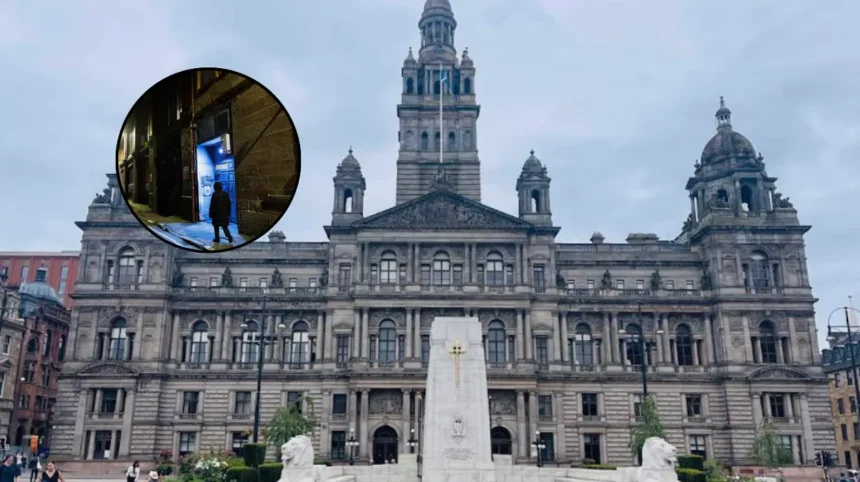
Glasgow (Glasgow Express) August 6, 2026 – As reported by journalist Rose Kendall of The Herald, Mr Anwar addressed a press conference held in response to recent far-right violence in Glasgow. During the briefing, the high-profile solicitor argued that the council had failed to invest in fundamental infrastructure—such as adequate alleyway lighting, comprehensive security cameras, gated lanes, and free night-time transport—despite securing £20 million for the multi-phase redevelopment of George Square.
- Key Points
- What Specific Infrastructure Failures Did Aamer Anwar Highlight?
- How Have Far-Right Night Patrols Impacted the Safety Debate in Glasgow?
- What Do Police Scotland Data Reveal About City Centre Crime Rates?
- How Have Political Leaders and Support Organisations Responded?
- What Solutions Did Green MSP Holly Bruce Propose?
- How Did Glasgow City Council Defend Its Current Safety Strategy?
- What Broader Insights Were Shared by Women’s Charity Advocates?
- What Is the Background Behind the Calls for Action?
- How Will This Development Affect Women, Local Business, and Public Governance in Glasgow?
What Specific Infrastructure Failures Did Aamer Anwar Highlight?
As reported by Rose Kendall of The Herald, Mr Anwar challenged council leaders over their budget decisions and the lack of basic physical precautions across the city centre. Speaking to assembled media representatives, Mr Anwar stated:
“Put simply, if you can spend £20 million on George Square, where is the lighting for alleyways in the city centre? Where is the free night time transport for women? Where is the deploying of night street wardens? Where are the gates in alleyways? Where are the street cameras for each city centre alleyway?”
Mr Anwar added that these are “simple, concrete steps for starters to protect women that other cities have taken,” describing it as “unacceptable that on a weekly basis women are being sexually assaulted and raped after a night out or returning home.”
How Have Far-Right Night Patrols Impacted the Safety Debate in Glasgow?
As documented in the coverage by Rose Kendall of The Herald, the press conference was initially convened to address a recent surge in far-right activity and civil disorder in Glasgow. Over the past year, self-styled night patrol groups have emerged in the city, claiming to monitor streets to protect local women and children.
However, as reported by journalist Rose Kendall of The Herald, Mr Anwar and fellow campaigners rejected that narrative entirely. Speakers at the conference stated that these vigilante groups operate “under the pretence of protecting women from sexual violence” while actually “targeting innocent people.”
While condemning vigilante patrols, Mr Anwar emphasized that the underlying lack of safety in the city centre remains a genuine concern that the local authority must address through formal, democratic channels rather than leaving a void for far-right groups to exploit.
What Do Police Scotland Data Reveal About City Centre Crime Rates?
As reported by Rose Kendall of The Herald, official Police Scotland figures obtained under Freedom of Information legislation reveal a complex contrast in crime trends within the G1 and G2 postcode areas covering Glasgow city centre:
- Overall Violent Crime Decline: Between the year 2000 and 2025, the total number of recorded violent and serious crimes—including attempted murder, robbery, serious assault, rape, and sexual assault—decreased from 494 to 295.
- Reduction Driven by Assaults: This overall downward trend was driven almost exclusively by steep falls in incidents of robbery and serious physical assault.
- Significant Rise in Sex Offenses: Conversely, recorded rape and sexual assault offences moved sharply in the opposite direction. Combined sexual offences rose from 36 recorded incidents in 2000 to 164 recorded incidents in 2025.
How Have Political Leaders and Support Organisations Responded?
What Solutions Did Green MSP Holly Bruce Propose?
As reported by Rose Kendall of The Herald, Glasgow Southside Green MSP Holly Bruce voiced support for practical safety measures, emphasizing night bus availability, upgraded street illumination, and visible community presence. Speaking to The Herald, MSP Holly Bruce stated:
“We need to empower women to utilise our city centre, not see them as protected people. They should be able to be mobile within their own city and should be able to do that freely.”
How Did Glasgow City Council Defend Its Current Safety Strategy?
As detailed by Rose Kendall of The Herald, a spokesperson for Glasgow City Council explained that the council maintains a close working partnership with Police Scotland to ensure security across the city centre. Addressing specific criticisms regarding CCTV and private alleyways, the council spokesperson stated:
“We are currently recruiting additional staff that will allow public space CCTV to be monitored 24 hours per day. City centre lanes are almost exclusively privately owned and any new infrastructure intended to improve safety and security, such as gates, lighting or CCTV, would require the support of owners. We are ready to work with owners if they come forward with any proposal to improve safety measures along these lanes.”
What Broader Insights Were Shared by Women’s Charity Advocates?
As reported by Rose Kendall of The Herald, a representative from a local women’s support charity highlighted that public street violence is only one dimension of a wider systemic issue. The spokesperson noted that nine out of ten women supported by their service daily are abused by someone known to them. Additionally, the representative pointed out that incidents of sexual violence spike both when men are frustrated by sports losses and when celebrating victories.
The charity spokesperson concluded:
“We don’t want to keep on coming up with new ways to keep ourselves safe, whether that’s at home, at work, at school, in hospitals, or in the city centre streets. So please, educate and challenge your sons, your friends.”
What Is the Background Behind the Calls for Action?
The debate over city centre safety in Glasgow comes amidst broader discussions surrounding public expenditure, urban renewal, and night-time economy safety across Scotland. Over recent years, Glasgow City Council has committed significant capital funding toward major urban infrastructure projects, including the £20 million public realm transformation of George Square and surrounding avenues.
Concurrently, public concern regarding women’s safety has grown, influenced by high-profile national campaigns calling for enhanced public transport options after midnight, improved street lighting, and dedicated street wardens. In response to public anxiety, informal self-styled patrol groups emerged in parts of the city centre. However, civil rights advocates, legal professionals, and local government officials have consistently expressed concern that unaccredited street patrols can intimidate residents and exacerbate tension.
Statistically, while broader violent crime rates in urban centres have dropped following police enforcement strategies targeting street fighting and weapon possession over the last two decades, reporting and recording of sexual offences have risen substantially across Scotland, putting greater focus on preventive local infrastructure.
Explore More Glasgow Council News
Glasgow City Council to Sell Five Municipal Properties, Glasgow 2026
Glasgow Council Leader Susan Aitken Prepares to Step Down in Glasgow 2026
How Will This Development Affect Women, Local Business, and Public Governance in Glasgow?
This development directly impacts several key stakeholders across Glasgow:
- Female Residents and Night-time Visitors: Immediate action by the council—such as 24/7 CCTV monitoring, potential alleyway gating in partnership with private landowners, and improved lighting—would directly enhance physical safety and mobility for women navigating the city centre at night.
- Local Governance and Council Budgeting: The scrutiny from legal figures such as Aamer Anwar and MSPs may force Glasgow City Council to re-evaluate capital spending allocations, potentially directing additional funding toward night-time transport subsidies, street wardens, and lighting grants for private lane owners.
- The Night-time Economy and Local Businesses: Safer streets and reliable late-night transport are vital for Glasgow’s hospitality sector. Addressing safety concerns effectively could increase footfall for night-time venues while reducing the presence of unofficial patrol groups that business owners fear might deter patrons.
- Community Cohesion and Policing: By pressing the council and Police Scotland for formal safety measures, public officials aim to ensure street safety remains under accountable civic authority, preventing extremist or vigilante factions from using public safety as a pretext for community division.
To gain a broader perspective on Aamer Anwar’s long-standing civil rights advocacy and legal campaigning in Scotland, watch this footage detailing his early activism: Aamer Anwar Glasgow University campaign video. This video highlights Anwar’s decades-long history of campaigning on human rights and social justice issues within Glasgow.