
Key Points:
- Thirty-one Glasgow secondary schools have been evaluated based on official Scottish Government educational attainment data.
- Five Glasgow secondary schools ranked within the top 50 across all of Scotland: Jordanhill School, Glasgow Gaelic School, Hyndland Secondary School, Notre Dame High School, and Hillhead High School.
- Four Glasgow schools—Jordanhill School, Glasgow Gaelic School, Hyndland Secondary School, and Notre Dame High School—have maintained positions within the top 50 in Scotland consistently over a five-year period.
- Jordanhill School claimed the number one ranking in Scotland for academic performance, with 91 per cent of leavers achieving five or more Highers (A–C) or equivalent qualifications.
- Twelve Glasgow City schools ranked within the top half of secondary schools nationwide, whilst three schools ranked in the bottom 50.
- Attainment performance is measured by leavers securing five Highers or equivalent qualifications at SCQF level 6 and above, alongside National 5 benchmarks.
- The Scottish Government data and resulting tables do not measure school quality, staff effort, funding disparities, or support for complex needs.
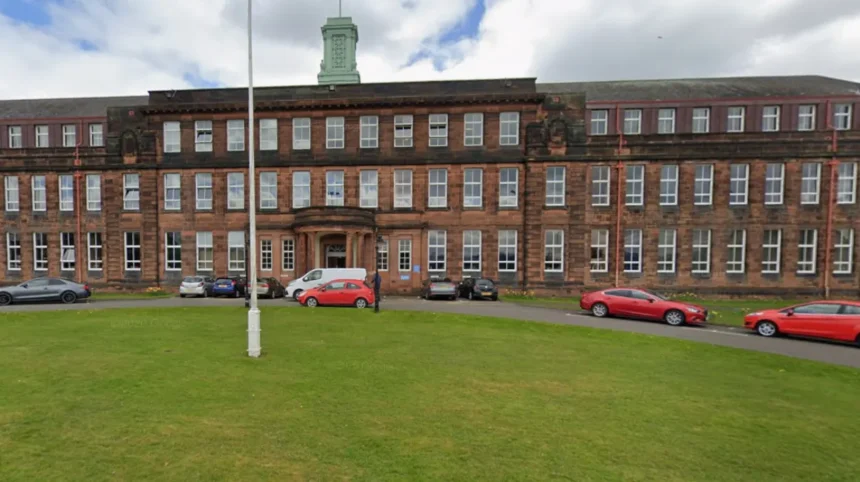
Glasgow (Glasgow Express) August 6, 2026 – Thirty-one Glasgow secondary schools have featured in the latest national academic performance figures, with five institutions securing positions within the top 50 secondary schools across Scotland. According to performance datasets published on the official Scottish Government website for the 2024–25 academic year, Jordanhill School in Glasgow’s West End captured the top rank nationwide, maintaining its position as Scotland’s highest-performing secondary school.
- Key Points:
- Which Secondary Schools in Glasgow Ranked Among Scotland’s Top Performers in 2026?
- How Is Academic Attainment Measured in Scottish Secondary Schools?
- Why Do Higher Examination Results Exclude Factors Like Deprivation and Funding?
- What Do Educational Experts Say About the Impact of Secondary School Rankings?
- Background of the 2026 Scottish Secondary School Performance Evaluation
- Predictions: How Will These Results Affect Parents, Students, and Education Authorities?
As reported by Glasgow Live, official figures published in the 2026 league tables evaluate leavers on the proportion achieving five Highers at grades A to C alongside five or more National 5 qualifications—a standard widely regarded as the Scottish Government’s “gold standard” of academic attainment. Jordanhill School recorded a 91 per cent leaver success rate against this benchmark, placing the grant-maintained institution comfortably ahead of all state and council-funded secondary schools in Scotland.
Which Secondary Schools in Glasgow Ranked Among Scotland’s Top Performers in 2026?
According to data analysis published by DataMap Scotland, 31 secondary schools within Glasgow City were evaluated against a total dataset of 355 secondary schools across Scotland. Five Glasgow institutions achieved national top-50 status:
- Jordanhill School (Ranked 1st in Scotland)
- Glasgow Gaelic School (Sgoil Ghàidhlig Ghlaschu)
- Hyndland Secondary School
- Notre Dame High School
- Hillhead High School
As reported by DataMap Scotland, four of these institutions—Jordanhill School, Glasgow Gaelic School, Hyndland Secondary School, and Notre Dame High School—have continually retained top-50 standings over the past five consecutive years.
In total, 12 Glasgow City secondary schools performed in the top half of Scotland’s national rankings. Conversely, three Glasgow secondary schools placed within the bottom 50 state secondary schools nationwide.
The table below outlines performance metrics recorded for Glasgow’s top-tier institutions:
| School Name | Local Authority / Funding | 5+ Highers (A–C) Leaver Benchmark | National Rank Context |
| Jordanhill School | Grant-Maintained (Direct Government) | 91% | #1 in Scotland |
| Glasgow Gaelic School | Glasgow City Council | ~61% | Top 50 in Scotland |
| Notre Dame High School | Glasgow City Council | ~60% | Top 50 in Scotland |
| Hillhead High School | Glasgow City Council | ~57% | Top 50 in Scotland |
| Hyndland Secondary School | Glasgow City Council | ~61% | Top 50 in Scotland |
How Is Academic Attainment Measured in Scottish Secondary Schools?
As documented by the Scottish Government, leaver attainment data measures the proportion of pupils achieving specific qualifications before leaving secondary education.
Throughout the official coverage, the term “Highers” encompasses both traditional Higher awards and equivalent qualifications evaluated at Scottish Credit and Qualifications Framework (SCQF) level 6 or above, such as Skills for Work Higher awards. Leavers achieving five or more Highers at grades A to C, in conjunction with five National 5 passes, form the primary benchmark for measuring upper-secondary performance.
As reported by the Daily Record, Jordanhill School’s 91 per cent benchmark score for 2026 represents a slight decline from 94 per cent in 2024, yet remains the highest score recorded across all 358 Scottish state secondaries. Historically, leavers from Jordanhill maintain high progression rates, with 85 to 90 per cent of pupils advancing directly into higher education at university.
Why Do Higher Examination Results Exclude Factors Like Deprivation and Funding?
The published achievement figures do not rank or reflect schools on a ‘best to worst’ basis. As detailed in official statements accompanying the dataset, raw examination tables fail to account for contextual operational factors across individual learning establishments, including:
- Specialist Educational Support: Assistance provided to children with complex additional learning needs.
- Staff Working Conditions and Quality: The teaching effort, working environments, and retention of educational staff.
- Student Experience: Broader pastoral care, extracurricular access, and wellbeing provisions.
- Local Authority Resourcing: Specific funding allocations provided by Glasgow City Council to individual schools.
- Socio-Economic Deprivation: Demographic challenges facing schools serving underprivileged areas within the local authority.
As reported by Glasgow Live, many of Scotland’s top-ranked secondary schools are located within affluent suburbs and local authorities with relatively low levels of socio-economic deprivation, such as East Renfrewshire and East Dunbartonshire. At top-performing council-run schools such as St Ninian’s High School in East Renfrewshire, the proportion of leavers from the most deprived Scottish Index of Multiple Deprivation (SIMD) quintiles is so small that the figure is officially undisclosed to protect privacy.
What Do Educational Experts Say About the Impact of Secondary School Rankings?
Addressing the public perception of school attainment data, Professor Lindsay Paterson, Emeritus Professor of Education Policy at the University of Edinburgh, outlined how parents interpret league tables compared to policymakers.
As cited by Professor Lindsay Paterson of the University of Edinburgh in reporting by Glasgow Live:
“Parents’ interest in league tables is quite different from the interest of politicians and the wider society. Parents very reasonably want to know if a school has a studious atmosphere among other desirable things. That is quite well reflected in the raw proportion of leavers who have high qualifications.”
Professor Paterson added that whilst raw qualification percentages offer parents a proxy measure of peer academic ethos, they do not provide an exhaustive evaluation of institutional value-added teaching.
Background of the 2026 Scottish Secondary School Performance Evaluation
The publication of the 2026 performance figures follows sustained national focus on post-pandemic academic recovery, qualification reform, and narrowing the attainment gap between leavers from the most and least deprived communities in Scotland.
Under the Scottish educational structure, local authority secondary schools rely on funding from regional councils—such as Glasgow City Council—which allocate resources based on population demographics, special educational needs, and local council tax revenues. In contrast, Jordanhill School operates under a unique grant-maintained status, receiving 100 per cent of its funding directly from the Scottish Government rather than through local authority channels.
Over the past decade, national leaver performance metrics have highlighted persistent geographical clustering. While Glasgow City contains notable high-performing institutions—led by its Gaelic medium secondary school and long-standing West End establishments—surrounding local authorities including East Renfrewshire (featuring St Ninian’s, Mearns Castle, and Williamwood) and East Dunbartonshire (featuring Boclair Academy and Bearsden Academy) continue to occupy high concentrations of top-ten national rankings.
Explore More Local Glasgow News
Man Found Injured on Carlton Court Dies in Hospital | Glasgow 2026
Glasgow affordable homes targets missed amid rising costs, 2026
Predictions: How Will These Results Affect Parents, Students, and Education Authorities?
The release of the latest Scottish Government attainment figures is anticipated to influence several operational and demographic areas across Glasgow:
- Heightened Catchment Area Housing Demand: Parental reliance on attainment tables to gauge school environment is likely to sustain high demand for housing within the catchment zones of consistently top-ranked schools, including Hyndland Secondary, Hillhead High, Notre Dame High, and Glasgow Gaelic School.
- Placement Request Pressures on Glasgow City Council: Glasgow City Council is expected to face an increased volume of placing requests from families residing outside specific catchment areas, placing administrative and capacity burdens on popular secondary schools.
- Scrutiny Over Funding Allocations: The contrast in attainment outcomes between schools in affluent catchment areas and those serving disadvantaged communities will intensify political debate regarding Glasgow City Council’s funding formula, driving calls for targeted interventions in lower-performing establishments.
- Focus on Comprehensive Evaluation Metrics: Educational bodies and teaching unions will continue urging parents and policymakers to look beyond raw Higher results, advocating for evaluation models that measure leaver positive destinations, vocational SCQF achievements, and socio-economic value-added progress.