Key Points
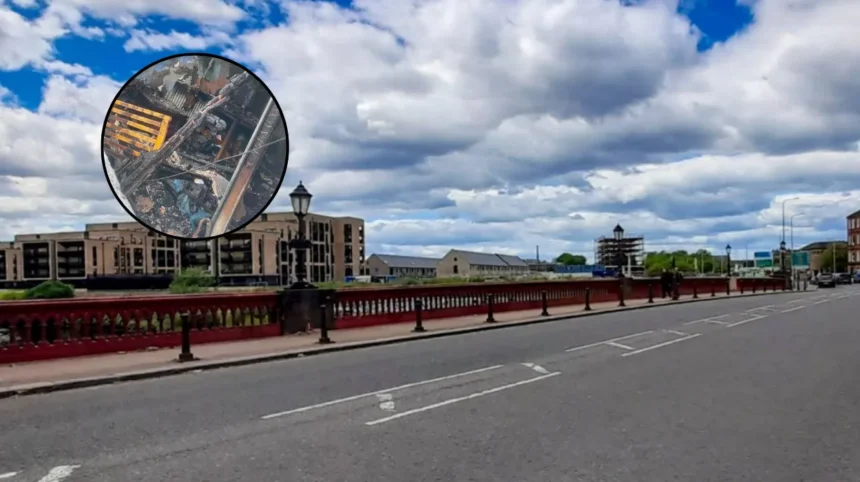
- Severe Residential Fire: A major structural blaze has completely destroyed a family home in the Athletes’ Village development in Dalmarnock, Glasgow, leaving a mother and her teenage son entirely homeless.
- Solar Panel Origin: Investigative statements from family members indicate that the fire broke out at approximately 3:00 pm on Wednesday, 15 June, originating from the solar photovoltaic (PV) panel installation on an adjacent neighbouring property before tearing through the adjoining residential structure.
- Complete Loss of Possessions: The resident, Jennifer, and her 13-year-old son, Noah, were unable to salvage any personal belongings from the property, escaping with only the clothes they were wearing to work and school.
- Emergency Response: The Scottish Fire and Rescue Service deployed multiple assets to combat the flames, including six fire appliances and an advanced high-reach aerial vehicle to control the structural roof fire.
- Condemned Property: Structural engineers and municipal housing authorities have officially condemned the affected property, leaving the house completely uninhabitable and requiring structural repairs projected to take up to a full year.
- Community Aid Mobilised: Family relatives have launched an emergency crowdfunding campaign to provide immediate financial relief, essential clothing, and basic toiletries while the local housing association seeks long-term alternative accommodation.
Glasgow (Glasgow Express) June 24, 2026 – A devastating residential fire, reportedly triggered by a malfunctioning solar panel system on an adjacent property, has completely destroyed a family home in Glasgow, leaving a local mother and her teenage son displaced. The accidental blaze erupted during the mid-afternoon hours within the historic Athletes’ Village development in Dalmarnock, structurally gutting the building’s roof and interior layout. Emergency services fought to bring the structural fire under control, but municipal housing authorities have since condemned the property, rendering it entirely unsafe for occupancy. The family has lost all physical possessions, escaping the disaster with nothing but their immediate work and school attire.
What Do We Know About the Timeline of the Blaze?
According to a detailed report published by reporter Jordan Shepherd of Glasgow Live, the fire originated at approximately 3:00 pm on Wednesday, 15 June.
The affected resident, Jennifer, an employee who has resided in the purpose-built residential estate since its completion, was present at her workplace when she received an emergency telephone call notifying her that her domestic property was heavily on fire.
As detailed by local media titles covering the incident, the fire didn’t start inside Jennifer’s house. As reported by television journalists at STV News, Leanne Lamont, a cousin of the displaced family, stated that
“the devastating blaze began around 3pm, and started when the solar panels on a neighbouring property caught fire.”
The flames rapidly intensified across the roofline of the three-storey residential block, bridging the structural gap and spreading directly into the home occupied by Jennifer and her 13-year-old son, Noah.
How Did the Scottish Fire and Rescue Service Respond?
To combat the fast-moving structural roof fire, the Scottish Fire and Rescue Service initiated an emergency deployment to the Dalmarnock site.
As confirmed in official operational logs reviewed by Glasgow Live, emergency dispatch teams deployed six independent fire appliances alongside a specialised high-reach aerial vehicle to address the worst-affected upper sections of the multi-storey residential building.
Firefighting crews faced significant technical challenges while containing the incident, as solar panel fires frequently involve live electrical components that remain energized under daylight conditions.
Despite the structural damage sustained by the modern housing units, emergency commanders confirmed that no civilian injuries or fatalities were recorded during the operation, as the neighbouring occupants successfully evacuated the area when smoke began venting from the roof tiles.
What Is the Extent of the Damage and Current Living Situation?
The aftermath of the fire has left the affected family in a severe state of financial and emotional hardship. The building has been formally declared structurally unstable, and the interior has been completely gutted by fire, smoke, and water ingress.
As reported by STV News, Leanne Lamont confirmed the absolute loss of the family’s material history, stating that:
“Sadly, there was nothing they were able to salvage from the property. The only belongings they have are the clothes they were wearing to work and school that day.”
Lamont added that the mother and son have lived in the high-profile development since it was first constructed, making the total loss of their long-term family residence “even more devastating.”
The current living arrangement remains highly temporary. The municipal housing authorities are actively coordinating with local social housing providers to source an appropriate alternative accommodation framework.
In the interim, Jennifer and Noah are residing with nearby relatives. Structural inspectors have projected that any comprehensive remediation, rebuilding, or repair work to the condemned structure will require a timeline extending up to a full calendar year. To address the immediate financial gap, a public GoFundMe campaign has been established by relatives to source basic essential clothing, school supplies, and everyday toiletries.
Background of the Athletes’ Village Development
The Athletes’ Village development, situated in the Dalmarnock district within Glasgow’s East End, was originally commissioned as a flagship infrastructure project for the 2014 Glasgow Commonwealth Games. Constructed by the City Legacy development consortium—which comprised prominent Scottish construction firms including Mactaggart & Mickel, CCG, Cruden, and WH Malcolm—the site was designed to temporarily house around 6,500 international athletes and officials before undergoing a scheduled conversion into a low-carbon, sustainable residential community.
Following the conclusion of the games, the site was converted into 703 homes, offering a mixture of private housing and social rented accommodation managed by regional housing associations.
The estate was widely lauded by architectural bodies and environmental agencies for its forward-thinking approach to sustainable urban planning. A core element of this eco-conscious design was the widespread installation of integrated renewable energy technologies.
Architectural documents and corporate case studies from the project’s roofing contractor, the Forster Group, confirm that the firm was selected by development partners to deliver an integrated solar photovoltaic (PV) roofing service to approximately one-third of the properties within the village.
The contractor successfully designed, installed, and commissioned specific in-roof and ballasted flat-roof PV systems across 225 individual homes.
To maintain clean aesthetics on the room-in-roof properties, the consortium opted out of standard internal string inverters, instead placing micro-inverters directly on the roof structure underneath the solar modules. While micro-inverters allow individual panels to operate independently, preventing a single failure from shutting down an entire solar array, the placement of micro-inverters and electrical cabling directly within the roof’s fabric introduces distinct maintenance and inspection requirements over long-term operations.
Future Prediction: How This Affects Sustainable Housing Residents
This structural fire in Dalmarnock is likely to catalyze immediate shifts in safety inspections, risk management, and insurance policies, directly impacting residents living in eco-friendly and social housing developments across the United Kingdom.
Residents occupying properties managed by social housing providers and local councils can anticipate a rapid implementation of mandatory, systemic safety audits for all roof-mounted electrical installations. Following a similar solar panel fire incident in Greenford, West London, investigated by The Independent, municipal authorities immediately initiated a comprehensive safety sweep of all local photovoltaic systems. Housing groups will likely face statutory pressure to enforce strict annual maintenance checks on micro-inverters, aging DC/AC isolation switches, and protective wiring looms to prevent thermal arcing.
Escalating Home Insurance Costs
The growing statistical link between older solar installations and complex structural roof fires will directly influence the insurance market for everyday homeowners. Actuaries are adjusting risk models to account for the unique operational hazards of micro-generation equipment, which cannot be easily deactivated during daylight hours.
As a result, residents with roof-mounted solar arrays may face higher annual premiums, stricter disclosure requirements regarding installer certifications, and potential policy exclusions if systems are not formally serviced by accredited engineers.
Structural Adjustments for Firefighting Services
The safety of residents will also be influenced by how emergency services adapt to fighting fires involving live electrical infrastructure. Organizations such as the Institution of Fire Engineers (IFE) have continuously issued warnings regarding the unique risks encountered when battling fires on properties equipped with solar PV technology.
As noted by industry specialist Jim Foran in technical briefings for Fire Safety Matters, poor-quality componentry, animal interference, or micro-cracks from falling debris can turn minor panel degradation into dangerous electrical arcs.
Because panels remain live whenever exposed to light, firefighting agencies are increasingly relying on specialized chemical blocking agents, such as liquid polymer tarpaulins, to de-energize roofs. For residents, this shift means that future emergency responses to solar-related incidents may involve highly specialized tactics designed to preserve life while isolating live micro-generation infrastructure.