Key Points
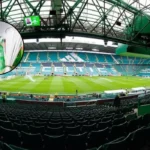
- Neutral Ground Advantage: Glasgow Warriors are hosting their United Rugby Championship (URC) semi-final against the Vodacom Bulls at Scottish Gas Murrayfield in Edinburgh rather than their usual home ground, Scotstoun Stadium.
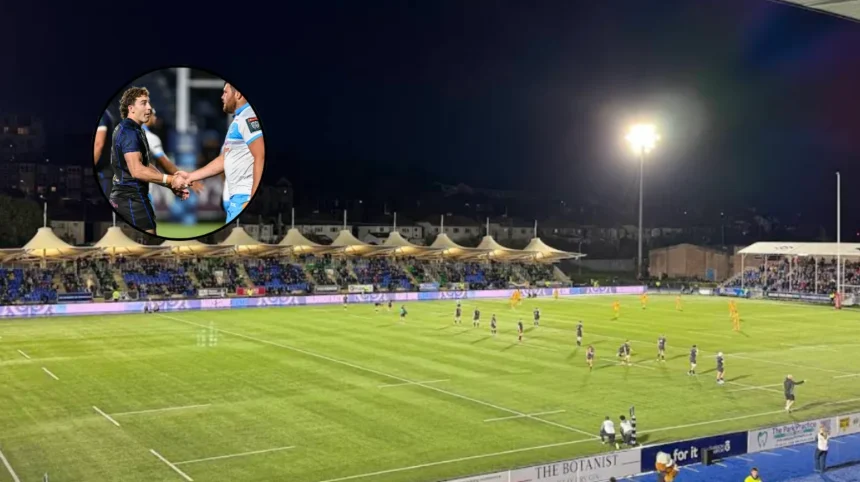
- Stadium Relocation Reason: Scotstoun Stadium is unavailable due to being taken over by organizers preparing the venue for the upcoming Glasgow 2026 Commonwealth Games.
- Coach’s Warning: Glasgow Warriors Head Coach Franco Smith has warned his squad that they have not relinquished home advantage, urging them to utilize their familiarity with the national stadium.
- Physical Challenge: Glasgow Attack Coach Nigel Carolan described the upcoming fixture as a fundamental “man test,” emphasizing that the Bulls bring an immense physical threat that must be matched.
- Injury Updates: Scotland centre Huw Jones has returned to training for Glasgow, whilst scrum-half George Horne remains in a race against time to recover from a hand injury.
- Historic Context: The match-up features significant history; Glasgow Warriors famously defeated the Bulls at Loftus Versfeld to secure the 2024 URC title, though the Bulls have an unbeaten record in semi-final fixtures.
Glasgow (Glasgow Express) June 4, 2026 – The crucial knockout fixture is scheduled to kick off at 14:30 local time (15:30 South African time) at the national rugby stadium in Edinburgh.
- Key Points
- How Does Franco Smith Plan to Use the Murrayfield Factor?
- What Tactical Challenges Do the Vodacom Bulls Present?
- Which Key Players and Selection Concerns Will Decide the Match?
- Background of the United Rugby Championship Play-Off Rivalry
- Prediction: How the Murrayfield Relocation Affects Regional Fans and Match Dynamics
As reported by rugby journalists across the United Kingdom and South Africa, Glasgow Warriors secured the right to a home semi-final after finishing at the top of the regular-season URC table and subsequently defeating Connacht 33-21 in their quarter-final clash.
However, the club cannot utilize Scotstoun Stadium in Glasgow because the venue has been formally handed over to Glasgow 2026 organizers to undergo necessary transformations ahead of this summer’s Commonwealth Games.
Consequently, the United Rugby Championship board confirmed that the match would be moved east to the larger grass surface of Murrayfield.
How Does Franco Smith Plan to Use the Murrayfield Factor?
Despite the change of scenery, the Glasgow camp remains adamant that their home advantage has not been compromised. As reported by the rugby writing staff at RugbyPass, Glasgow Warriors Head Coach Franco Smith stated that his squad must actively capitalize on the familiar international surroundings. Smith explained:
“We’re going to train at Scotstoun on Monday and Tuesday and then on Thursday we’ll have a training session at Murrayfield. So we’ve just obviously got to make that home advantage count where we can. I think recovery in this week is going to be very important, like it always is, but we’ve got one benefit – the team that we play will travel this week and we don’t. It is going to be my job to make sure that we take every benefit and every home advantage that we can.”
Smith also acknowledged the immense incentive of potentially playing the Grand Final at the same venue if they progress, though he remained strictly focused on the immediate hurdle. As recorded by RugbyPass, Smith added:
“What a privilege it would be. But, again, I want to, from the start of this week, give emphasis on getting across this hurdle. It would be fantastic. Imagine playing the final in Murrayfield. It will be just unbelievable. But, hopefully, that is the last word this week spoken about it.”
What Tactical Challenges Do the Vodacom Bulls Present?
The relocation to Murrayfield alters the tactical dynamics of the fixture significantly, particularly regarding the playing surface. Writing for SuperSport, rugby analyst Brenden Nel noted that the transition away from Scotstoun’s synthetic pitch could alleviate a psychological barrier for the South African visitors. Nel stated that South African sides traditionally harbor a “mental block” when competing on artificial pitches, where fast-paced, momentum-driven teams are difficult to contain.
However, Nel countered that because the Glasgow Warriors roster comprises the core of the Scotland national team, Murrayfield operates effectively as a secondary home and the “national heartbeat” for the squad, tempering any direct advantage the Bulls might hope to gain from a grass surface.
The physical nature of the confrontational South African style remains the primary concern for the Glasgow coaching staff. As reported by SA Rugby Magazine, Glasgow Warriors Attack Coach Nigel Carolan explicitly outlined the nature of the challenge ahead. Carolan stated:
“Plan A when you play the Bulls is it’s going to be a man test and there’s no shirking that. If you don’t match it you’re in trouble. They bring a tremendous amount of physicality. We’ve definitely matched them in that department and then it allows us to play the game we know we can.”
Carolan further emphasized the importance of maintaining composure amid the high stakes of a knockout match on neutral territory, adding:
“It’s been a real squad effort right from the start of the season, and there have been a lot of players used. So it’s on us now to cash in on this massive opportunity, and it’s a great position against really tough opposition. It’s what you want in a semifinal. We’ve just got to keep our feet on the ground. It’s about not getting ahead of ourselves. I think it’s very important that we don’t play the occasion. It is foreign territory for us to have a home semifinal – when we won the URC, we had to do it the hard way. That does keep you on edge.”
Which Key Players and Selection Concerns Will Decide the Match?
Personnel availability and individual form are poised to heavily influence the outcome of Saturday’s semi-final. According to reporting from SA Rugby Magazine, Glasgow received a significant squad boost with Scotland international centre Huw Jones returning to full training.
However, uncertainty persists regarding first-choice scrum-half George Horne, who is undergoing intensive assessment for a hand injury sustained during the quarter-final victory over Connacht.
The scrum-half battle projects as a critical axis for the match. From the South African perspective, Brenden Nel of SuperSport highlighted Bulls scrum-half Embrose Papier as a primary threat, describing the player as the exact “strike force” the Bulls required this season.
Papier enters the fixture following a man-of-the-match performance against Munster and currently ranks as the competition’s second-highest try-scorer this season with 11 scores.
Furthermore, goal-kicking accuracy is expected to dictate scoreboard pressure. Data compiled by SuperSport highlights that George Horne holds an 82% kicking success rate this season, which was instrumental in guiding Glasgow to the top of the regular-season standings.
Conversely, the Bulls rely on the experienced boot of Johan Goosen, who enters the semi-final on the back of a six-game winning streak.
Background of the United Rugby Championship Play-Off Rivalry
The fixture between the Glasgow Warriors and the Vodacom Bulls has quickly developed into one of the most compelling cross-hemisphere rivalries in modern professional rugby union.
The modern foundations of this competitive friction were firmly established during the 2023/24 URC season. In that campaign, Franco Smith led his Glasgow Warriors squad to Pretoria for the Grand Final at Loftus Versfeld, where they executed a major sporting upset by defeating Jake White’s Bulls on their own turf to claim the United Rugby Championship title.
Since that historic final, the encounters between the two clubs have remained exceptionally tight. In the 2024/25 season, the Bulls exacted a measure of revenge by securing a rare away victory against Glasgow at Scotstoun Stadium.
However, the current 2025/26 campaign has seen the pendulum swing back toward the Scottish outfit. Glasgow managed to secure narrow victories in both of their regular-season meetings against the Pretoria-based franchise, establishing themselves as a persistent “bogey team” for the South African side.
Statistically, the semi-final introduces a clash of historical milestones. The Vodacom Bulls maintain an unblemished competitive record in URC semi-finals, having progressed to the Grand Final on every occasion they have reached the final-four stage, including famous knockout victories over Leinster in Dublin. Meanwhile, Glasgow Warriors are bidding to become the first club in the history of the expanded United Rugby Championship format to capture two league titles.
Prediction: How the Murrayfield Relocation Affects Regional Fans and Match Dynamics
The relocation of this semi-final from the west coast to the east coast of Scotland introduces distinct logistical, financial, and psychological variables that will directly impact the regional rugby public and traveling supporters.
For the core Glasgow Warriors fan base, the relocation removes the distinct intimacy and intense acoustic advantage of Scotstoun Stadium.
A 7,000-capacity partisan crowd at Scotstoun creates a hostile environment for visiting southern hemisphere teams; moving the fixture to the 67,144-capacity Scottish Gas Murrayfield risks diluting that localized home atmosphere unless a massive regional migration occurs from the West to the East.
Logistically, thousands of Glasgow-based supporters face unexpected travel requirements along the M8 motorway corridor or via ScotRail services to Edinburgh on a high-demand weekend. This operational shift places an immediate financial and time burden on the local fan base, which could subtly suppress the raw volume of local support.
Conversely, for the neutral Scottish rugby public and Edinburgh-based fans, the choice of Murrayfield presents a highly accessible opportunity to witness elite knockout rugby, potentially expanding the overall crowd size well beyond what Scotstoun could accommodate.
For the Vodacom Bulls and their traveling South African contingent, the international venue represents a far more traditional, wide-open rugby environment than the narrow confines of Scotstoun. The transition to a high-quality grass surface accommodates the Bulls’ traditional tactical emphasis on set-piece dominance, territory kicking, and heavy collisions.
While Glasgow’s international players retain deep familiarity with Murrayfield through their autumn and Six Nations duties with Scotland, the neutral ground setting ultimately levels the environmental playing field, reducing the provincial disadvantages normally associated with an away semi-final in the northern hemisphere.