

Key Points
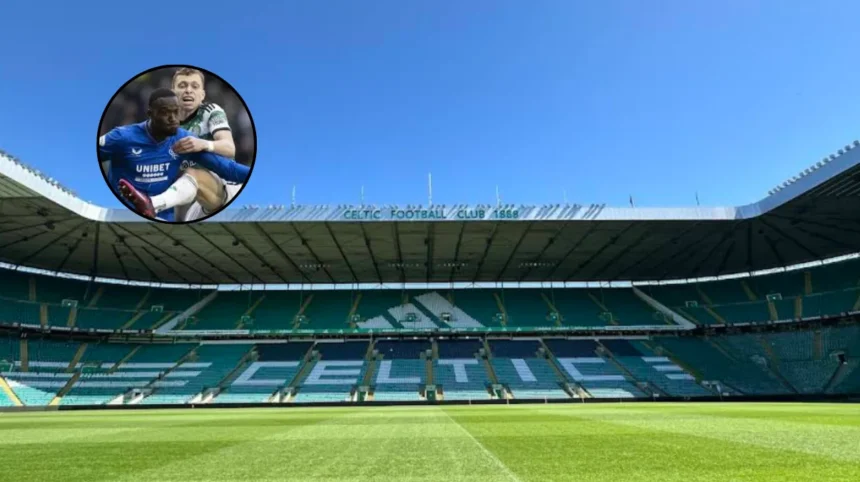
- Controversial Old Firm Incident Under Review: Celtic defender Alistair Johnston was cautioned with a yellow card in the 39th minute for a challenge on Rangers winger Mikey Moore during the Glasgow derby, sparking widespread public debate regarding a potential red card.
- Official Audio Released: The Scottish Football Association (SFA) published the complete audio and visual feed recorded between the on-field match officials and the Video Assistant Referee (VAR) center at Clydesdale House to clarify the decision-making process.
- Broadcast Clarification Provided: Sky Sports issued a formal statement correcting claims made during their ‘Ref Watch’ broadcast, confirming that John Beaton and the VAR team possessed all available camera angles during the live match rather than receiving them at half-time.
- Punditry Split on Severity: Former players and television pundits, including Michael Stewart and Kris Boyd, publically condemned the officiating, labeling the challenge a clear sending-off offense due to the high point of contact above the ankle.
- SFA Technical Support: SFA Head of Refereeing Willie Collum defended the on-field decision of referee Nick Walsh, characterising the challenge as “reckless” rather than “endangering the safety of an opponent,” thereby supporting the choice not to elevate the punishment to a direct red card.
Celtic FC (Glasgow Express) June 2, 2026 – A former FIFA referee has reacted to newly surfaced footage released by the Scottish Football Association (SFA) detailing the controversial VAR discussions that occurred during the recent Old Firm derby between Celtic and Rangers. The flashpoint involved Celtic defender Alistair Johnston, who received only a yellow card from on-field referee Nick Walsh following a heavy 39th-minute challenge on Rangers winger Mikey Moore. Despite intense pressure from the Rangers technical bench and various media pundits demanding a straight red card for serious foul play, newly published audio logs have exposed the exact rationale utilized by the match officials to maintain the lower sanction. The disclosure has reignited arguments over structural consistency within Scottish football officiating, prompting immediate commentary from refereeing experts and television broadcasters alike.
- Key Points
- Why Did VAR Choose Not to Recommend a Red Card for Alistair Johnston?
- How Have Refereeing Experts and Pundits Reacted to the SFA Footage?
- What Clarification Did Sky Sports Issue Regarding Technical Glitches?
- Background of the SFA VAR Transparency Initiative
- Prediction: How This Development Will Affect Scottish Football Audiences
- For Active Players on the Pitch
Why Did VAR Choose Not to Recommend a Red Card for Alistair Johnston?
As reported by the official audio transcripts released by the SFA, the VAR team led by John Beaton systematically assessed the contact points before confirming Walsh’s initial on-field assessment of a reckless yellow card. According to the recorded match dialogue, the VAR stated to the Assistant Video Assistant Referee (AVAR):
“Okay. The contact’s on the foot. The foot’s just over there, no other contact. Happy with that? Top of the foot.”
The AVAR subsequently replied: “I agree.”
The transcript further documents the VAR explaining the mechanics of the collision to justify why the threshold for a red card was not achieved. The VAR stated that:
“The attacker’s feet were seen to be down first. Then he’s come sideways; it’s angled across. The contact’s on the foot. It’s not high up. Happy with that. Okay, confirmed. Yellow card, reckless tackle, Celtic number two. Exactly as described, Nick. Exactly as described.”
The AVAR added a minor qualification during the live review process, stating that
“the contact is mainly on the top of the foot and maybe a very small glance above that.”
Because the on-field referee’s initial description of a reckless, low challenge matched the primary visual evidence seen in the replay room, Clydesdale House opted against summoning Walsh to the pitchside monitor for a formal review.
How Have Refereeing Experts and Pundits Reacted to the SFA Footage?
The handling of the incident has drawn sharp criticism from prominent football analysts who argue that the physical reality of the tackle contradicted the internal dialogue of the refereeing team.
Writing via his official account on X, formerly Twitter, football pundit Michael Stewart expressed severe dissatisfaction with the lack of VAR intervention. As reported by Stewart Wilson of The National, Stewart stated:
“A good many people feared VAR/officiating would have a huge part to play in the title race. Hopefully it isn’t decisive but deary me. How the VAR can look at the replays and not see a red card has occurred is wild. To hear some people say the follow through doesn’t matter is like going back 20 years.”
The sentiment was mirrored by former Rangers striker Kris Boyd during live television analysis. As reported by The National, Boyd was adamant that a red card should have been issued after analyzing alternative replay angles, stating “100 percent” when questioned if an official pitchside intervention was required.
Boyd further added: “When you see it like that there… He hits him above the ankle. It’s a red card all day long.” Fellow pundit James McFadden similarly conceded that Johnston was “very fortunate” to escape an early dismissal.
Conversely, the SFA’s Head of Refereeing, Willie Collum, defended the technical application of the laws of the game during the Scottish Football VAR Review Show. Speaking to host Gordon Duncan, Collum explained that the challenge lacked the core elements required to trigger a dismissal under IFAB rules. As reported by The Herald, Collum stated:
“We’re looking for excessive force. We’re looking for brutality. Ultimately, we’re looking for endangering the safety of an opponent. We don’t think it meets that criteria. We agree with the referee that it’s reckless. Also, the VAR check is reckless. There is contact more in the top of the foot with the heel here, but there’s no doubt—you can even hear the VAR talking about it at the end of the check—about glancing contact on the shin, not full studs but glancing contact with the studs.”
Collum emphasized that modern officiating must move away from the assumption that any contact above the ankle automatically equates to a red card. He introduced a concept recently highlighted by UEFA regarding “on-off contact,” distinguishing Johnston’s challenge from sustained, full-stud impacts that force an ankle to bend dangerously. Collum noted that while Johnston was initially airborne and lunging, his leg was bent upon arrival, and his final position was significantly lower than when he first entered the tackle.
What Clarification Did Sky Sports Issue Regarding Technical Glitches?
In the immediate aftermath of the match, speculation arose during Monday’s Ref Watch program suggesting that the VAR production team lacked access to all necessary camera angles during the live broadcast, potentially compromising the validity of the check.
The broadcaster subsequently retracted this theory by issuing an official public clarification across its media channels.
As reported by The Rangers Review, the formal statement from Sky Sports Scotland read:
“Sky Sports can clarify that all angles of Alistair Johnston’s tackle on Rangers’ Mikey Moore were available to VAR during Sunday’s Old Firm clash. It was suggested on Ref Watch that the VAR team, led by John Beaton, did not have the full range of angles available until half-time. However, the officials at Clydesdale House did in fact have all angles at their disposal. The decision was fully reviewed by the VAR team, who were satisfied that referee Nick Walsh’s decision to book Celtic defender Johnston was the correct outcome.”
This structural confirmation eliminated suspicions of equipment failure at Clydesdale House, cementing the fact that the decision to award a yellow card was based on full visual information rather than limited perspectives.
Background of the SFA VAR Transparency Initiative
The publication of this specific audio feed forms part of a broader transparency campaign enacted by the Scottish Football Association aimed at reducing public skepticism and clarifying high-profile officiating decisions.
Following systemic complaints from Scottish Premiership clubs regarding inconsistent interpretations of handball and serious foul play, the governing body committed to regular broadcasts of the Scottish Football VAR Review Show.
This initiative mimics structures utilized by the English Professional Game Match Officials Limited (PGMOL) to demystify the interaction between VAR hubs and on-field referees.
By releasing raw audio logs, the SFA intends to demonstrate that while decisions remain inherently subjective, the protocols governing VAR interventions are applied strictly according to international guidelines.
This framework mandates that a VAR can only overturn an on-field decision if a “clear and obvious error” has been identified, a benchmark that the SFA maintains was not achieved in Johnston’s tackle.
Prediction: How This Development Will Affect Scottish Football Audiences
The release of this footage and the subsequent defense of the decision by the SFA hierarchy will likely alter how Scottish football supporters, club managers, and players interact with officiating systems throughout future domestic campaigns.
Supporters and club executives will have to adjust to a highly technical interpretation of physical challenges. The explicit confirmation that “glancing contact” above the ankle is viewed as a cautionable, reckless action rather than an automatic red card establishes a firm precedent for upcoming disciplinary reviews.
Rangers head coach Danny Rohl, who held prolonged discussions with match officials following the match, alongside other top-flight managers, must re-evaluate their tactical expectations regarding VAR interventions. Teams can no longer rely on slow-motion replays showing high contact to guarantee a sending-off; instead, they must accept that the momentum, structural intent, and “on-off” nature of a challenge will dictate final rulings.
For Active Players on the Pitch
For the players, this development offers a clearer boundary regarding what constitutes an printable dismissal in the modern Scottish game. Defenders will understand that while lunging tackles remain high-risk, a bent leg and a low point of ultimate impact may safeguard them from direct red cards. Conversely, attacking players must recognize that VAR officials are instructed to look beyond simple physical contact to assess the underlying force and brutality of a challenge, meaning that minor, glancing impacts will rarely result in numerical advantages for their teams.