Key Points
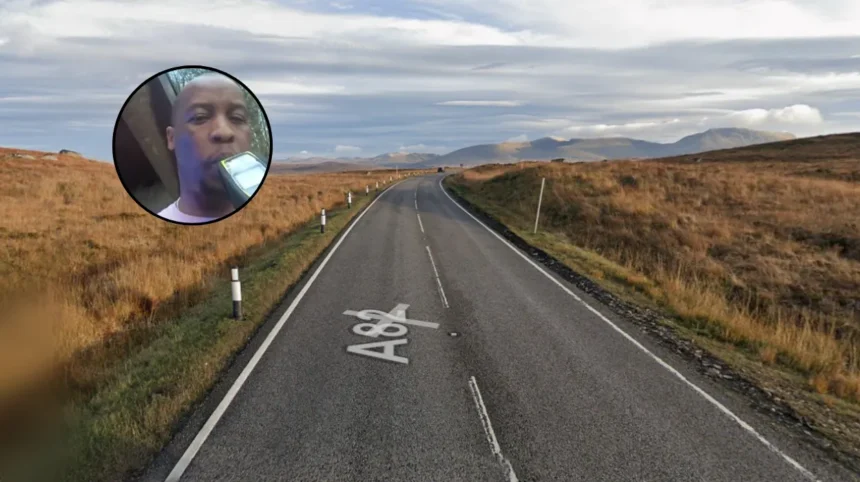
- A man is due in court after being caught driving on the A82 near Glasgow with 83 micrograms of alcohol in 100ml of breath — nearly four times Scotland’s legal limit of 22 micrograms.
- Police received multiple reports on Sunday, 31 May 2026, of a car travelling with a missing tyre near the Arden Roundabout.
- Officers traced the driver by following gouge marks left on the road surface and stopped the vehicle with help from Dumbarton Road Policing officers.
- The driver failed a roadside breath test and was arrested; the vehicle was also found to be uninsured.
- Scotland’s drink-drive limit is significantly lower than in England, Wales and Northern Ireland (22mcg vs 35mcg per 100ml of breath).
- Drink-driving can result in criminal record, driving disqualification, fine, and in serious cases imprisonment.
- The incident occurred on one of Scotland’s busiest roads, the A82, raising road-safety concerns for commuters and local residents.
Glasgow (Glasgow Express) June 2, 2026 – A man is due in court after allegedly being caught nearly four times the drink-drive limit on the A82 near Glasgow, following a police stop triggered by multiple public reports of a vehicle travelling with a missing tyre.
- Key Points
- Why is this case particularly serious under Scotland’s drink-drive laws?
- What offences has the driver allegedly committed?
- What role did the public play in this arrest?
- Why is the A82 a critical location for this incident?
- What are the potential legal consequences for the driver?
- What does this case highlight about road safety on busy Scottish roads?
- What message does this send to drivers?
- Background: How Scotland’s Drink-Drive Law and This Development Fit Together
- Prediction: How This Development Can Affect Drivers, Commuters and the Local Community in Glasgow and Surrounding Areas
- What longer-term effects might this have on road safety in the region?
As reported by the Glasgow Times, officers received multiple reports on Sunday, 31 May 2026, of a car travelling with a missing tyre near the Arden Roundabout. The vehicle was described as unstable and potentially dangerous, prompting urgent attention from Police Scotland.
Police traced the driver by following gouge marks left on the road surface by the missing tyre, with Dumbarton Road Policing officers eventually stopping the vehicle. Upon stopping the van, officers conducted a roadside breath test, which the driver failed. The driver was subsequently arrested and charged.
According to the Glasgow Times, the man recorded 83 micrograms of alcohol in 100ml of breath. Scotland’s legal drink-drive breath limit is 22 micrograms per 100ml of breath, meaning the driver was nearly four times over the limit. In addition to drink-driving, the vehicle was found to be uninsured.
Why is this case particularly serious under Scotland’s drink-drive laws?
Scotland operates a stricter drink-drive limit than England, Wales and Northern Ireland. As confirmed by the Scottish Government’s official guidance, the current limit in Scotland is:
- 22 microgrammes (mcg) of alcohol in 100 ml of breath
- 50 milligrammes (mg) of alcohol in 100ml of blood
- 67 milligrammes (mg) in 100 ml of urine.
By contrast, in England, Wales and Northern Ireland the breath limit is 35 micrograms per 100ml of breath. This means a driver in Scotland can be over the limit after consuming just one drink, according to Road Safety Scotland.
The man’s reading of 83 micrograms is therefore not only well above the Scottish limit but also would be more than double the limit in the rest of the UK. This makes the offence particularly serious under Scottish law.
What offences has the driver allegedly committed?
Based on the available reports, the driver faces multiple allegations:
- Driving with alcohol concentration nearly four times the legal limit (83mcg vs 22mcg).
- Driving without insurance, as the vehicle was found to be uninsured.
- Potentially driving a vehicle in an unsafe condition, given the missing tyre and the gouge marks left on the road.
As reported by the Glasgow Times, the man is due in court to face these charges. The exact charges and court date have not been publicly detailed in the available reports.
What role did the public play in this arrest?
The stop began with multiple reports from the public. As reported by the Glasgow Times, officers received several calls on Sunday, 31 May, about a car travelling with a missing tyre near the Arden Roundabout. These reports highlighted a vehicle that was clearly unstable and posed a risk to other road users on the busy A82.
Police treated the reports seriously and launched a trace operation. The missing tyre left distinct gouge marks on the road surface, which officers followed to locate the vehicle. This investigative step allowed Dumbarton Road Policing officers to intercept and stop the van.
Why is the A82 a critical location for this incident?
The A82 is one of Scotland’s main arterial roads, connecting Glasgow to the Highlands and passing through densely populated areas, including parts of West Dunbartonshire.
Driving while severely impaired on such a route significantly increases the risk of serious collisions, especially given the road’s mix of commuters, heavy goods vehicles, and local traffic.
The combination of high alcohol levels, a missing tyre, and lack of insurance creates a “perfect storm” of danger, according to standard road-safety assessments.
What are the potential legal consequences for the driver?
While the final outcome will depend on court proceedings, drink-driving offences in Scotland can lead to:
- A criminal record
- Driving disqualification for a significant period (often 12 months or more, depending on the level over the limit and circumstances)
- A substantial fine
- In more serious cases, imprisonment, especially where there are aggravating factors such as very high alcohol levels, unsafe vehicle condition, or uninsured driving.
Other similar cases in the UK illustrate the severity of penalties for high-level drink-driving. For example, a 56-year-old HGV driver who was caught almost four times over the limit (127 micrograms, legal limit 35 in that jurisdiction) was jailed for nine months, disqualified for three years and four months, and required to pass an extended driving test to renew his licence. Another driver caught more than four times over the limit on the M4 received a 30-month disqualification after pleading guilty.
Although sentencing in Scotland may differ, the high alcohol level (83mcg vs 22mcg limit) and additional offences (uninsured vehicle, missing tyre) suggest the court could impose a significant penalty.
What does this case highlight about road safety on busy Scottish roads?
The case is not unique in terms of severity. Other recent reports from Scotland and the wider UK show multiple drivers caught several times over the legal limit. For example:
- A driver in Thurrock was caught more than four times over the limit on the M4, giving a reading of 148mg (more than four times the limit), and was disqualified for 30 months.
- An HGV driver caught almost four times over the limit was jailed and disqualified for over three years.
These cases underscore that drink-driving at very high levels remains a persistent problem, despite strict laws and public awareness campaigns.
What message does this send to drivers?
This arrest reinforces several key messages:
- Even one drink can put a driver over Scotland’s low legal limit.
- Extremely high alcohol readings, such as 83mcg, are taken very seriously by police and courts.
- Public reports of dangerous vehicles can lead directly to arrests, as seen in this case.
- Driving an unsafe vehicle (missing tyre) and without insurance compounds the legal and safety risks.
Police Scotland and road-safety organisations consistently warn that drink-driving endangers not only the driver but also families, commuters, and vulnerable road users.
Background: How Scotland’s Drink-Drive Law and This Development Fit Together
This case arises under Scotland’s notably strict drink-drive legislation. In 2014, Scotland lowered its drink-drive limit from 35mcg to 22mcg per 100ml of breath, aligning the limit more closely with many European countries and aiming to reduce alcohol-related road casualties. The change was introduced on 5 December 2014 and has been in force since then.
The legal framework means:
- Drivers are legally prohibited from driving with more than 22mcg of alcohol in 100ml of breath.
- Police can conduct roadside breath tests when they suspect drink-driving.
- If a driver fails the roadside test, they are typically taken to a police station for a more precise evidential breath, blood, or urine test.
- Convictions result in criminal records and mandatory minimum disqualification periods, with higher penalties for higher alcohol levels and aggravating factors.
In this development, the driver’s reading of 83mcg is nearly four times the limit, placing the offence among the more serious end of the spectrum. The additional factors — missing tyre and no insurance — are likely to be considered aggravating circumstances by the court.
The arrest also demonstrates Police Scotland’s operational approach: responding to public reports, using physical evidence (gouge marks) to trace vehicles, and deploying road-policing units such as the Dumbarton team to intercept dangerous drivers on key routes like the A82.
Prediction: How This Development Can Affect Drivers, Commuters and the Local Community in Glasgow and Surrounding Areas
This high-profile arrest is likely to affect the particular audience of drivers and commuters on the A82 and in Glasgow and surrounding areas in several ways:
- Increased awareness of drink-drive limits
News of a driver caught nearly four times over the limit will reinforce the message that Scotland’s 22mcg limit is strict and that even moderate alcohol consumption can lead to arrest. Many drivers may re-evaluate their habits, especially before driving on busy routes like the A82. - Greater caution after social events
Given that the incident occurred on a Sunday, a day often associated with social gatherings, drivers who attend pubs, restaurants or private events near Glasgow may be more likely to:- Use designated drivers
- Take public transport
- Use taxi or ride-hailing services
This could reduce the number of impaired drivers on the road, particularly on weekends.
- Higher risk perception and possible behavioural change
The combination of drink-driving, missing tyre, and uninsured vehicle highlights multiple layers of risk. Drivers may become more cautious about:- Checking their vehicle’s condition (tyres, lights, etc.)
- Ensuring they have valid insurance
- Avoiding alcohol before driving
This could lead to fewer unsafe vehicles and fewer drink-drive offences over time.
- Increased police presence and enforcement expectations
High-visibility arrests often lead to public expectations of more enforcement. Drivers may anticipate:- More roadside breath tests
- More road-policing activity on key routes like the A82
This perceived increase in enforcement can deter drink-driving among those who might otherwise take the risk.
- Potential for community concern and demand for road safety measures
Local residents and community groups in areas near the Arden Roundabout and along the A82 may:- Raise concerns about drink-driving and unsafe vehicles
- Call for more road-safety campaigns, signage, or speed checks
- Support local police initiatives targeting drink-driving
What longer-term effects might this have on road safety in the region?
If this case receives sustained media coverage, it could:
- Strengthen public support for strict drink-drive enforcement in Scotland.
- Encourage more reporting of suspicious or dangerous vehicles by the public.
- Contribute to a cultural shift where drink-driving is viewed more negatively and as an unacceptable risk.
However, the ultimate impact depends on:
- The court’s sentence and how widely it is reported.
- Whether police continue to use similar tactics (public reports + physical traces) to catch dangerous drivers.
- Ongoing road-safety education from Police Scotland, local councils, and organisations like Road Safety Scotland.
For drivers and commuters in Glasgow and the surrounding areas, this development serves as a stark reminder that drink-driving, especially at very high levels, will be detected and punished, and that unsafe vehicles and lack of insurance only compound the legal and personal consequences.