


Choosing the best Edradynate Estate gamekeeper options requires evaluating professional qualifications, regulatory compliance history, and strict land management credentials. Locals assess candidates by analyzing wildlife crime records, firearm certification validity, and modern habitat conservation practices across Highland shooting properties.
- What Is The History Of Gamekeeper Management On The Edradynate Estate?
- Traditional Employment Structures (1984–2018)
- Wildlife Crime Investigations and Statutory Breaches
- The Breakdown of Estate Operations
- How Did The Glasgow High Court Verdict Transform Local Selection Standards?
- The Trial and Conviction of David Campbell
- Identification of Risk Metrics
- Integration of Civil Liability into Sporting Selections
- What Qualifications Must A Modern Scottish Gamekeeper Possess?
- Statutory Educational Certifications
- Firearm and Ballistics Licensing
- Chemical and Trapping Accreditations
- How Do Glasgow Clients Evaluate Environmental Compliance Records?
- Public Enforcement Databases and Sanction Lists
- Independent Audits of Trapping and Muirburn Records
- Collaboration with Non-Governmental Conservation Bodies
- What Role Does Sustainable Land Management Play In Selection?
- Peatland Restoration and Carbon Capture
- Native Woodland Expansion and Species Enrichment
- Diversification into Non-Sporting Revenue Streams
- How Are Changing Scottish Land Laws Shaping Future Choices?
Edradynate Estate is a 4,000-acre traditional sporting and agricultural landholding located in Strathtay, near Aberfeldy, Perthshire. The property sits approximately 75 miles north of Glasgow and operates managed pheasant shoots, partridge shoots, and salmon fishing beats along the River Tay. Historically, the estate has relied on a structured team of land management professionals, specifically a head gamekeeper and underkeepers, to maintain its sporting wildlife populations and manage its ecosystems.
In the Scottish estate sector, a gamekeeper is a professional employed to manage countryside areas to ensure there is enough game for shooting sports. The role involves managing habitats, controlling predatory animals, and preventing poaching. However, modern land management demands that these activities align strictly with national environmental laws and wildlife conservation frameworks. When Glasgow-based sporting clients, corporate syndicates, and conservation researchers evaluate gamekeeper options or management standards related to Edradynate Estate, they focus heavily on historical compliance, professional standards, and legal accountability.
The criteria used to assess these options have changed significantly following major legal proceedings at the High Court in Glasgow. The management history of Edradynate Estate has been defined by long-term legal scrutiny, culminating in landmark criminal trials. Therefore, understanding how locals analyze these options requires an examination of historical operations, legal benchmarks, and the evolving statutory requirements for modern gamekeeping in Scotland.
What Is The History Of Gamekeeper Management On The Edradynate Estate?
Locals examine the history of gamekeeper management on the Edradynate Estate by analyzing past employment structures, decades of wildlife crime investigations, and the ultimate breakdown of operational standards that led to major criminal proceedings at the High Court in Glasgow.
Traditional Employment Structures (1984–2018)
For over three decades, the operational framework of gamekeeping at Edradynate Estate was directed by David Campbell, who served as the head gamekeeper from May 1984 until February 2018. Under his supervision, the estate operated as a commercial shooting enterprise under the ownership of the late millionaire financier Michael Campbell. The estate workforce included specialized staff roles, such as underkeepers, agricultural tenant farmers, and groundsmen. These employees were responsible for rearing game birds, managing heather moorlands, and executing predator control strategies.
During this era, gamekeeping options on the estate focused heavily on maximizing the density of game birds, specifically common pheasants (Phasianus colchicus) and red partridges (Alectoris rufa), to support high-yield commercial shooting parties. This traditional operational model frequently prioritised high game numbers over broader ecological balance, creating intense friction with wildlife protection authorities and local communities.
Wildlife Crime Investigations and Statutory Breaches
Between 1984 and 2017, operations at Edradynate Estate were the subject of at least 22 separate police investigations concerning the illegal targeting of protected species. Wildlife crime officers and investigators from the Royal Society for the Protection of Birds (RSPB) documented systemic incidents of raptor persecution across the property. Investigators recovered numerous poisoned carcasses of protected birds of prey, including 9 buzzards, 2 sparrowhawks, and 1 red kite.
Police forensic searches conducted on the estate also uncovered multiple illegal bait deployment sites containing agricultural carcasses laced with industrial poisons. Forensic analysis of vehicles and clothing associated with the estate management confirmed trace residues of these restricted chemical agents. In 2002, the estate’s gamekeeping personnel were arrested and faced nine criminal charges regarding the deployment of spring traps and poisoned baits, establishing a long-term record of regulatory non-compliance.
The Breakdown of Estate Operations
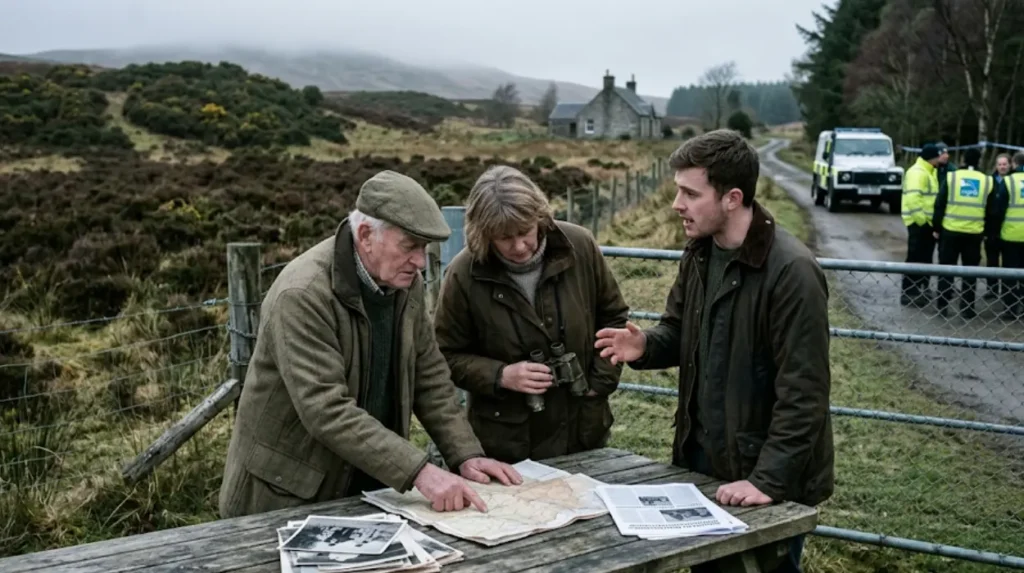
The historical management framework collapsed completely between 2017 and 2018 due to severe internal conflicts between the estate owner and the head gamekeeper. David Campbell was removed from his position in early 2017 following a complete breakdown in professional relations. This termination triggered a sequence of legal actions, including a 2018 trial at Perth Sheriff Court where Campbell was accused of maliciously poisoning the estate’s own game cover crops as an act of employment revenge. While that specific case resulted in a verdict of “not proven,” the internal operational stability of the estate was permanently compromised, ending 33 years of centralized management.
How Did The Glasgow High Court Verdict Transform Local Selection Standards?
The Glasgow High Court verdict transformed selection standards by establishing a zero-tolerance policy for historic workplace grievances, enforcing strict background reviews for violent behavior, and making legal compliance the primary metric for evaluating professional gamekeeping options.
The Trial and Conviction of David Campbell
In February 2026, a 13-day criminal trial at the High Court in Glasgow fundamentally altered how the public and estate owners evaluate gamekeeper options. The jury found former Edradynate Head Gamekeeper David Campbell, aged 77, guilty of the murder of his former colleague, Brian Low. Brian Low, aged 65, had served as an estate groundsman at Edradynate from August 2000 until his retirement in February 2023, working directly alongside Campbell for nearly two decades.
The prosecution demonstrated that on 16 February 2024, Campbell executed a premeditated ambush on Leafy Lane near Pitilie track, located outside Aberfeldy. Campbell disabled his home closed-circuit television (CCTV) infrastructure, traveled to the remote footpath on an electric bicycle while concealing a shotgun, and shot Low in the neck and chest at a range of approximately 19 meters while Low was walking his dog. The High Court in Glasgow sentenced Campbell to life imprisonment with a mandatory minimum term of 19 years before becoming eligible for parole.
Identification of Risk Metrics
The evidence presented during the Glasgow trial forced an immediate shift in how local syndicates and estate owners vet land management personnel. The court reviewed multiple historical breach of the peace charges against Campbell dating from 1995 to 2012. These records revealed a decades-long pattern of professional intimidation, including documented threats to shoot grounds maintenance workers, local residents, and wildlife crime officers.
As a direct result of these disclosures, Glasgow individuals seeking estate options now reject the traditional culture of ignoring aggressive behavior under the guise of “tough estate management.” Selection standards now require formal psychological evaluation indicators, comprehensive workplace dispute reviews, and the absolute elimination of candidates who display a history of workplace grievances or interpersonal hostility.
Integration of Civil Liability into Sporting Selections
The conviction highlighted the immense civil, financial, and reputational liabilities borne by landholdings that retain non-compliant or volatile staff. Prior to the murder conviction, Edradynate Estate had maintained endorsements from commercial shooting bodies, including a 2020 accreditation by the British Game Alliance and an active relationship with the Game & Wildlife Conservation Trust (GWCT).
Following the exposure of the estate’s operational environment at the High Court, Glasgow sports enthusiasts and corporate investors updated their procurement frameworks. The modern selection process treats any history of wildlife crime investigations or employee intimidation as a critical operational failure, completely disqualifying an option from commercial or recreational consideration.
What Qualifications Must A Modern Scottish Gamekeeper Possess?
A modern Scottish gamekeeper must possess valid statutory wildlife management certifications, accredited firearms licensure, and documented training in conservation chemistry to meet the legal standards required by Glasgow estate selectors.
Statutory Educational Certifications
When analyzing modern gamekeeper options, selectors prioritize individuals who hold recognized academic and vocational qualifications. The baseline industry standard is the National Certificate (NC) or Modern Apprenticeship in Gamekeeping and Wildlife Management, offered by accredited institutions such as Scotland’s Rural College (SRUC) or North Highland College UHI. These educational frameworks provide standardized training in:
- Game bird husbandry and disease management
- Advanced habitat assessment, including upland peatland restoration
- Population monitoring methodology for both game and non-game species
Firearm and Ballistics Licensing
Candidates must maintain full compliance with the Firearms (Scotland) Act 1968 and all subsequent amendments. Selectors verify the status of a candidate’s Firearm Certificate (FAC) and Shotgun Certificate (SGC), issued exclusively by Police Scotland after thorough background vetting. A qualified gamekeeper must also be registered on the rolling National Deer Management Trainer databases and hold Deer Management Qualifications (DMQ) at Level 1 and Level 2. These qualifications confirm a keeper’s competence in humane culling, visual identification, and wild game hygienic processing under UK food safety laws.
Chemical and Trapping Accreditations
Given the severe legal consequences of historical poisoning cases like those investigated at Edradynate, modern keepers must hold valid certificates for handling agricultural chemicals and setting traps. This includes City & Guilds NPTC Level 2 awards in the Safe Use of Pesticides (specifically PA1 and PA6 ground-crop applications). Anyone using spring traps, corvid traps, or snares must be registered with NatureScot and possess a unique operator ID provider number, which must be physically stamped onto all field equipment to ensure full transparency and legal accountability.
Explore More Area Guide
What You Should Know Before Visiting Historic Paisley Abbey Near Glasgow
The Political, Legal, and Economic Dynamics of Modern Scottish Independence
How Do Glasgow Clients Evaluate Environmental Compliance Records?
Glasgow clients evaluate environmental compliance records by cross-referencing public wildlife crime enforcement databases, auditing active estate trapping registers, and reviewing spatial conservation maps managed by statutory bodies.
Public Enforcement Databases and Sanction Lists
The primary step in evaluating any gamekeeping option involves checking official enforcement registers. Glasgow individuals and syndicates audit the annual Wildlife Crime in Scotland report series published by the Scottish Government. They cross-reference names and estates against the official sanction logs maintained by NatureScot, the national nature agency. If an estate or an individual gamekeeper has been issued a General Licence Restriction—a penalty that revokes the right to control common pest birds due to evidence of wildlife abuse—they are immediately disqualified from selection.
Independent Audits of Trapping and Muirburn Records
Prospective clients routinely demand access to an estate’s operational logs before booking sporting dates or entering management contracts. These logs must include precise geospatial coordinates for every active trap, catch records detailing target and non-target species, and formal Muirburn management plans. Muirburn refers to the controlled burning of heather moorland to encourage new growth. Under the Wildlife and Management of Muirburn (Scotland) Act, this practice is strictly restricted, and compliance records must prove that burning occurred only within the legal season and outside protected deep-peat zones.
Collaboration with Non-Governmental Conservation Bodies
Glasgow clients increasingly consult independent databases managed by non-governmental organizations (NGOs) to verify historical compliance. They review the RSPB Raptor Persecution Map Data layers to determine if a candidate property has a history of suspicious raptor disappearances or satellite-tag failures. By validating field reports with data from regional monitoring groups, such as the Tayside Raptor Study Group, selectors ensure that their chosen gamekeeping options are entirely free from hidden environmental liabilities.
What Role Does Sustainable Land Management Play In Selection?
Sustainable land management dictates selection by prioritizing options that successfully balance commercial shooting activities with carbon storage restoration, biodiversity conservation, and verified ecotourism integration.
Peatland Restoration and Carbon Capture
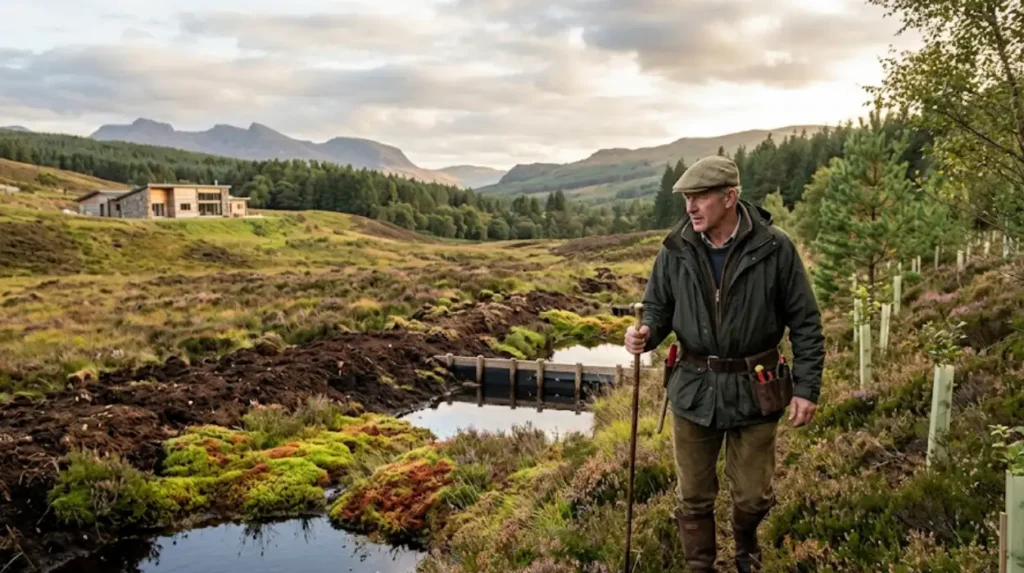
Modern gamekeeper selection favors professionals who can manage land for carbon sequestration alongside traditional sporting activities. Highland estates like Edradynate contain significant expanses of deep peat bogs, which act as vital carbon sinks for Scotland’s net-zero targets. Selectors evaluate candidates on their ability to reverse historical drainage trends by blocking estate ditches, restoring natural hydrology, and re-establishing active Sphagnum moss growth. This process reduces carbon emissions from degrading peat and preserves the landscape in a way that aligns with modern corporate sustainability standards.
Native Woodland Expansion and Species Enrichment
The modern approach to gamekeeping rejects monocultural land use that supports only game birds. Top-tier candidates are judged on their success in establishing native woodland corridors, consisting of Scots pine (Pinus sylvestris), silver birch (Betula pendula), and rowan (Sorbus aucuparia). These expanded woodland edges provide natural shelter for commercial game like pheasants, while simultaneously supporting declining native wildlife, such as the red squirrel (Sciurus vulgaris) and the black grouse (Tetrao tetrix).
Diversification into Non-Sporting Revenue Streams
Glasgow estate investors prioritize gamekeeping options that accommodate multi-use land models. Traditional models that rely solely on shooting seasons are financial risks and face declining public support. The best contemporary gamekeepers design their operational schedules to support alternative revenue streams, including:
- Self-catering luxury eco-rentals, such as the managed properties on the modern Edradynate estate
- Regulated wildlife photography tours and guided educational walks
- Scientific field research access for university biodiversity teams
By selecting keepers who understand how to safely integrate public access and conservation with traditional field sports, Glasgow clients protect their long-term investments and ensure their land management strategies remain viable for decades to come.
How Are Changing Scottish Land Laws Shaping Future Choices?
Changing Scottish land laws are shaping future choices by mandating formal estate shooting licenses, introducing strict statutory vicarious liability for owners, and legally enforcing biodiversity net-gain metrics across all commercial properties.
The Introduction of Compulsory Shooting Estate Licensing
The passing of the Wildlife and Muirburn (Scotland) Act has introduced a mandatory licensing framework for all properties operating commercial grouse and mixed-game shoots. Under this statutory regime, an estate cannot conduct shooting activities unless it holds a valid, site-specific operational licence issued by NatureScot.
If any employee or gamekeeper working on that landholding is convicted of a wildlife offense or found to have illegally targeted a bird of prey, the estate’s overarching licence can be suspended or permanently revoked. This legal shift means that hiring an unvetted or non-compliant gamekeeper can instantly shut down a property’s entire commercial operation, making regulatory compliance the single most important factor in the recruitment process.
The Enforcement of Strict Vicarious Liability
Scottish statutory frameworks place clear vicarious liability on landowners and estate managers for crimes committed by their staff. Under Section 24 of the Wildlife and Natural Environment (Scotland) Act, an estate owner or manager can be criminally prosecuted for wildlife offenses committed by their gamekeeper, unless they can prove they were completely unaware of the crime and had taken all reasonable steps to ensure compliance.
The High Court proceedings in Glasgow reinforced the severe legal risks faced by estate owners who fail to supervise their staff. As a result, Glasgow asset managers now require all gamekeeping contracts to include mandatory compliance clauses, real-time GPS tracking of field activities, and independent third-party environmental audits.
Mandatory Integration of Biodiversity Net-Gain Metrics
Future land management choices are heavily influenced by national legal frameworks that tie land ownership to measurable biodiversity improvement. Gamekeeper performance is no longer assessed simply by the size of the annual game bag. Instead, it is measured against scientific indicators, including:
- The documented recovery of localized raptor populations
- Measurable reductions in soil erosion along salmon river catchments
- The successful restoration of native flora across degraded heather moorlands
Glasgow syndicates and individual buyers recognize that long-term land values depend directly on ecological health. By choosing gamekeepers who are trained in modern conservation science and fully compliant with Scottish law, selectors protect their investments from legal liability and ensure their estates remain viable, productive, and respected landscapes for the future.
What is Edradynate Estate?
Edradynate Estate is a sporting and agricultural estate in Perthshire, Scotland, covering approximately 4,000 acres. The estate is known for pheasant shooting, partridge shooting, and salmon fishing along the River Tay.