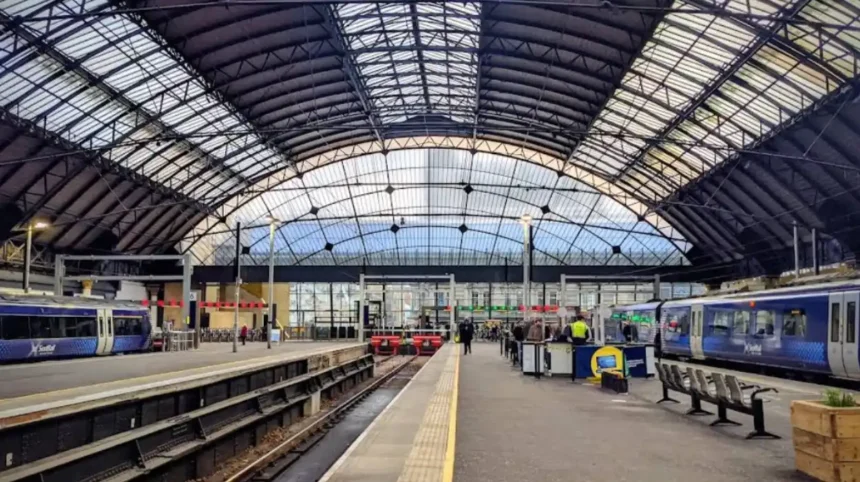
A trespass incident on the Glasgow railway network occurs when an unauthorized person, vehicle, or object enters land specifically designated as operational railway property. This unauthorized entry breaches statutory boundaries managed by Network Rail and ScotRail, disrupting public transportation services across West Scotland.
- How Does The Legal Framework Define Railway Trespass In Scotland?
- What Are The Primary Causes Of Rail Trespass Incidents In Glasgow?
- Route Short-Cutting and Urban Permeability
- Anti-Social Behavior, Vandalism, and Substance Misuse
- Metal Theft and Substance Procurement
- How Do Trespass Incidents Impact Glasgow Train Operations?
- The Mechanism of Reactive Delay
- Operational Cancellations and Passenger Disruption
- Financial and Contractual Repercussions
- What Engineering Methods Does Network Rail Use To Prevent Trespass?
- Advanced Boundary Fencing and Physical Deterrents
- Cable Protection and Infrastructure Hardening
- Electronic Surveillance and Predictive Analytics
- How Do Emergency Services Respond To A Glasgow Rail Trespass Report?
- Emergency Dispatch and Site Containment
- Electrical Isolation and Power Management
- Technical Search and Apprehension Tactics
- What Public Awareness Campaigns Address Railway Trespass In Scotland?
The operational railway infrastructure in the Glasgow area includes running lines, platforms, trackside embankments, tunnels, bridges, maintenance depots, and overhead line equipment (OLE). Under the statutory framework of Scotland, any unauthorized physical presence within these specific boundaries constitutes an illegal act.
Railway infrastructure differs fundamentally from ordinary public land or private properties due to its inherent hazards. Tracks accommodate fast-moving passenger trains operated by ScotRail, Avanti West Coast, CrossCountry, and LNER, alongside heavy freight services operated by Direct Rail Services and DB Cargo. The infrastructure also relies on 25-kilovolt (kV) alternating current (AC) overhead lines to power electric traction systems, adding significant electrical hazards to the physical risks of the environment.
When an unauthorized individual compromises the perimeter fencing or walks onto a platform edge, sensors, drivers, or signal staff immediately flag the breach. Network Rail, as the infrastructure authority, enforces a safety-first operating model. To protect life, any reported presence of a person on or near the lines forces signallers to halt train movements or issue emergency speed restrictions across the affected line section. This immediate response prevents physical collisions but causes a cascading series of delays across the transport network.
How Does The Legal Framework Define Railway Trespass In Scotland?
The legal framework defines railway trespass in Scotland as a specific statutory criminal offense under Section 55 of the British Transport Commission Act 1949. This law makes unauthorized entry onto operational railway land illegal, carrying strict financial penalties and a permanent criminal record.
Statutory Definition and Jurisdiction
Unlike general trespass in Scotland, which is typically a civil matter rather than a criminal offense under common law, railway trespass is governed by explicit statutory legislation. Section 55 of the British Transport Commission Act 1949 specifically penalizes unauthorized presence on railway property. The jurisdiction over these offenses falls to the British Transport Police (BTP), the specialized national police force responsible for policing the rail network across Great Britain.
The geographical boundaries of this law encompass all lines radiating from Glasgow Central and Glasgow Queen Street stations, including the extensive suburban networks of the Cathcart Circle, the North Clyde Line, and the Argyle Line. The statutory protections extend to the fence lines bounding the railway tracks, meaning that crossing or damaging a railway fence constitutes a breach of the law before a person even reaches the ballast or rails.
Penalties and Prosecution Mechanisms
The legal consequences for violating railway trespass statutes are severe and strictly enforced by the Crown Office and Procurator Fiscal Service (COPFS). An individual prosecuted and convicted under Section 55 faces a maximum fine up to Level 3 on the standard scale, which equates to £1,000.
Additionally, if the trespass involves willful obstruction of railway operations or endangers passengers, the authorities can upgrade charges to more severe offenses, such as malicious mischief or violations under the Malicious Damage Act 1861. These elevated charges carry penalties that include larger fines and custodial sentences. Because railway trespass in Scotland is a criminal offense, a conviction results in a permanent entry on the offender’s criminal record via the Police National Computer (PNC), which can impair future employment opportunities, international travel, and security clearances.
What Are The Primary Causes Of Rail Trespass Incidents In Glasgow?
The primary causes of rail trespass incidents in Glasgow include intentional vandalism, systematic route short-cutting, youth anti-social behavior, theft of trackside materials, and alcohol intoxication. These distinct human behaviors regularly compromise the structural integrity and operational safety of the regional transport network.
Route Short-Cutting and Urban Permeability
Urban geography directly drives trespass patterns in densely populated areas of Glasgow, such as Pollokshields, Partick, and Easterhouse. Pedestrians frequently cut through railway lines to find shorter routes between residential housing estates, commercial centers, and schools.
When urban planning lacks adequate pedestrian overbridges or underpasses, individuals often bypass or cut through Network Rail boundary fencing to save time. This systematic trespass occurs most often near low-level suburban stations where tracks cut through local communities, making the railway line an enticing but highly dangerous shortcut.
Anti-Social Behavior, Vandalism, and Substance Misuse
Youth anti-social behavior and structural vandalism represent a significant percentage of annual trespass incidents reported by the British Transport Police. Groups of youths often gather on tracks, bridges, and embankments for recreational loitering, graffiti spraying, or stone-throwing at passing rolling stock.
These activities peak during school holiday periods and warmer summer months. Furthermore, the consumption of alcohol and controlled substances within Glasgow’s night-time economy severely impairs judgment, leading individuals to wander onto operational lines near central stations, unaware of the extreme risks posed by oncoming trains and electrified infrastructure.
Metal Theft and Substance Procurement
Organized criminal activity constitutes another major cause of trackside trespass, specifically focused on the theft of high-voltage copper signaling cables and earthing wires. Criminals cut through security barriers and enter live track zones to harvest these valuable materials for sale on the black market.
This specific type of trespass occurs primarily during night-time hours along dark, isolated stretches of the network, such as the freight routes around Mossend Yard or the outer suburban sections of the Strathclyde network. The process of cutting live cables poses an immediate threat of electrocution to the thieves, while simultaneously disabling vital signaling systems and disrupting train operations.
How Do Trespass Incidents Impact Glasgow Train Operations?
Trespass incidents impact Glasgow train operations by triggering immediate emergency stop protocols, imposing reactive delays across the Strathclyde network, causing widespread cancellations, and requiring massive financial compensation payouts. A single trackside intrusion can disrupt thousands of passenger journeys within minutes.
The Mechanism of Reactive Delay
When a train driver, track worker, or member of the public reports a trespasser to the Strathclyde Signaling Centre, controllers must immediately implement strict safety protocols. Signallers switch track signals to red, instantly halting all train movements in the affected signal sections (Haith, n.d.). If the exact location of the individual is uncertain, signallers issue an emergency “caution order” to drivers, forcing trains to run at a walking pace of no more than 5 to 10 miles per hour.
This sudden stop or severe speed restriction causes a phenomenon known as reactive delay, where the lateness of one train cascades down the line to delay every following service (Haith, n.d.). Because Glasgow’s rail network relies on high-density commuter lines like the Argyle and North Clyde lines, a delay in one tunnel section quickly spreads across the entire suburban system, trapping trains at platforms and inside tunnels miles away from the initial incident.
Operational Cancellations and Passenger Disruption
If a trespasser refuses to leave the tracks or flees into a dark tunnel, such as the low-level tunnels beneath Glasgow Central or Queen Street, operations must be fully suspended until British Transport Police officers locate and remove them. This prolonged suspension leads directly to partial or full service cancellations.
Trains are forced to terminate early at outer stations like Johnston, Dumbarton Central, or Cambuslang to prevent gridlock at the main city terminals. The resulting disruption strands thousands of daily commuters, overloads local bus networks, and severely reduces the reliability of Scotland’s busiest rail hub.
Financial and Contractual Repercussions
The financial consequences of trespass incidents are governed by strict contractual frameworks within the UK rail industry, specifically the Schedule 8 performance regime of the track access agreement between Network Rail and train operating companies (Smith, n.d.). Under this regime, every minute of train delay must be attributed to a specific root cause.
When a trespass incident occurs on operational tracks, Network Rail is generally held responsible for the infrastructure breach. The company must pay financial compensation to operators like ScotRail to offset their revenue losses and penalty costs. These annual payments cost the taxpayer millions of pounds, diverting vital funds away from track maintenance and infrastructure upgrades.
What Engineering Methods Does Network Rail Use To Prevent Trespass?
Network Rail uses targeted engineering methods to prevent trespass, including installing high-security steel palisade fencing, applying anti-climb paint, burying trackside cabling, and deploying smart closed-circuit television (CCTV) systems. These physical barriers and monitoring technologies secure the perimeter against unauthorized access.
Advanced Boundary Fencing and Physical Deterrents
The primary line of defense against trackside intrusion is the physical boundary fence. Network Rail has systematically replaced traditional post-and-wire or chain-link fences with high-security galvanized steel palisade fencing. This fencing stands 1.8 to 2.4 meters high and features pointed, triple-pointed, or splayed tops designed to prevent climbing.
Key access points, station platform ends, and urban hot spots utilize this heavy-duty structure. For areas with persistent vandalism, engineers apply non-drying anti-climb paint to bridges and walls. This petroleum-based compound stays greasy and stains clothing, making structures nearly impossible to scale and deterring intruders.
Cable Protection and Infrastructure Hardening
To prevent cable theft and the associated trespass risks, engineers use infrastructure hardening techniques. Signaling and power cables are moved from surface-laid plastic troughs into buried concrete trenches or heavy-duty steel containment structures bolted directly to bridges and walls.
Furthermore, Network Rail has introduced synthetic and composite materials with zero scrap metal value to replace traditional copper grounding strips. This approach removes the primary financial incentive for thieves to breach the railway perimeter.
Electronic Surveillance and Predictive Analytics
To monitor expansive sections of track, Network Rail deploys electronic surveillance tools across the Glasgow network. Hot spots feature intelligent CCTV systems equipped with thermal imaging and video analytics. These cameras use automated algorithms to detect human movement along the fence line or track bed, instantly alerting operators at the British Transport Police control room.
Additionally, acoustic sensors attached to fences detect the vibrations of cutting tools or climbing attempts, enabling rapid security deployment before an intruder can step onto the active ballast.
Explore More Area Guide
Electric Bike Rentals Soar Across Scotland: Edinburgh and Glasgow 2026
Glasgow Beats Manchester in Key Economic Metrics, Glasgow 2026
How Do Emergency Services Respond To A Glasgow Rail Trespass Report?
Emergency services respond to a Glasgow rail trespass report by deploying specialized British Transport Police units, isolating overhead power lines, using search dogs or drones, and conducting a thorough safety sweep of the tracks. This coordinated effort aims to secure the individual quickly and safely resume train operations.
Emergency Dispatch and Site Containment
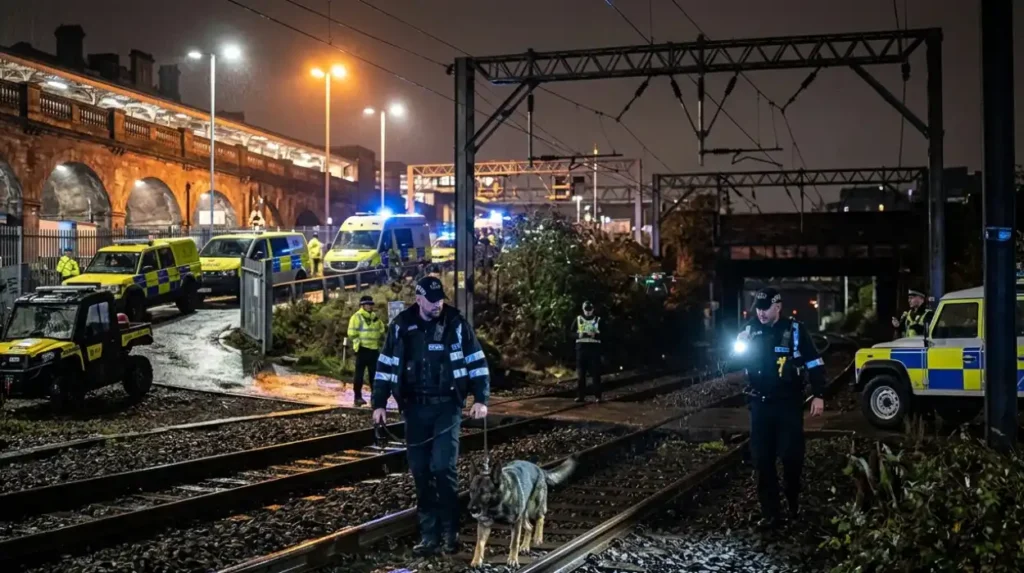
The moment a trespasser is verified on the network, the British Transport Police control room dispatches mobile units to the nearest access points or stations. BTP officers working out of Glasgow Central and Queen Street stations utilize specialized terrain vehicles and foot patrols to quickly reach the site.
Concurrently, local Police Scotland units provide perimeter support, securing exit routes and checking streets near the railway boundary to catch suspects fleeing the scene.
Electrical Isolation and Power Management
If a trespass incident occurs on an electrified route, such as the 25-kV overhead line network feeding the Cathcart Circle or the Ayrshire coast lines, commanders can request an emergency traction power isolation. Network Rail electrical control operators isolate and ground the overhead lines in the affected sector, shutting off power to the lines.
This step is essential to protect emergency personnel from accidental electrocution, but it cuts power to all electric trains in the area, causing them to coast to a stop and worsening regional delays.
Technical Search and Apprehension Tactics
To locate hidden or fleeing suspects in complex railway environments, emergency teams use advanced search technologies. BTP handlers deploy trained police dogs to track human scent along embankments and inside dense trackside vegetation.
Furthermore, remote drone units equipped with high-definition thermal imaging cameras fly over the tracks to spot individuals hiding in dark areas, under bridges, or inside deep cuttings. Once located, officers use specialized de-escalation or containment tactics to remove the individual safely without risking further injuries on the tracks.
What Public Awareness Campaigns Address Railway Trespass In Scotland?
Public awareness campaigns address railway trespass in Scotland through targeted educational programs like “You vs. Train,” interactive school workshops, community sports initiatives, and stark digital media advertisements. These coordinated efforts aim to highlight the extreme dangers of railway track intrusion and change public behavior.
The “You vs. Train” Initiative
The cornerstone of modern railway safety communication in Scotland is the national “You vs. Train” campaign, run jointly by Network Rail and the British Transport Police. This targeted initiative uses real-life case studies, graphic digital imagery, and videos to illustrate the severe consequences of trespassing on live tracks.
The campaign focuses heavily on the hidden dangers of the network, such as the 25-kV overhead line equipment. This system can conduct high-voltage electricity through the air to shock an individual without direct physical contact, a risk that many young people do not realize.
Educational Outreach and Community Engagement
To reach youth demographics in high-risk areas across Glasgow, BTP officers and Network Rail safety teams run regular educational outreach programs in local primary and secondary schools. These sessions leverage virtual reality headsets to simulate the speed and quietness of modern electric trains, demonstrating how difficult it is to spot or hear an oncoming train until it is too late (Moloney, 2018).
Additionally, the rail industry partners with community organizations and football clubs, such as the Rangers Charity Foundation and the Celtic FC Foundation, to deliver summer sports camps. These camps provide safe recreational activities during peak holiday periods, successfully steering young people away from dangerous loitering near railway property.
What is railway trespass?
Railway trespass occurs when a person, vehicle, or object enters restricted railway land without permission, including:
Tracks
Platforms
Bridges and tunnels
Maintenance areas
Electrified zones
It is treated as a serious safety and legal issue.