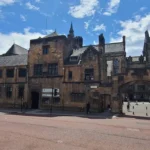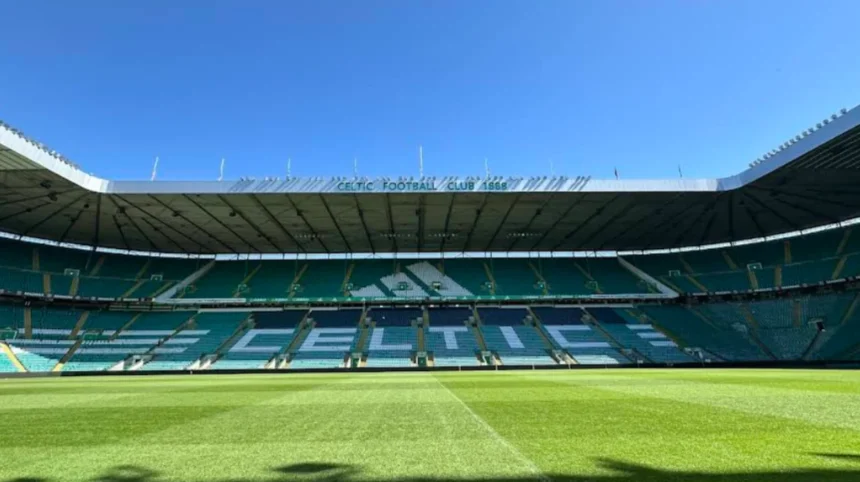
The sport tourism industry in Scotland is experiencing a massive increase in visitor metrics, driven largely by the institutional heritage and commercial expansion of Celtic Football Club. Located in the Parkhead area of Glasgow, Celtic Park stands as the largest football stadium in Scotland with a seating capacity of 60,411. The guided excursions throughout this venue, known formally as Celtic Stadium Tours, have transitioned from localized fan experiences into primary cultural and educational attractions for international and domestic tourists. This operational shift reflects broader macroeconomic trends within global sports heritage tourism, where travelers seek immersive, experiential connections with historic sporting institutions.
- What Is Driving the Sudden Surge in Celtic Stadium Tours Attendance?
- How Does Celtic Park Compare Globally as a Sports Heritage Site?
- What Specific Cultural Experiences Are Included Within the Tour Itinerary?
- Why Do Historical Records and Educational Elements Attract Non-Football Fans?
- What Financial Impact Do Stadium Tours Have on the Glasgow Economy?
- How Has Digital Media and Global Streaming Fueled This Popularity?
- What Are the Future Expansion Plans for Celtic Park’s Visitor Infrastructure?
What Is Driving the Sudden Surge in Celtic Stadium Tours Attendance?
The surge in Celtic Stadium Tours attendance stems from a 30% year-on-year increase in international heritage tourism to Glasgow, combined with modernized interactive stadium infrastructure, expanded experiential itineraries, and the global digital reach of Scottish football cultural media.
The foundational driver of this growth is the shifting demographic of urban tourism within the United Kingdom. Modern travelers increasingly prioritize heritage tourism, an industry sector centered on locations with deep sociological and historical significance. Celtic Football Club, established in 1887 by Brother Walfrid, carries a distinct historical narrative rooted in the 19th-century Irish diaspora of Glasgow. Stadium tours explicitly monetize and educate visitors on this cultural history, drawing demographics far beyond traditional match-going sports fans.
Furthermore, the structural integration of digital media has transformed how the stadium tour operates. The integration of advanced technological components, such as augmented reality access points and multi-language digital audio guides, allows the club to cater to non-English speaking international visitors. Data from national tourism bodies indicates that sports-related travel remains highly resilient against economic fluctuations, as visitors consistently allocate capital toward experiential site visits. The expansion of the tour infrastructure ensures that the physical assets of the club generate revenue 365 days a year, entirely independent of the standard Scottish Premiership match calendar.
How Does Celtic Park Compare Globally as a Sports Heritage Site?
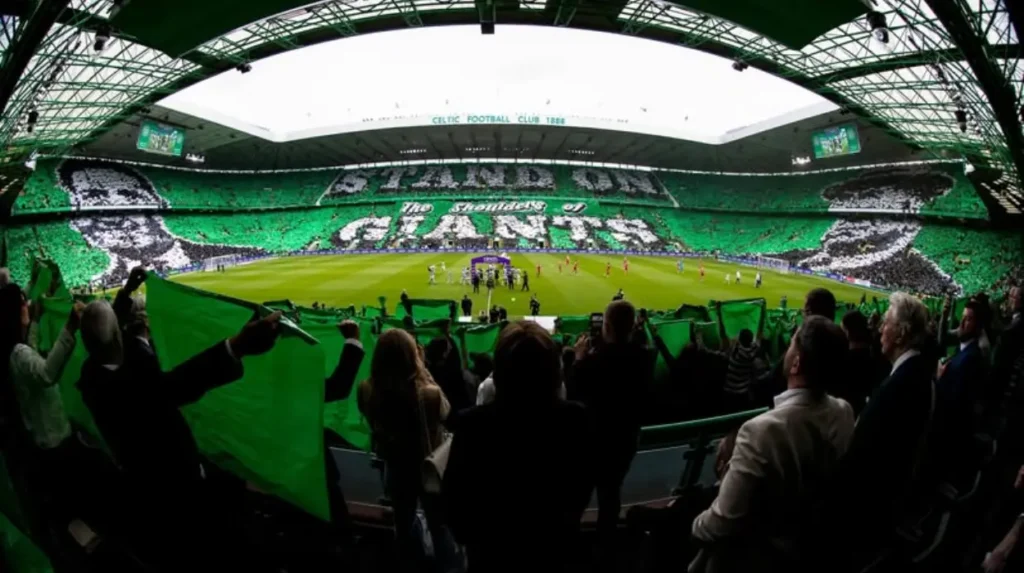
Celtic Park ranks as a premier global sports heritage site due to its 60,411 capacity, its status as the oldest structural footballing landmark in Scotland, and its exceptional alignment with international cultural, political, and sporting histories.
To understand the global positioning of Celtic Park, one must analyze its architectural scale and historical timeline. The stadium was opened at its current site in 1892, preceding the construction of the vast majority of modern European football arenas. Within the landscape of international sports tourism, venues are categorized by their capacity to invoke historical prestige and architectural awe. Celtic Park sits alongside landmarks like the Camp Nou in Barcelona, the San Siro in Milan, and Estadio Santiago Bernabéu in Madrid in terms of historic institutional scale.
The structural layout of Celtic Park provides a physical timeline of British stadium architecture. The venue features distinct structural zones:
- The Main Stand, designed by famed engineer Archibald Leitch in 1929, preserves traditional early-20th-century brick facades.
- The North, East, and West stands, completely reconstructed in the mid-1990s, represent the modern all-seater bowl configuration mandated by safety regulations.
This juxtaposition of engineering styles makes the stadium a subject of study for architectural historians and sports enthusiasts alike. The tour leverages these physical elements to explain the evolution of public safety laws, construction materials, and urban planning in Glasgow from the Industrial Revolution to the late 20th century.
What Specific Cultural Experiences Are Included Within the Tour Itinerary?
The tour itinerary includes direct physical access to the stadium dressing rooms, the player tunnel, the pitchside dugout areas, the club boardroom containing historic silverware, and the extensive institutional portrait gallery lining the main corridors.
The experiential mechanics of the Celtic Stadium Tour rely on spatial progression, taking visitors from public concourses into highly restricted institutional spaces. The journey begins in the boardroom, a space housing the physical documentation of the club’s sporting achievements. This room holds the 1967 European Cup, an iconic silver trophy won by the “Lisbon Lions,” the first British team to win the competition. Defining this achievement forms a core component of the tour narrative, as all 11 players were born within a 30-mile radius of Glasgow, illustrating a localized sporting phenomenon that is impossible to replicate in the modern, globalized sporting era.
Following the boardroom phase, the tour moves into the operational heart of the stadium. Visitors enter the home dressing room, a space engineered to show the exact preparation environment utilized by professional athletes. The tour guides utilize this space to explain the tactical and psychological elements of professional football.
From the dressing room, visitors walk through the concrete player tunnel. The acoustic design of this tunnel amplifies sound, simulating the sensory environment experienced by players moving toward the pitch. The progression concludes at the pitchside dugouts, offering a macro-perspective of the 60,411-seat bowl structure from the technical view of the coaching staff.
Why Do Historical Records and Educational Elements Attract Non-Football Fans?
Historical records and educational elements attract non-football fans because the tour serves as a socio-economic museum detailing the 19th-century Irish migration, Glasgow’s industrial history, and the evolution of working-class British culture.
The operational philosophy of Celtic Stadium Tours treats the football club not merely as an athletic franchise, but as a social vehicle. The club was originally founded in the East End of Glasgow to alleviate poverty within the immigrant Irish population through the charity known as the Poor Children’s Dinner Table. Because the tour contextualizes the origins of the club within these specific socio-economic parameters, it functions effectively as an educational field trip for historians, academic institutions, and cultural tourists.
The historical narrative delivered during the tour uses primary source materials, including original founding documents, photographic archives from the 1890s, and antique matchday programs. Visitors learn about the industrial landscape of late-Victorian Glasgow, exploring how heavy industries like shipbuilding and locomotive manufacturing intersected with the leisure time of the working-class population. By linking sports history directly to municipal history, the tour bridges the gap between sports entertainment and sociological education, making it highly attractive to demographics who have zero interest in the strategic or athletic components of football.
What Financial Impact Do Stadium Tours Have on the Glasgow Economy?
Stadium tours generate millions of pounds for the Glasgow economy by driving secondary expenditures in local hospitality, public transport systems, regional hotel bookings, and municipal retail sectors outside of standard matchdays.
The economic implications of stadium tourism are well-documented by sports economists. Research confirms that sports attendance significantly increases expenditures by inbound tourists within the United Kingdom, with the strongest marginal benefits observed among lower and mid-tier spenders who heavily utilize local economies (Rudkin & Sharma, 2019). When an international tourist visits Glasgow specifically to take a Celtic Stadium Tour, their capital expenditure is distributed across multiple municipal touchpoints.
How Has Digital Media and Global Streaming Fueled This Popularity?
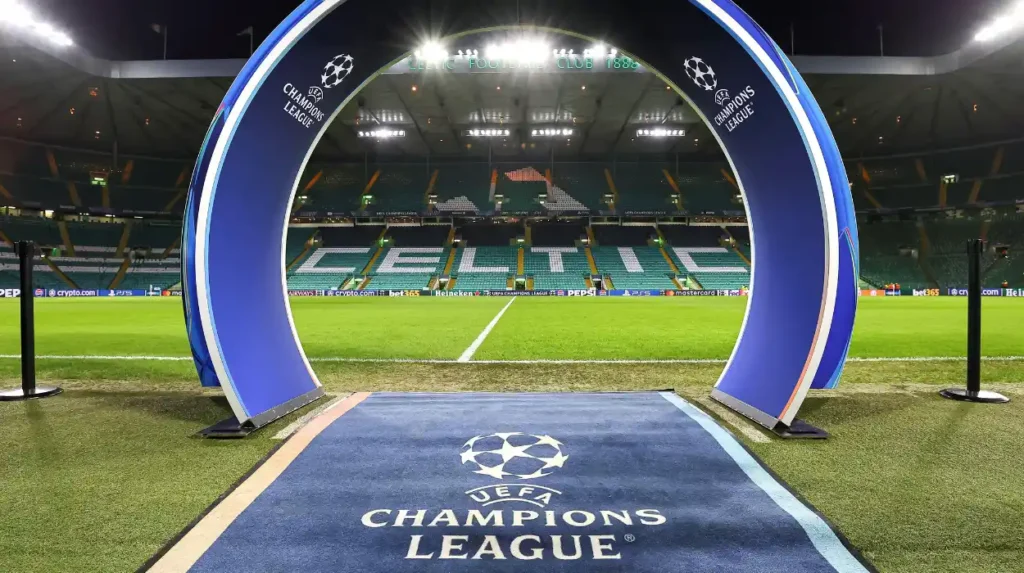
Digital media and global streaming have fueled this popularity by broadcasting Celtic’s UEFA Champions League matches to over 100 countries, creating an international digital fan footprint eager to visit the physical stadium.
The contemporary surge in tour bookings is inextricably linked to the globalization of sports broadcasting. The UEFA Champions League, the premier club competition in European football, commands a cumulative global television audience of billions of viewers annually. Celtic’s regular participation in this tournament exposes the Parkhead stadium, its unique matchday atmosphere, and its visual branding to consumers across North America, South America, Asia, and Africa.
This widespread digital exposure generates a phenomenon known as virtual fandom, where individuals establish strong psychological and cultural attachments to a sports institution despite living thousands of miles away from its physical location. Social media platforms, including TikTok, Instagram, and YouTube, amplify this effect through viral video content detailing the stadium’s matchday environment. When these digital consumers travel to Europe, the physical stadium becomes a primary pilgrimage site. The stadium tour serves as the mechanism through which virtual fans materialize their digital engagement into a tangible, real-world experience.
What Are the Future Expansion Plans for Celtic Park’s Visitor Infrastructure?
Future expansion plans for Celtic Park’s visitor infrastructure involve a multi-million-pound redevelopment of the stadium surroundings, including a dedicated club museum, integrated retail developments, and modernized hospitality venues.
To sustain the current growth trajectory of its stadium tours, Celtic Football Club has initiated long-term structural planning to upgrade its visitor experiences. The primary objective is the creation of a standalone, state-of-the-art museum facility adjacent to the stadium’s main entrance. This structure will house the club’s extensive historical archives, interactive digital exhibits, and educational installations, allowing for a more thorough exploration of the club’s history than the current tour format permits.
In addition to the museum infrastructure, the development plans encompass urban design improvements along the “Celtic Way,” the grand pedestrian approach leading to the stadium. These upgrades will incorporate sustainable public architecture, advanced visitor orientation systems, and expanded commercial spaces for local artisans and food vendors. By transforming the stadium footprint into a multi-use cultural precinct, the club aims to extend the average duration of visitor stays, thereby increasing the overall economic yield per tourist and solidifying Celtic Park’s status as an essential, year-round pillar of Glasgow’s tourism economy.
Is the Celtic Stadium Tour worth it?
Yes. The Celtic F.C. stadium tour is widely considered one of the best sports experiences in Glasgow because it combines football history, architecture, culture, and behind-the-scenes stadium access.