Glasgow tobacco buying follows strict age, retail, and product rules, so the smartest approach is legal, verified, and local. The safest routes are licensed tobacco shops, supermarkets, convenience stores, and regulated online retailers that check age and follow Scottish tobacco law.
- What does legal tobacco buying in Glasgow mean?
- Where can tobacco be bought in Glasgow?
- How do age checks work?
- Why is online tobacco buying used?
- What products are sold legally?
- What should buyers avoid?
- How has tobacco law changed in Scotland?
- What is the role of registered retailers?
- What about tobacco alternatives?
- What is the smart buying process?
- What does the future market look like?
What does legal tobacco buying in Glasgow mean?
Legal tobacco buying in Glasgow means purchasing tobacco only from a lawful retailer, being 18 or older, and following Scotland’s rules on age verification, packaging, and product restrictions. It also means avoiding counterfeit, untaxed, or unregistered supply chains and using legitimate local or online sellers.
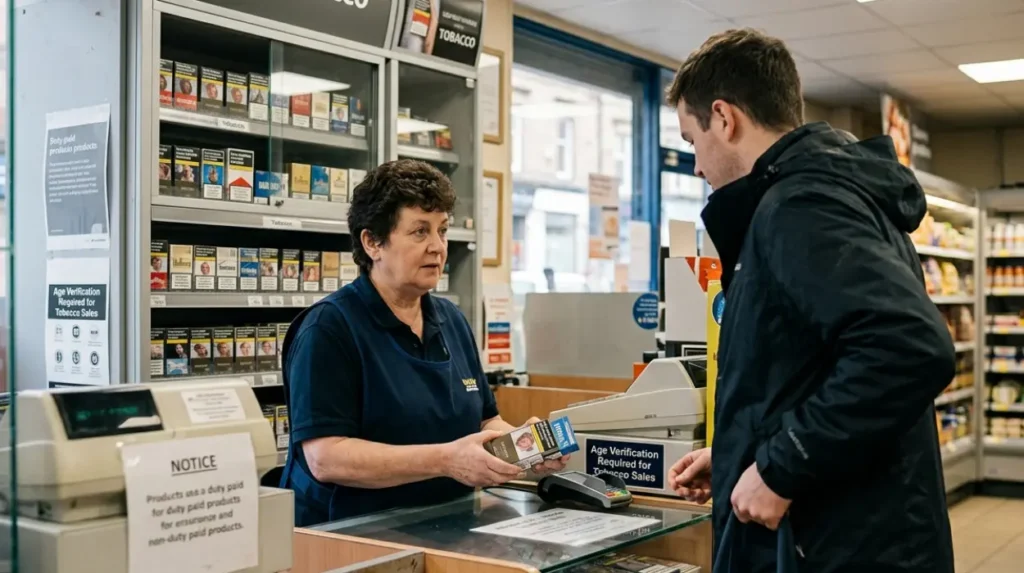
Glasgow sits under Scotland’s tobacco-control framework. The Scottish Government states that the legal age to buy tobacco is 18, and retailers must verify age before selling tobacco products. Online sales are legal when the seller follows age-checking rules and supplies duty-paid products with required warnings. Businesses that sell tobacco products in Scotland must also register with the national retailer system.
The practical meaning for buyers is simple. A proper purchase comes with standard packaging, health warnings, and a retailer that operates inside the law. Any offer that skips age checks, sells loose cigarettes, or promises unusually cheap tobacco outside normal retail channels signals risk and noncompliance.
Where can tobacco be bought in Glasgow?
Tobacco in Glasgow is sold through registered tobacco retailers such as specialist tobacco shops, convenience stores, petrol stations, supermarkets, and compliant online sellers. The smartest choice is a registered retailer that checks ID, sells duty-paid stock, and follows Scottish tobacco-control rules.
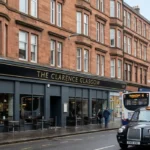
Glasgow has a large retail market, and specialist tobacco shops remain part of that market. One example visible in public business listings is a Glasgow smoking shop operating from Great Western Road, which shows how tobacco retail is distributed across the city. General retail outlets also sell tobacco when they are properly registered and compliant.
The key factor is not the shop type alone. It is the retailer’s compliance status. Scotland requires tobacco and nicotine vapour sellers to register, and that applies to one or many premises operated by the same business. For buyers, that means the smartest purchase comes from a visible, established outlet rather than informal sellers.
How do age checks work?
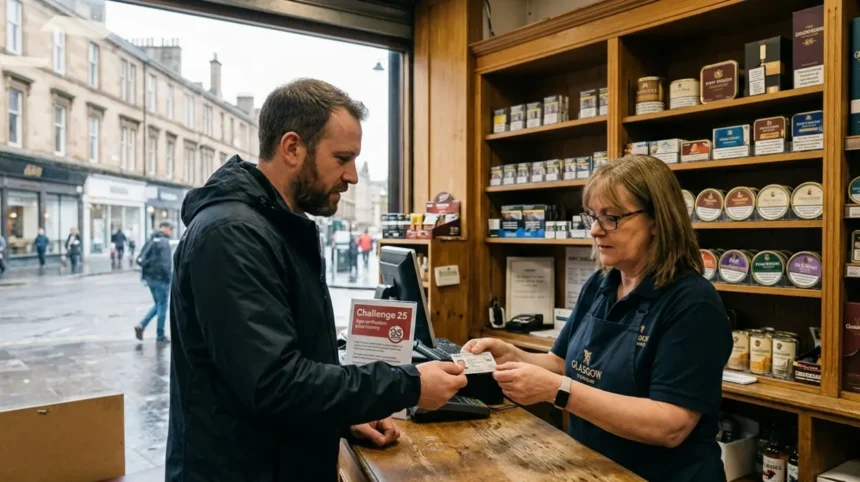
Age checks in Glasgow work through retailer verification of identity before sale, because the legal buying age for tobacco is 18. Retailers commonly ask for photo ID, and online sellers use age-verification systems before dispatching duty-paid products.
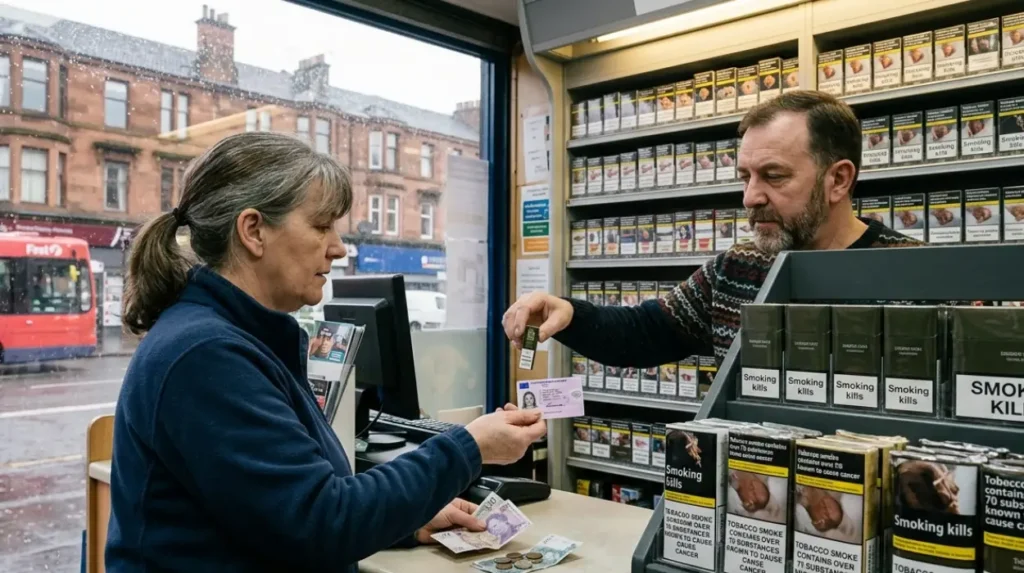
Scottish Government policy confirms that the age to buy tobacco is 18. Guidance on tobacco purchasing also states that traders are responsible for checking the age of customers, and online sales remain subject to age verification. That keeps the transaction within the law and protects retailers from enforcement action.
For a buyer in Glasgow, this means planning ahead. Bring a valid passport, driving licence, or other accepted photo ID when buying in person. The law puts the responsibility on the retailer, but the practical result is the same: no proof of age, no sale. That rule also applies to proxy buying, where an adult tries to buy tobacco for someone underage.
Why is online tobacco buying used?
Online tobacco buying is used for convenience, product availability, and home delivery, but only lawful retailers count. The smartest online approach uses UK duty-paid tobacco, clear age verification, and proper health warnings rather than unregulated marketplaces or social media sellers.
Online buying fits people who want a broader range of products or simple home delivery. UK guidance says online tobacco sales are legal when the retailer complies with the law and verifies age. That creates a legal route for adults in Glasgow who do not want to visit a physical shop.
The main caution is source quality. Legal sellers provide standard packaging, tax-paid products, and regulated warnings. Unregulated sellers create risks around counterfeit stock, missing excise duty, and no age control. The smart decision is to use a known retailer rather than an anonymous marketplace listing.
What products are sold legally?
Legal tobacco products in Glasgow include cigarettes, hand-rolling tobacco, cigars, cigarillos, pipe tobacco, and other regulated tobacco formats sold in compliant packaging. Scotland also restricts some product features and continues to tighten the market through tobacco-control law.
The legal product range is shaped by regulation, not just demand. UK and Scottish tobacco law restricts certain flavours and additives in cigarettes and hand-rolling tobacco, and it also controls emissions standards. The wider policy direction is toward stronger tobacco control, including future age-of-sale changes tied to the Tobacco and Vapes Bill framework.
For buyers, this means standard retail tobacco remains available, but the market is narrower than many expect. Flavor rules, packaging rules, and age controls all affect what appears on the shelf. That is why specialist tobacco shops often focus on mainstream products with reliable stock and legal labeling.
What should buyers avoid?
Buyers should avoid street sellers, untaxed stock, counterfeit cigarettes, loose tobacco sold without proper packaging, and any source that bypasses age checks. These routes create legal, financial, and health risks and do not match Scotland’s regulated retail system.
Illegal or informal supply is the opposite of a smart purchase. A lawful tobacco sale in Glasgow comes through a registered retailer that checks age and sells compliant products. Tobacco sold outside that system can be counterfeit, improperly taxed, or mislabelled, and buyers lose the protections that come with legitimate retail.
There is also a policy reason to avoid shortcuts. Scotland has tightened tobacco controls for years, including raising the purchase age from 16 to 18 and expanding regulation through newer laws. The enforcement direction is clear: regulated retail is the only stable option.
How has tobacco law changed in Scotland?
Scotland’s tobacco law has tightened steadily since the smoking ban and the age rise from 16 to 18. The direction of policy now points toward stronger retail control, broader registration, and future restrictions linked to the next generation of tobacco law.
A major turning point came on 26 March 2006, when Scotland prohibited smoking in enclosed public places. Later, the minimum purchase age for tobacco increased from 16 to 18 on 1 October 2007. Those measures changed tobacco use patterns and strengthened the public-health model around smoking in Scotland.
More recently, the Scottish Government announced plans to raise the tobacco age of sale further so that anyone born on or after 1 January 2009 can never legally be sold tobacco products in Scotland. That is a major long-term shift. It shows that tobacco access is becoming more restricted, more monitored, and more tightly tied to formal retail systems.
What is the role of registered retailers?
Registered retailers are the legal backbone of tobacco sales in Scotland. Registration confirms that a business selling tobacco or nicotine vapour products is known to government systems and subject to regulatory oversight.
Scotland operates a register for tobacco and nicotine vapour product retailers, and businesses selling these products must register with the Scottish Government. That system supports enforcement and helps reduce unlawful supply. It also means buyers can prefer outlets that operate inside a known compliance framework.
For Glasgow consumers, registration is a practical trust signal. A registered retailer is more likely to follow the rules on age checks, warnings, and lawful product handling. That does not guarantee premium service, but it does reduce the chance of buying from a risky source.
What about tobacco alternatives?
Tobacco alternatives in Glasgow include nicotine pouches, vapes, and stop-smoking support services, but they are regulated differently from tobacco. Nicotine pouches without tobacco are legal for adults, while Scotland also keeps tightening rules around vaping and youth access.
Scottish policy on smoking and vaping covers both tobacco control and nicotine regulation. Tobacco-free nicotine pouches are marketed as legal adult products in the UK, while tobacco snus is described as banned for sale in the UK in the source material reviewed. That distinction matters because many consumers use the wrong product name for very different products.
For Glasgow buyers, the choice between tobacco and alternatives depends on purpose. If the goal is nicotine without combustion, adult alternatives exist under different rules. If the goal is tobacco itself, the correct route remains a registered and age-checked retailer.
What is the smart buying process?
The smart buying process in Glasgow is to choose a registered retailer, verify age rules, buy duty-paid products, and keep purchases within the law. This process reduces risk, protects product quality, and matches Scotland’s strict tobacco-control environment.
First, identify a lawful seller. That can be a specialist shop, convenience store, supermarket, or compliant online retailer. Second, keep valid ID ready, because retailers must verify age for tobacco sales. Third, buy only standard packaged products with legal warnings and proper tax status.
This process also helps with consistency. Registered sellers usually stock mainstream brands and maintain regular supply chains, which lowers the chance of substitute products or suspicious offers. In a regulated market like Glasgow’s, the smartest approach is the simplest one: use formal retail and avoid shortcuts.
What does the future market look like?
The future tobacco market in Glasgow is moving toward tighter age restrictions, stronger retailer oversight, and a smaller role for informal supply. Scotland’s policy direction is long-term reduction in youth access and stronger public-health control.
The policy trend is clear. Scotland already has the 18+ purchase rule, retailer registration, and bans on several harmful or misleading sales practices. The next stage is the “smokefree generation” approach, where people born on or after 1 January 2009 are not sold tobacco legally. That is not a minor adjustment; it is a structural change in the tobacco market.
For Glasgow readers, that means tobacco access will continue to depend on formal, compliant retail channels. The smart buyer today is one who follows the law now and understands that the market will become even more regulated over time. Businesses and consumers both need to treat compliance as the default, not the exception.
Where can you legally buy tobacco in Glasgow?
You can legally buy tobacco from registered retailers including supermarkets, convenience stores, petrol stations, and specialist tobacco shops.