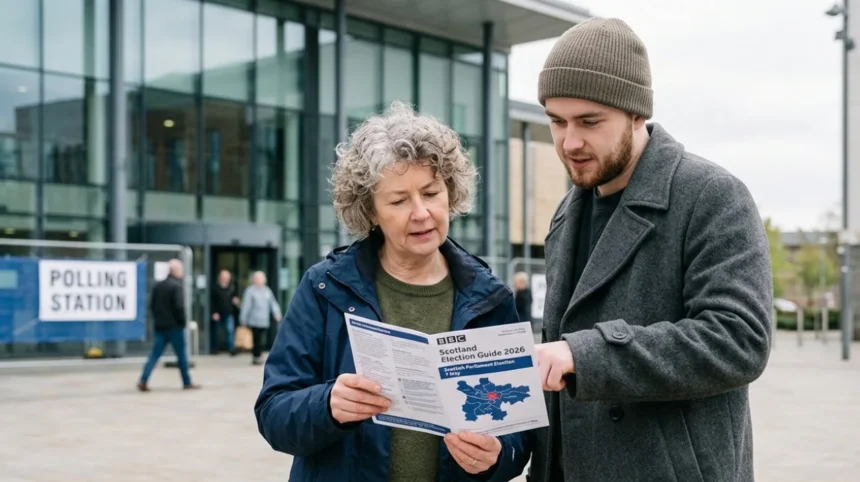
BBC Scotland election coverage refers to the BBC’s reporting, analysis, and live results service for Scottish parliamentary contests, including the 2026 Scottish Parliament election held on Thursday 7 May 2026. The Scottish Parliament’s election page confirms that the 2026 election has taken place and that the previous election was in 2021.
- What is BBC Scotland election coverage?
- What the BBC covers
- How does the Scottish Parliament election work?
- Why Glasgow matters
- What happened in the 2026 Scottish election?
- What the result means
- Why is BBC Scotland election reporting important?
- How it helps voters
- What powers does the Scottish Parliament have?
- Why that affects Glasgow
- How has Scottish election coverage changed over time?
- Long-term political context
- What should Glasgow readers watch next?
- What to follow in future coverage
- Why does this topic matter in search?
- Evergreen search value
What is BBC Scotland election coverage?
BBC Scotland election coverage is the BBC’s editorial package for Scottish elections, with live reporting, results tracking, policy comparison, interviews, and constituency or regional updates. The BBC’s Scotland politics pages and election topic pages collect this material in one place for audiences following national and local political change in Scotland.
The coverage matters because Scottish elections shape government in Edinburgh, which has power over health, education, housing, transport, the environment, and agriculture. Those devolved powers make BBC Scotland election reporting relevant to voters in Glasgow, where decisions at Holyrood affect public services, transport links, and local political priorities.
What the BBC covers
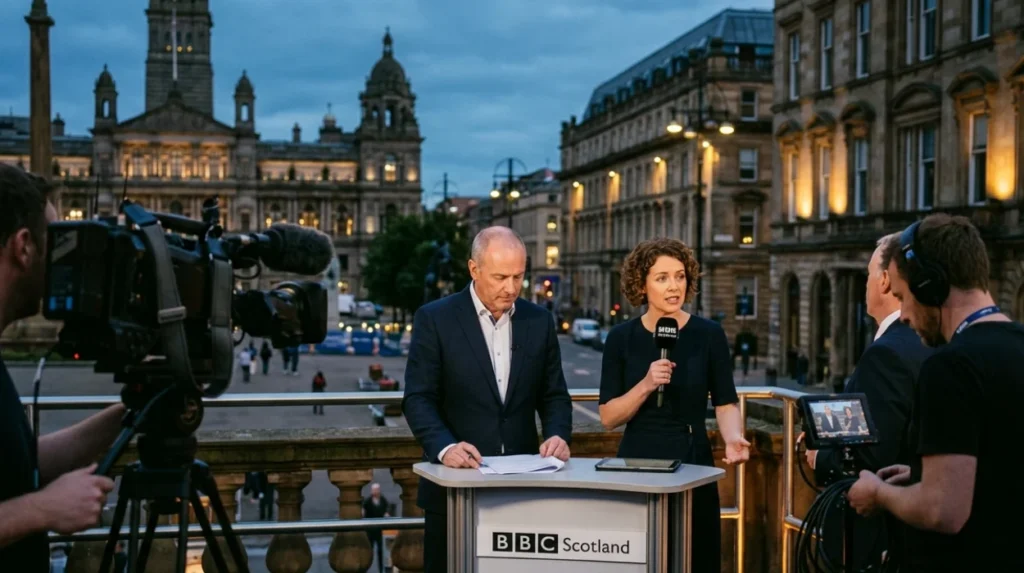
BBC election coverage usually includes live result pages, seat counts, leader reactions, policy explainers, voter guides, and constituency-level reporting. In 2026, the BBC also published a policy comparison guide for the Scottish election, showing how parties stood on key issues.
It also places results in a wider political context, including whether a party has won a majority, formed a minority government, or needs support from other parties. BBC reporting after the 2026 vote stated that John Swinney’s party finished well ahead of its rivals but without an overall majority.
How does the Scottish Parliament election work?
The Scottish Parliament election uses a mixed electoral system that combines constituency seats and regional list seats. Scotland elects 129 Members of the Scottish Parliament, made up of 73 constituency MSPs and 56 regional MSPs chosen through proportional representation.
This structure is designed to balance local representation with overall proportional outcomes. A voter in Glasgow contributes to both a constituency contest and a regional contest, which means the final makeup of the parliament reflects both direct wins and broader party support.
Why Glasgow matters
Glasgow is one of the Scottish Parliament’s electoral regions. In the 2026 election, the Glasgow region had 75 candidates, an electorate of 497,844, and 834 spoilt ballots recorded in the regional count.
That scale makes Glasgow one of the most important urban battlegrounds in Scottish politics. Its results help shape the balance of power in Holyrood, especially when national vote shares are close and coalition or minority arrangements become necessary.
What happened in the 2026 Scottish election?
The 2026 Scottish Parliament election took place on Thursday 7 May 2026, according to the Scottish Parliament website. The same page notes that the most recent previous election was in 2021 and that the 2026 contest is the latest full parliamentary election cycle.
BBC reporting on the result said the SNP won 58 seats, while Labour and Reform each won 17 seats. That result gave the SNP a clear lead but not an overall majority, which is the key threshold for stable single-party control in the Scottish Parliament.
What the result means
A party with fewer than 65 seats in the 129-member parliament does not have a majority. In the 2026 result, the SNP remained the largest party but still had to govern without an outright majority, which affects how legislation, budgets, and confidence motions are managed.
For voters in Glasgow, this matters because local priorities often depend on the Scottish Government’s ability to pass budgets and maintain policy direction. Issues such as transport investment, public services, housing pressure, and city-region development depend on political stability at national level.
Why is BBC Scotland election reporting important?
BBC Scotland election reporting is important because it combines live results with impartial explanation of how Scottish politics works. That combination helps voters understand not only who won, but also what the numbers mean for government formation, policy control, and legislative power.
The BBC also gives audiences access to party comparisons before polling day. Its 2026 election guide compared party positions on major issues, helping readers evaluate manifestos rather than relying only on headlines or slogans.
How it helps voters
Election coverage helps readers understand the difference between constituency and regional votes, the size of the parliament, and the implications of a minority government. It also helps people follow close contests, including the Glasgow region, where a large electorate and many candidates make results more complex than in smaller areas.
It also provides continuity across election cycles. The Scottish Parliament website keeps historical election pages from 1999 onward, which allows voters, journalists, and researchers to compare how party strength has changed over time.
What powers does the Scottish Parliament have?
The Scottish Parliament has wide responsibility for devolved policy areas. Britannica states that its powers include health, education, housing, regional transport, the environment, and agriculture.
Those powers make Scottish elections especially significant for Glasgow. Decisions made at Holyrood can affect NHS Scotland services, school policy, housing delivery, rail and bus priorities, and environmental regulation in the city and surrounding area.
Why that affects Glasgow
Glasgow is Scotland’s largest city and a major urban centre for public services, transport networks, and housing demand. Election outcomes therefore influence how resources are allocated and how national policy is adapted to metropolitan needs.
That is why BBC election coverage often focuses on city issues, not just national seat totals. Glasgow voters need to see how party platforms translate into practical outcomes for everyday services and city governance.
How has Scottish election coverage changed over time?
Scottish election coverage has moved from simple result reporting to a wider digital package of live blogs, data analysis, and policy tools. The BBC’s current election pages combine live updates with background explainers and comparison content, which reflects how online election journalism now serves both immediate and evergreen search intent.
The Scottish Parliament website also shows a long record of previous election results from 1999, 2003, 2007, 2011, 2016, 2021, and 2026. That archive makes it easier to track long-term political trends and party shifts across Scotland.
Long-term political context
Scotland has not always had the same party balance. Britannica notes that Labour once dominated Scottish politics for much of the late 20th century, while the SNP later became a major force and won a clear majority in 2011.
That historical movement explains why election coverage in Scotland attracts strong search interest every cycle. Voters want to know not only the latest winner, but also how the latest vote fits into a longer political story.
What should Glasgow readers watch next?
Glasgow readers should watch seat negotiations, committee control, policy priorities, and the shape of the next government after the 2026 result. A party winning the most seats still needs workable support to govern effectively when it lacks a majority.
BBC Scotland election coverage remains useful after polling day because the real impact begins once the results are known. Budget talks, ministerial appointments, local transport decisions, and public service planning all follow from the election outcome.
What to follow in future coverage
Readers should watch the Glasgow region count, constituency performance across the city, and how national parties respond to the seat distribution. They should also track policy negotiations on services that directly affect city life, including housing, transport, and health.
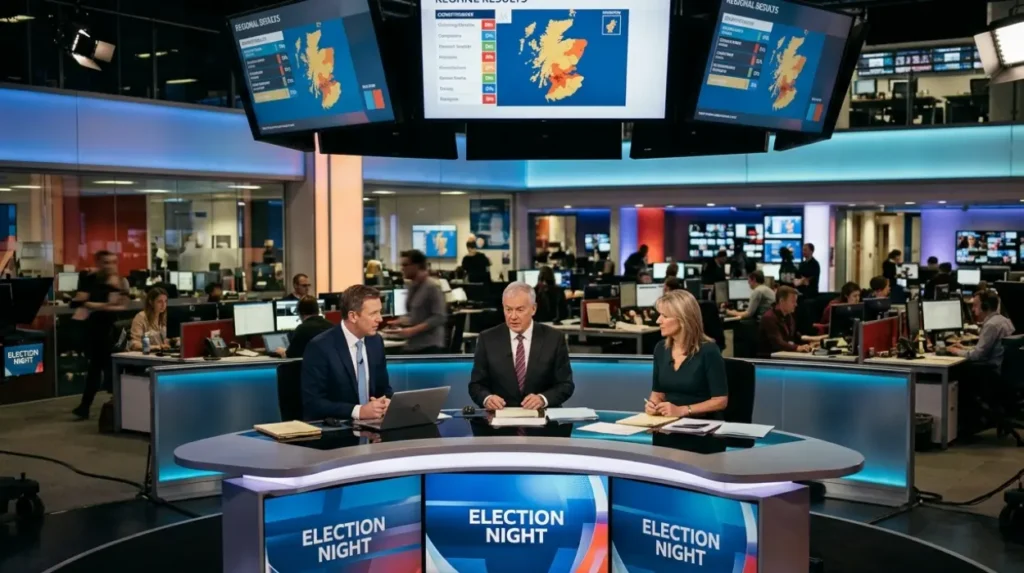
The BBC’s continuing Scotland politics coverage remains a central source for these developments. Its live news pages and election topic pages keep the story updated beyond election night, which is important for readers searching for both immediate results and lasting context.
Why does this topic matter in search?
“BBC Scotland election” is a strong evergreen search topic because it combines a major public broadcaster, a clear political event, and a durable geographic audience in Scotland. People search it before voting, during election night, and after results are declared.
For Glasgow audiences, the topic stays relevant because the city is a major electoral region with a large electorate and frequent political contest. The 2026 Glasgow regional data alone shows how central the city remains to national election coverage.
Evergreen search value
The topic also supports multiple search intents at once. Some readers want results, some want background on the Scottish Parliament, and others want a clearer explanation of how BBC coverage works during elections.
That combination makes it suitable for evergreen content, because the structural facts about Scotland’s parliament, the BBC’s role, and Glasgow’s place in the system remain stable across election cycles.
What is BBC Scotland election coverage?
BBC Scotland election coverage is the BBC’s reporting and live analysis of Scottish elections, including results, constituency counts, party reactions, interviews, and policy explainers.