Key Points
- A Jet2 flight LS190 from Palma de Mallorca declared an emergency on approach to Glasgow Airport on Monday.
- The flight used Squawk 7700 transponder code to signal distress, indicating a general emergency.
- The reason for the alert was understood to be a medical emergency on board.
- The emergency was declared at an altitude of 8,214 metres (26,950 feet) near Wigton, shortly before entering Scotland.
- A similar incident occurred over the weekend involving a passenger taken ill on a flight from Alicante to Edinburgh.
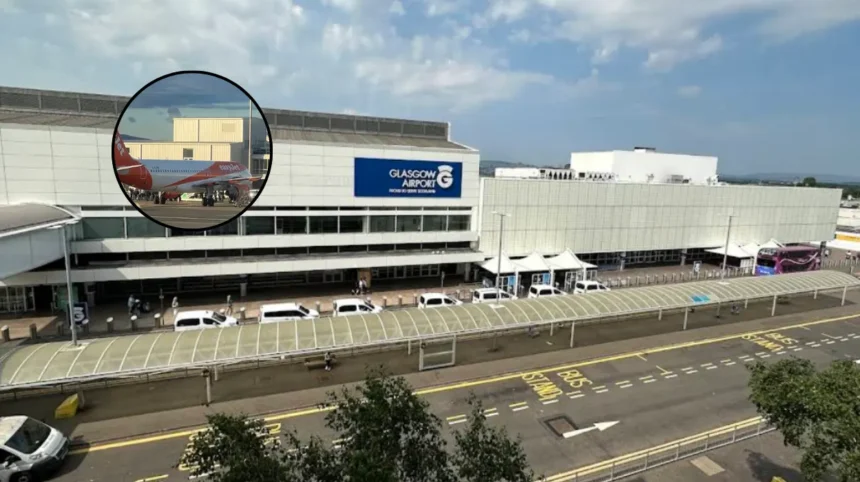
Glasgow (Glasgow Express) May 4, 2026 – A Jet2 flight LS190 from Palma de Mallorca declared an emergency on approach to Glasgow Airport today, activating the Squawk 7700 transponder code due to a medical emergency on board.
- Key Points
- What Triggered the Emergency Declaration on Jet2 LS190?
- Why Is Squawk 7700 Used in Aviation Emergencies?
- Where Did the Incident Unfold Geographically?
- When Did the Flight Declare the Emergency Relative to Landing?
- How Does This Compare to Recent Similar Incidents?
- What Role Did Air Traffic Control Play?
- What Is Known About Jet2 Flight LS190?
- Background of the Development
- Prediction: Impact on Passengers and Travellers
The aircraft signalled distress at 8,214 metres (26,950 feet) near Wigton, just before crossing into Scottish airspace, prompting an immediate response from air traffic control.
What Triggered the Emergency Declaration on Jet2 LS190?
The flight, operating from Palma de Mallorca to Glasgow, used the internationally recognised Squawk 7700 code, which denotes a general emergency situation.
This code alerts air traffic control to prioritise the aircraft, often for issues such as medical emergencies, though it can cover engine problems or other critical faults.
As reported in initial aviation updates, the cause was understood to be a medical emergency involving a passenger or crew member on board. The declaration occurred close to Wigton, a location in Cumbria, England, at a high altitude consistent with descent procedures into Scotland.
No further details on the individual’s condition were immediately available, but such activations ensure rapid coordination for medical assistance upon landing.
Why Is Squawk 7700 Used in Aviation Emergencies?
Squawk 7700 is the standard Mode 3A transponder code for general emergencies, as outlined by aviation authorities. It allows controllers to identify the aircraft on radar and provide priority handling, without specifying the exact nature of the problem to maintain operational focus.
In the UK, this code covers scenarios like medical issues, distinguishing it from 7600 for communications failure or 7500 for unlawful interference.
Pilots set it when already under air traffic service but facing urgent needs, retaining prior codes in some cases to avoid confusion.
As noted by aviation safety resources, the code’s use does not always signal disaster; many activations resolve routinely with ground support.
Where Did the Incident Unfold Geographically?
The emergency was declared near Wigton, at approximately 8,214 metres, positioning the flight on final approach to Glasgow Airport.
Wigton lies south of the Scottish border, marking the point of transition into UK controlled airspace for Scottish destinations.
Glasgow Airport, a major hub in Scotland, handled the safe landing without reported disruptions to other operations. Flight tracking data would confirm the precise path, but the location aligns with standard routing from Palma de Mallorca over the Irish Sea.
When Did the Flight Declare the Emergency Relative to Landing?
The alert came shortly before the aircraft entered Scotland, during descent from cruising altitude. At 26,950 feet, the plane was in controlled descent, typical for approaches to Glasgow from southern Europe.
The timing allowed air traffic control to prepare emergency services at the airport, ensuring a smooth touchdown. No delays to the airport’s schedule were noted in immediate reports.
How Does This Compare to Recent Similar Incidents?
A similar event unfolded over the weekend, where a passenger fell ill on a flight from Alicante to Edinburgh, prompting medical intervention.
Though specifics on the airline or code were not detailed, it highlights a pattern of in-flight medical needs on routes to Scotland.
Such occurrences are not uncommon on long-haul leisure flights from holiday destinations like Spain’s Balearic and Costa Blanca regions. Air traffic teams routinely manage these without broader impact.
What Role Did Air Traffic Control Play?
Controllers at relevant centres, likely Scottish or en-route facilities, received the Squawk 7700 signal and expedited clearance for Glasgow. Protocols ensure priority vectoring and ambulance readiness.
No statements from NATS (National Air Traffic Services) or Glasgow Airport were issued in initial coverage, but standard procedures were followed.
What Is Known About Jet2 Flight LS190?
Jet2 flight LS190 operates the Palma de Mallorca to Glasgow route, a popular summer leisure service. The airline, known for UK holiday flights, maintains safety records in line with industry standards.
The aircraft type was not specified, but Jet2 typically uses Boeing 737s or Airbus A320-family jets for such sectors.
Background of the Development
Medical emergencies on flights represent a recurring aspect of commercial aviation, particularly on routes from warm-climate holiday spots to cooler northern destinations like Scotland. Passengers, often older or with pre-existing conditions, may experience health episodes during cabin pressure changes or long durations aloft.
The use of Squawk 7700 has been standard since transponder protocols were established post-World War II, evolving through ICAO guidelines to standardise emergency signalling worldwide. Glasgow Airport, handling over 7 million passengers annually pre-pandemic figures, routinely prepares for such events with on-site medical teams.
Jet2, as a Leeds-based leisure carrier, emphasises crew training for in-flight care, including defibrillators and basic life support on all aircraft. Recent years have seen increased awareness following high-profile cases, leading to enhanced airline partnerships with ground health services. This incident fits within a broader context of rising air travel volumes in 2026, with UK airports reporting near-full recovery from prior disruptions.
Prediction: Impact on Passengers and Travellers
This development can affect passengers and travellers by heightening awareness of in-flight medical protocols, potentially leading to more frequent pre-flight health checks or airline advisories for at-risk individuals. Frequent flyers on Spanish-UK routes may notice stricter cabin crew monitoring or priority landing routines, minimising delays but occasionally causing minor schedule shifts.
Leisure travellers to Scotland could experience brief ambulance activity at airports, standard and non-disruptive. Families or elderly passengers might opt for travel insurance covering medical evacuations, while airlines like Jet2 may review crew training without altering operations. Overall, it reinforces aviation’s safety net without broad changes to travel patterns.