Key Points
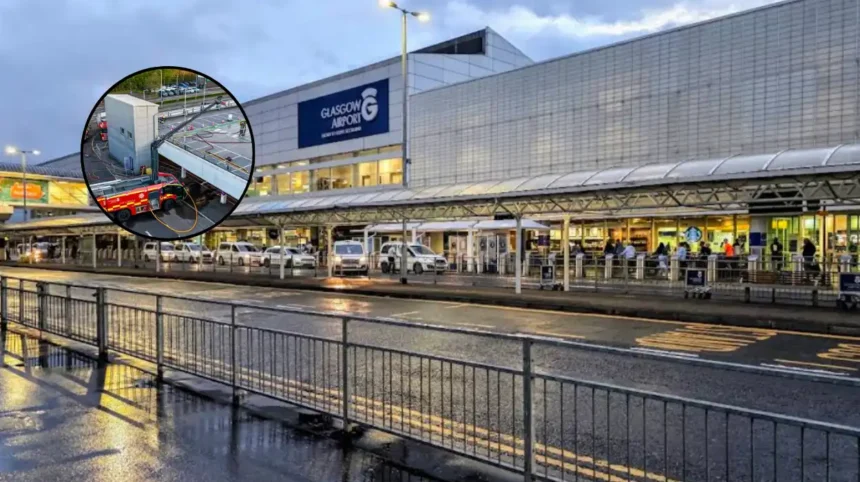
- Glasgow Airport hosted a multi-agency emergency training exercise on Thursday, 23 April 2026, from 7.30pm to 11.30pm.
- The exercise simulated a vehicle fire in the multi-storey car park, testing operational response, communication, and coordination.
- Involved crews from Glasgow Airport Fire and Rescue Service (ARFFS) and Scottish Fire and Rescue Service (SFRS), with support from airport partners.
- Features included fire appliances with blue lights, firefighters in breathing apparatus, deployed fire hoses with water, and synthetic smoke for realism.
- Temporary cordons in car park areas for safety; covered pedestrian routes remained open to minimise disruption to passengers.
- Exercise followed JESIP (Joint Emergency Services Interoperability Principles) model for joint working.
- Statements from Laurie Wylie (Deputy Airport Fire Manager, ARFFS), Matthew Wilson (Technical Director, Glasgow Airport), and Area Commander Eddie Kenna (SFRS).
- Pre-event announcement by STV News highlighted no risk to public safety.
Glasgow (Glasgow Express) April 28, 2026 – Glasgow Airport successfully hosted a multi-agency emergency training exercise on Thursday evening, simulating a vehicle fire in its multi-storey car park to test response capabilities with minimal disruption to operations.
- Key Points
- What Was the Scenario in the Glasgow Airport Training Exercise?
- Which Agencies Participated in the Exercise?
- What Did Officials Say About the Exercise’s Success?
- How Did the Exercise Minimise Impact on Airport Operations?
- Why Are Such Exercises Conducted Regularly at Airports?
- Background of the Development
- Prediction: How This Affects Airport Users and Local Communities
What Was the Scenario in the Glasgow Airport Training Exercise?
The planned exercise recreated a controlled incident within the airport environment, specifically a vehicle fire in the multi-storey car park. This allowed emergency responders from Glasgow Airport Fire and Rescue Service (ARFFS) and the Scottish Fire and Rescue Service (SFRS) to practise command, control, and coordinated responses under realistic evening conditions.
As reported in the official Glasgow Airport statement, fire appliances operated with blue lights activated, firefighters donned breathing apparatus, fire hoses were deployed with water discharged, and a short burst of synthetic smoke was used to heighten authenticity.
Certain sections of the car park were temporarily cordoned off to maintain safety, while covered pedestrian routes stayed accessible for passenger movement. STV News, in their pre-exercise coverage on 22 April 2026, noted that the activity was designed to test emergency response, communication, and multi-agency coordination without posing any risk to public safety.
The exercise aligned with established joint working principles and formed part of Glasgow Airport’s broader emergency planning programme.
Which Agencies Participated in the Exercise?
Crews from the Glasgow Airport Fire and Rescue Service (ARFFS) collaborated closely with colleagues from the Scottish Fire and Rescue Service (SFRS), supported by partners across the airport community.
Area Commander Eddie Kenna, SFRS’s Local Senior Officer for East Renfrewshire, Renfrewshire, and Inverclyde, highlighted the partnership in post-exercise remarks.
Yahoo UK News reported on 24 April 2026 that the multi-agency effort involved these fire services working together in the car park areas. Social media updates from Renfrewshire Chamber and Positive Paisley on Facebook echoed the successful joint involvement of ARFFS and SFRS crews.
An Instagram post on 24 April 2026 praised the collaboration between the two fire services during the multi-agency training.
What Did Officials Say About the Exercise’s Success?
Laurie Wylie, Deputy Airport Fire Manager at Glasgow Airport Fire and Rescue Service, stated:
“This exercise provided a fantastic opportunity to work side by side with our colleagues from the Scottish Fire and Rescue Service, allowing us to test the principles of joint working under the JESIP model.”
He added:
“Effective interoperability is vital when responding to emergency events, and this exercise offered a valuable platform to refine our procedures and ensure we are ready to deliver a rapid, coordinated response to any eventuality. The safety of the public and the protection of essential infrastructure remain our absolute priorities. I would like to extend my sincere thanks to everyone involved, particularly the crews from ARFFS and SFRS who took part, as well as those who carried out significant work behind the scenes to make this exercise such a success.”
Matthew Wilson, Technical Director at Glasgow Airport, commented:
“Safety is our highest priority, and exercises like this are essential in ensuring the airport remains fully prepared for any scenario. Training alongside our emergency service partners in a realistic, operational environment enables us to test procedures, strengthen coordination and continually improve our readiness. I would like to thank everyone involved for their professionalism and cooperation, as well as passengers and members of the public for their understanding while the exercise was taking place.”
Area Commander Eddie Kenna of the Scottish Fire and Rescue Service said:
“We’re grateful for the opportunity to join with crews from the Glasgow Airport on this multi-agency training exercise. It is vital that our firefighters have the skills and knowledge required to respond to a wide variety of incidents. Unique exercises like this provide us with the opportunity to train in the most realistic environments possible, while strengthening our operational readiness and collaborating with emergency partners to keep communities safe.”
How Did the Exercise Minimise Impact on Airport Operations?
The training took place between 7.30pm and 11.30pm, chosen to rehearse procedures under evening conditions while limiting interference with peak operations.
Passenger movement continued via open covered routes, and the airport emphasised minimal disruption throughout. Pre-notice via Glasgow Airport’s X (formerly Twitter) account on 23 April 2026 informed the public of the planned exercise with emergency services partners.
STV News confirmed in advance that there would be no risk to public safety, with pedestrian access maintained. Post-event coverage by Glasgow Times on X noted the exercise’s focus on effective interoperability without broader operational halts.
Why Are Such Exercises Conducted Regularly at Airports?
Glasgow Airport positions these drills as part of its ongoing commitment to safety, resilience, and emergency preparedness.
They enable testing of operational responses in realistic settings, refining communication and coordination among agencies. The JESIP model underpins the joint efforts, promoting interoperability essential for real emergencies.
Renfrewshire Gazette’s X post on 24 April 2026 described it as a major emergency training exercise staging fire crews effectively. Scottish Business News on Facebook highlighted the completion of the joint training, underscoring its role in readiness.
Background of the Development
Glasgow Airport’s emergency planning programme includes regular multi-agency exercises to maintain high standards of preparedness, building on previous collaborations between ARFFS and SFRS. The JESIP framework, adopted across UK emergency services, standardises joint responses and has been integral to such drills at airports nationwide.
This specific exercise follows similar simulations at other UK airports, ensuring alignment with aviation safety regulations from the Civil Aviation Authority. Historical context shows Glasgow Airport has conducted car park fire scenarios before, evolving procedures based on lessons from past events like the 2018 security incident response.
Prediction: How This Affects Airport Users and Local Communities
This development enhances response readiness, potentially reducing incident resolution times for passengers facing disruptions from fires or accidents in airport facilities. Local residents in Renfrewshire, East Renfrewshire, and Inverclyde benefit from strengthened SFRS capabilities, improving community safety in airport-adjacent areas. Travellers gain confidence in the airport’s prioritisation of safety, supporting smoother operations and quicker recovery from potential emergencies.