Key points
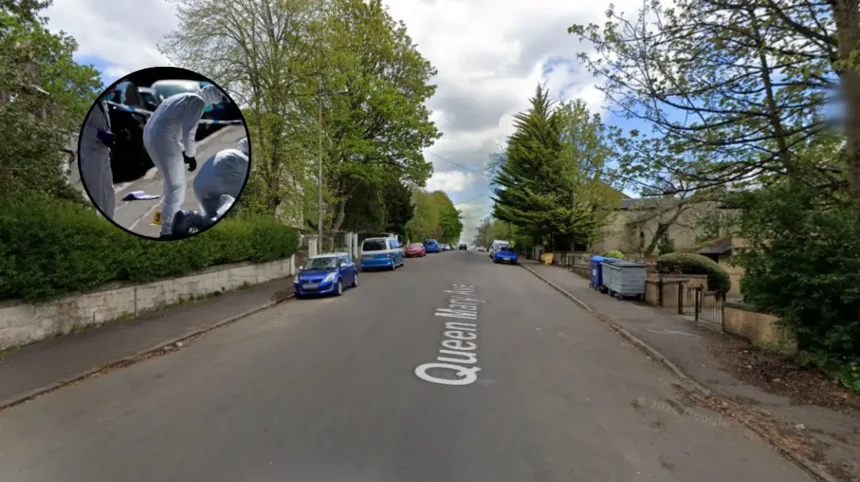
- Police Scotland and Army Explosive Ordnance Disposal (EOD) have stood down the incident on Dixon Avenue in the Crosshill area of Glasgow, more than 24 hours after the cordon was first put in place.
- Dixon Avenue was cordoned off at Cathcart Road, Gartuke Street and Allison Street at Belleisle Street, with roads remaining closed throughout 24 April and into the evening of 25 April.
- Two teenage boys, both pupils at Holyrood Secondary School, were taken to the Royal Hospital for Children in Glasgow after an incident involving fireworks.
- Emergency services, including a bomb‑disposal unit, were called to the Dixon Avenue area around 12.15 pm on Thursday, 23 April, following reports of pupils allegedly throwing fireworks on the street.
- An eyewitness told STV News that a group of young teenage boys were “launching fireworks” on the street, sparking the large emergency response.
- Police confirmed that fireworks were involved and that an item, believed to be a firework, was removed by the EOD team and is being assessed.
- The Ministry of Defence said its Army EOD team confirmed that an explosion had occurred at the scene and has since passed the area back to Police Scotland.
- Police Scotland stated that the cordon has been removed, all roads have reopened, and residents and local businesses are safe to return.
Glasgow (Glasgow Express) April 25, 2026 Police Scotland and the Army’s Explosive Ordnance Disposal (EOD) unit have now stood down the incident on Dixon Avenue more than 24 hours after officers first established a cordon in the area, with the road at last reopening to local traffic and residents.
On 23 April at around 12.15 pm, emergency services were called to Dixon Avenue in the Crosshill / Govanhill area after reports emerged that a group of school pupils were allegedly “throwing fireworks” at each other on the street, according to an eyewitness quoted by Luke Hercus of STV News, who reported that a group of young teenage boys were “launching fireworks” on the road. That account was echoed in coverage by Glasgow Live, which noted that the disturbance involved pupils throwing fireworks on the street and prompted the rapid deployment of police, fire, ambulance and military‑style bomb‑disposal resources.
Two teenage boys, both from Holyrood Secondary School, were taken to the Royal Hospital for Children, Glasgow, where they remain for treatment following the incident. A BBC News report stated that the incident occurred outside the school grounds and that two students sustained injuries as a result, with the council indicating that staff were working with the relevant authorities as investigations progressed.
Why was a bomb‑disposal unit deployed overnight?
Police Scotland later confirmed that an item, believed to be a firework, was identified at the scene and removed by the Army’s EOD team for assessment.
A spokesperson for Police Scotland, as quoted by BBC News, said the explosives disposal team was
“present to evaluate an item discovered at the site”,
underscoring that the initial response was treated as a potential explosives‑related incident for safety reasons.
A Ministry of Defence spokesperson, as reported by STV News, confirmed that an Army EOD team responded to Dixon Avenue on 23 April following a request from Police Scotland and later stated that “an explosion had occurred” at the scene before the area was passed back to the police.
Police and health officials have not yet released full details on the nature of the injuries or the exact type of firework‑like device involved, beyond confirming that the object has been secured for forensic and technical analysis.
How long was Dixon Avenue closed and what impact did it have?
The cordon around Dixon Avenue remained in place for more than 24 hours, with Police Scotland advising the public to avoid the area and instructing motorists not to enter the street.
The road was blocked at uk/local/cathcart/">Cathcart Road, Gartuke Street and Allison Street at Belleisle Street, effectively cutting off through‑traffic and prompting local diversion messages from both police and local authorities.
A Police Scotland statement, disseminated via social‑media updates and official channels, emphasised that the cordon was a precautionary measure to ensure public safety while the EOD team and police engineers worked at the scene.
The force later confirmed that the incident in the Dixon Avenue area of Crosshill has been officially stood down and that “all roads have been reopened”, with locals and business owners told they are safe to return to the area.
Background of the incident and the local response
The incident unfolded in the Crosshill–Govanhill corridor, an area with a mix of residential properties, small businesses and community facilities, including Holyrood Secondary School.
The proximity of the disturbance to the school prompted the local authority to issue a statement through the BBC, noting that the event occurred outside the school grounds and that two pupils had been injured, with the council co‑operating with emergency services as inquiries continued.
Eyewitness descriptions collected by STV News and Glasgow Live painted a picture of a chaotic mid‑afternoon scene, with parents and local residents gathering at the perimeter of the cordon as emergency lights and specialist vehicles remained on site for much of the evening and into the next day.
Residents told reporters that they were initially confused about the precise nature of the incident, with some unaware that fireworks were involved until later briefings from police and local media.
Police Scotland has opened an investigation to establish the full circumstances of how the fireworks were obtained and used, and has asked anyone with information to contact the force quoting incident number 1302 of Thursday, 23 April 2026.
No arrests have yet been publicly confirmed in the immediate aftermath, though the force has indicated that enquiries are ongoing and that the removed item will be fully assessed before any further statements are issued.
How this incident might affect local residents, parents and schools
In practical terms, the prolonged cordon is likely to have disrupted local traffic patterns and access to homes and businesses along Dixon Avenue and the surrounding streets for at least one full teaching day. Parents of Holyrood Secondary School pupils may now expect tighter guidance from the school and local authorities on how students are supervised near the campus at lunchtime, particularly in light of an incident involving fireworks in a densely populated residential zone.
For the wider community, the deployment of a bomb‑disposal unit over a suspected firework‑related incident may heighten awareness of how even common pyrotechnics can trigger a major emergency response when used unsafely or in inappropriate locations. Local authorities and Police Scotland may use this case to reinforce existing advisories on fireworks possession and misuse, particularly among younger people, and to remind the public that items resembling explosive devices will be treated with maximum caution until examined by specialist teams.