Key Points
- Rangers secured back-to-back victories over Celtic within eight days, following up a 3-0 Premier Sports Cup win at Ibrox with a 1-0 victory at Parkhead.
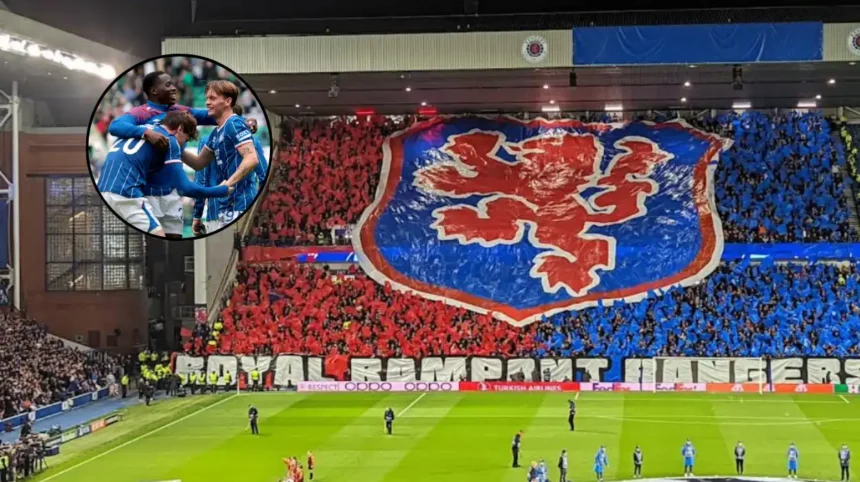
- German-born forward Ryan Naderi scored the decisive goal in the 33rd minute, capitalizing on a loose ball to silence the home crowd.
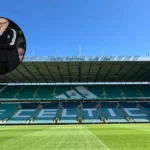
- Despite playing in front of an all-green, 58,000-strong crowd with no away supporters present, Rangers dominated virtually every statistical metric.
- Celtic managed only five total attempts during the match, while Ryan Naderi individually registered four shots for the visitors.
- The result handed Celtic their first William Hill Premiership defeat of the season, reducing their lead at the top of the table to just two points heading into the international break.
- Rangers manager Derek McInnes praised his squad’s collective work rate, defensive organization, and growing trust within a newly assembled team.
- Celtic manager Martin O’Neill faced mounting pressure after consecutive defeats, insisting post-match that the sides were evenly matched despite widespread media consensus to the contrary.
Rangers (Glasgow Express) September 21, 2026 – For the second occasion in eight days, Rangers dominated Celtic, this time securing a statement 1-0 victory at Parkhead that sent shockwaves through the William Hill Premiership and piled intense pressure on home manager Martin O’Neill. The widespread view shared across the football media is that the Hoops were extremely fortunate to escape with just a single-goal defeat, as Derek McInnes’ side outperformed their rivals in virtually every tactical department.
How did Rangers dismantle Celtic’s tactical setup at Parkhead?
As reported by Matthew Lindsay, Chief Football Writer of The Herald, Rangers manager Derek McInnes admitted post-match that he now has complete faith in his squad after watching them execute a disciplined game plan away from home. As stated by Derek McInnes in coverage by The Herald:
“Trust is the most important thing for me. I need to trust my team and trust the individuals within it.”
The basic statistics from the fixture paint a damning picture of Celtic’s offensive stagnation. Celtic managed a meager five attempts throughout the entire ninety minutes, whereas Rangers striker Ryan Naderi single-handedly registered four shots. While Celtic boss Martin O’Neill insisted in his post-match remarks that the sides were evenly matched, the underlying data and general consensus told a completely different story of tactical superiority by the visitors.
As detailed by live reporting from The Guardian, Rangers successfully silenced the 58,000 home supporters when Ryan Naderi pounced in the 33rd minute to break the deadlock. Speaking to Sky Sports after the final whistle, match-winner Ryan Naderi described his decisive moment, stating:
“I’m so, so, so happy. I’m happy for the team, we deserve this. It’s unbelievable. I’m honest. I was a bit lucky to be in the right place but that’s what you have to do as a striker, I was there.”
What did Derek McInnes say about the physical battle and squad resilience?
Rangers traveled across Glasgow knowing they would face a hostile environment without any travelling supporters. However, Derek McInnes noted that getting in front early allowed the pressure of the 60,000 home fans to ultimately work against Celtic.
As reported by The Herald, Derek McInnes explained the psychological approach required for the fixture:
“In the context of the season, it was very important. We’d have heard all about it if we’d lost and the gap was stretched to eight points at this early stage. So it was important to close that gap and also, with such a young squad, having the belief and confidence to win a game in this environment.”
McInnes also highlighted the defensive contribution of central defender Olwethu Makhanya and the rest of the backline. Elaborating on the team’s growing chemistry, Olwethu Makhanya told Sky Sports:
“We also spend a lot of time together, even, like, outside training, we go out together, drink coffee, you know, I feel like we’re family, you know, we spend more time together, we understand each other more. And, you know, that gives us a reason to keep on fighting for one another.”
How are pundits and analysts reacting to Celtic’s slump?
The manner of the defeat has prompted heavy scrutiny regarding Celtic’s tactical direction under 74-year-old manager Martin O’Neill. Writing for Ibrox News, analysts noted that former figures such as Scott Brown found it difficult to accept the extent to which Celtic were second-best across the pitch, particularly given the partisan nature of the crowd.
Celtic’s sluggish build-up play was epitomised late in the game when defender Liam Scales and winger Haissem Hassan were reduced to pumping desperate long balls forward, easily dealt with by a resolute Rangers defence marshalled by Dujon Sterling and Emmanuel Fernandez. With this result, Celtic’s cushion at the summit of the table has been trimmed to a precarious two points, giving the rest of the league renewed encouragement.
Background of the particular development
The fixture at Parkhead on September 20, 2026, marked the second consecutive Old Firm meeting within a frantic eight-day window. Just a week prior, Derek McInnes’ newly assembled Rangers side dismantled Celtic 3-0 in the Premier Sports Cup quarter-final at Ibrox. That initial cup victory provided a major psychological boost for a Rangers squad that had endured a turbulent start to the campaign, including an early exit from European competition and an initial five-point deficit in the league table.
Conversely, Celtic entered this Premiership fixture under mounting pressure following their cup exit and subsequent domestic struggles. Veteran manager Martin O’Neill, who returned to steady the ship, faced mounting scrutiny over the team’s lack of attacking fluidity and reliance on ageing core players blended with unproven acquisitions. The absence of away fans at Parkhead—a recurring security measure in recent derby fixtures—added an intense atmosphere where the hosts were expected to dominate possession and dictate terms, making Rangers’ defensive masterclass and clinical counter-attacking execution all the more significant.
Prediction
This back-to-back dominance by Rangers fundamentally alters the landscape of the William Hill Premiership title race, reducing Celtic’s advantage at the top to just two points as the league enters the international break. For Rangers supporters and the club’s hierarchy, these successive victories validate Derek McInnes’ pragmatic tactical approach and prove that his revamped squad possesses the physical resilience and mental toughness required to compete in hostile environments. It injects immense belief into a young dressing room that they can sustain a genuine championship challenge over a grueling 38-game schedule.
On the other hand, for Celtic supporters and the club’s management team, the consecutive losses expose glaring structural limitations in squad depth, attacking creativity, and midfield dynamism. If Martin O’Neill’s side fails to address these tactical vulnerabilities during the international break, they risk losing both their domestic supremacy and the full backing of a fanbase accustomed to undisputed hegemony in Glasgow. The upcoming fixtures when domestic action resumes will test whether Celtic can stage a tactical reinvention or if Rangers’ resurgence marks a permanent shift in the balance of power in Scottish football.