

Key Points
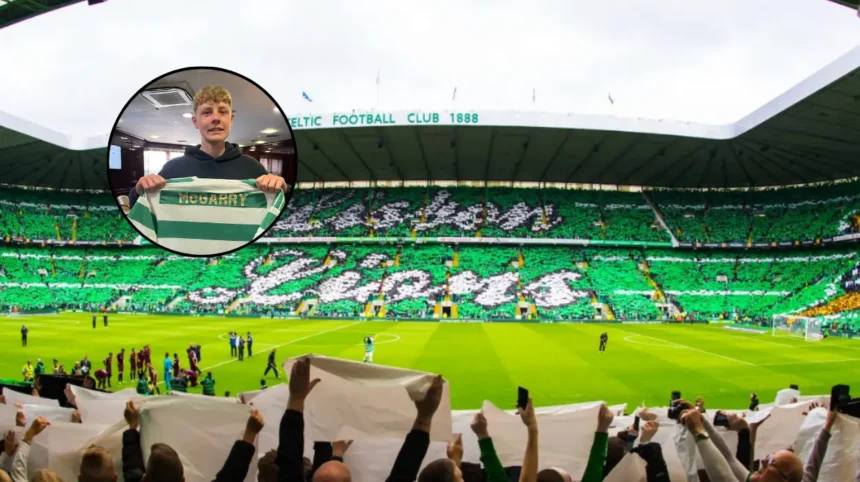
- Professional Contract Directives: 17-year-old West Belfast teenager Shea McGarry is set to sign a professional contract with Scottish Premiership side Glasgow Celtic FC later this month.
- Community Milestone: Upon completion of the signing, McGarry will become one of the rare footballing talents from West Belfast to join the Glasgow club, following in the historic footsteps of Anton Rogan, who represented Celtic during the 1980s and 1990s.
- Gaelic Athletic Association Origins: The young prospect began his sporting career in Gaelic games, representing local Belfast club Lámh Dhearg from the age of five before taking up competitive association football.
- Late Entry into Competitive Football: McGarry did not participate in structured club football until approximately ten years of age, having previously played informally during school break times and on local green areas in Glen Colin.
- Grassroots Progression: His transition into club football began when he joined Poleglass-based youth outfit Celtic Boys alongside his friend Christopher, initiating his rapid pathway towards professional scouting networks.
- Family Insights: In an exclusive interview given to the Andersonstown News, his mother, Lorraine McGarry, outlined her son’s sporting progression, emphasizing that his journey was entirely self-driven without parental pressure.
Celtic (Glasgow Express) October 10, 2026 – A 17-year-old football prospect from West Belfast, Shea McGarry, is preparing to formalize his transfer to Glasgow Celtic Football Club after agreeing terms on a professional contract with the Scottish Premiership side. The young player is scheduled to sign the official documentation later this month, ending a long period without a local West Belfast representative on the playing squad at Celtic Park.
As reported by reporter Daniel Kelly of the Andersonstown News, the announcement marks a significant milestone for local sports development in Ireland, which has maintained long-standing historical and sporting ties with the Glasgow institution through figures such as Neil Lennon, Martin O’Neill, Jonny Hayes, and Liam Scales.
The upcoming agreement represents a rare breakthrough for West Belfast youth football. The region has not seen a local player secure a place within the Glasgow club’s ranks since former defender Anton Rogan featured for the Hoops during the late 1980s and early 1990s.
How Did Shea McGarry Begin His Journey in Sport?
In an interview granted to reporter Daniel Kelly of the Andersonstown News, the player’s mother, Lorraine McGarry, outlined the early trajectory of her son’s athletic career, noting that competitive association football was initially not part of his childhood plans.
As reported by reporter Daniel Kelly of the Andersonstown News, Lorraine McGarry stated:
“He’s done us so proud getting this far, but we never pressured him into playing football it was quite a coincidence actually how he got started.”
She explained that her son’s earliest athletic endeavors were centered entirely around Gaelic games rather than association football, with his initial sporting development taking place within the local community setup in West Belfast.
As reported by reporter Daniel Kelly of the Andersonstown News, Lorraine McGarry stated:
“Shea was always involved in sport with GAA, playing for Lámh Dhearg from when he was five-years-old, but soccer was never on the agenda for him until he was about ten, then a few of his friends who neighboured his granny got him involved in Celtic Boys.”
When Did Shea McGarry Transition to Club Football?
Prior to joining an organized football team, McGarry participated in the sport strictly on an informal basis alongside schoolmates and neighborhood peers in his local area.
As reported by reporter Daniel Kelly of the Andersonstown News, Lorraine McGarry stated:
“Up until that point Shea only really played football at lunch-time in school or in the front green in Glen Colin but never had any interest in playing competitive football. It was all about Lámh Dhearg and that was it really until he started with Celtic Boys after he and his friend Christopher joined the Poleglass-based club.”
The transition from informal recreation to structured club training at the Poleglass-based Celtic Boys marked the beginning of his development toward elite academy scouting, eventually attracting interest from professional scouts in Scotland.
What is the Background of This Particular Development?
The connection between Ireland and Glasgow Celtic Football Club is rooted in over a century of shared cultural and sporting history. Established in 1887 in the East End of Glasgow by Brother Walfrid, an Irish Marist brother from County Sligo, Celtic Football Club was originally founded to alleviate poverty within the Irish immigrant community in Scotland. Over decades, this origin created an enduring fan base across Ireland, with strong supporters’ clubs operating throughout Belfast and northern districts.
In West Belfast specifically, local interest in Celtic has remained consistently high. However, direct pathways for local players from West Belfast grassroots teams to the senior Celtic setup have been historically scarce. During the late 1980s and early 1990s, Anton Rogan served as a prominent local figure who successfully transitioned from Northern Irish football to establish himself at Celtic Park, making over 100 appearances for the club.
In recent decades, while several elite Irish players—including former managers Neil Lennon and Martin O’Neill, alongside current international squad members like Liam Scales—have achieved prominence in Glasgow, young recruits directly hailing from West Belfast grassroots setups have been uncommon. Grassroots development in Northern Ireland traditionally relies on local youth clubs, community schemes, and Gaelic Athletic Association (GAA) clubs, which often cultivate cross-sport athleticism before young talents are identified by cross-channel scouting networks in England and Scotland.
How Can This Development Affect the Local Football Community and Young Athletes?
The signing of Shea McGarry by Glasgow Celtic Football Club carries notable implications for young aspiring athletes, grassroots clubs, and cross-channel youth scouting in Northern Ireland.
1. Grassroots Visibility and Scouting Opportunities
McGarry’s transition from a local youth team in Poleglass to a major European academy highlights the ongoing effectiveness of local grassroots programs. His signing demonstrates to Northern Irish youth organizations, such as Celtic Boys and GAA clubs like Lámh Dhearg, that talent pathways exist even for individuals who enter structured association football at a later age. This development may encourage Scottish and English clubs to dedicate greater scouting resources to grassroots leagues within Belfast.
2. Community Engagement and GAA Dual Participation
The player’s background in Gaelic Athletic Association (GAA) competition up to the age of ten underscores the benefits of multi-sport participation during early childhood. His successful trajectory demonstrates that early specialization in association football is not strictly necessary to reach elite levels, potentially encouraging local sports federations to maintain cooperative scheduling between youth Gaelic games and association football.
3. Pathway Inspiration for Local Youth
For young athletes across West Belfast, McGarry’s professional contract provides a visible, modern example of a local peer achieving a place at a major professional club. This milestone strengthens the aspirational connection between youth football leagues in Belfast and elite academy structures in Scotland, signaling to local players that professional opportunities remain achievable through community-level pathways.