Key Points
- Match Outcome: Celtic missed out on the opportunity to extend their advantage at the summit of the Scottish Premiership table following a surprising 2-0 defeat away to Falkirk.
- Striker’s Record: Colombian forward Camilo Durán started in his preferred central role but was unable to score, ending a sequence where he had recorded eight goal contributions in his prior six appearances.
- Iconic Critique: Former Celtic goalkeeper and club icon Pat Bonner identified key flaws in Durán’s tactical movement, noting that while the player has received significant praise since his summer arrival, further refinement is needed if he is to succeed long-term at Parkhead.
- Attacking Concerns: The scoreless performance away from home has raised fresh question marks over Celtic’s forward efficiency when facing compact, organized defensive units.
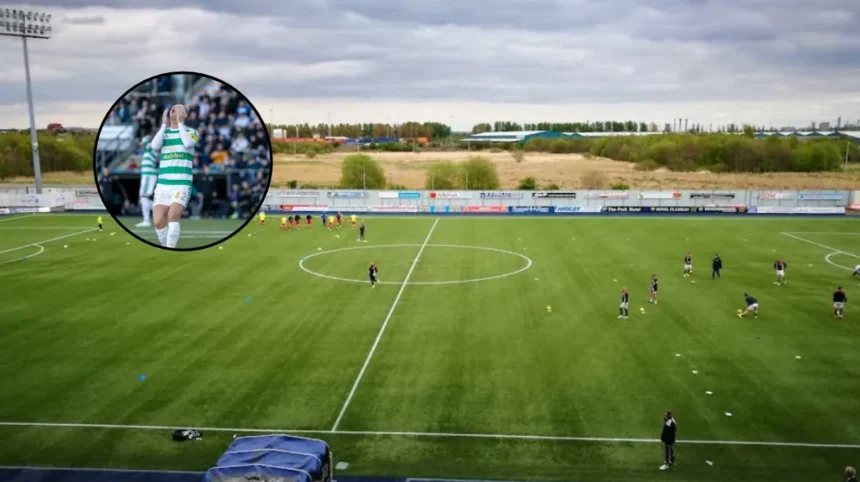
Glasgow (Glasgow Express) November 2, 2026 – Celtic missed out on a prime opportunity to extend their lead at the top of the Scottish Premiership standings after falling to a 2-0 defeat against Falkirk. The setback at the Falkirk Stadium highlighted underlying structural issues within the Hoops’ forward line, drawing sharp tactical scrutiny from former players and media analysts alike.
Despite entering the fixture with impressive momentum, the visitors found themselves unable to break down a resilient domestic opposition. Summer signing Camilo Durán was selected by manager Martin O’Neill to lead the line in his natural central attacking role. Although the 24-year-old Colombian striker had registered eight goal contributions in his preceding six matches, his movement proved insufficient to crack Falkirk’s defensive structure.
According to analysis broadcast on BBC Sportsound, former Celtic goalkeeper Pat Bonner highlighted tactical limitations in the frontman’s overall display. Bonner observed that while Durán has garnered substantial credit for his early-season goal scoring, his off-the-ball positioning requires work if he is to hold down the starting role permanently at Parkhead. Bonner noted that against deep-set lines, a primary striker must continuously alter their angles of movement to create passing lanes for incoming midfielders, a quality that was noticeably absent during Sunday’s contest.
How Did Falkirk Neutralize Celtic’s Attacking Threat?
Falkirk’s defensive shape systematically limited the space available to Celtic’s creative players, restricting service to the central striker throughout both halves. As recorded by press coverage across Scottish national sports outlets, Falkirk absorbed periods of high ball possession before capitalising on decisive transitions.
During the first half, Durán came close to breaking the deadlock, seeing one header strike the woodwork and two further efforts saved by goalkeeper Scott Bain. However, as the match progressed, Falkirk’s central defenders successfully pushed the Colombian further away from the penalty box. Bonner emphasized that when service becomes scarce, an elite striker must adapt by pulling wide or dropping short to pull defensive structures out of shape.
Instead, Celtic’s focal point remained static for prolonged periods. The inability to alter the angle of attack ultimately resulted in Durán’s substitution in the 65th minute, with Kasper Høgh brought on to search for a late breakthrough. The change yielded little structural difference, as Falkirk preserved their two-goal margin until the final whistle.
Background of the Development
The modern tactical evolution of the Scottish Premiership has seen an increasing number of clubs adopt low-block defensive formations when hosting Celtic. To counter this, historical success at Parkhead has often hinged on forward players who combine physical presence with fluid movement.
Camilo Durán arrived at Celtic during the summer transfer window from Azerbaijani champions Qarabağ for a reported fee of £6 million. The Colombian made an immediate impression on supporters, demonstrating sharp finishing skills in open play and establishing himself as the club’s primary scoring outlet during the opening months of the 2026–27 campaign.
However, recent fixtures have highlighted a growing contrast between Celtic’s domestic home form and their performances away from Glasgow or on the European stage. The team has managed just three wins from their last ten outings in all competitions, raising wider questions regarding tactical flexibility. Bonner’s technical critique reflects a broader debate among former players regarding whether O’Neill’s system relies too heavily on individual brilliance rather than structured movement patterns in the final third.
Prediction: How This Development Could Affect Celtic and Their Supporters
This defeat and the subsequent tactical commentary are likely to impact Celtic’s operational approach and overall supporter sentiment over the coming weeks:
- Increased Tactical Scrutiny on the Frontline: Opposing managers in the Scottish Premiership will take encouragement from Falkirk’s defensive template. Celtic can expect upcoming opponents to deploy similar narrow defensive blocks, forcing Martin O’Neill and his coaching staff to work closely with Durán on his off-the-ball runs and link-up play.
- Selection Pressure and Rotation: With alternative options like Kasper Høgh eager for starting opportunities, Durán’s position as an undisputed starter could come under pressure if his movement against compact teams does not show immediate improvement.
- Title Race Dynamic: By surrendering three points at Falkirk, Celtic have allowed the chasing pack to narrow the margin at the top of the league table. Any further stumbles against mid-table opposition could turn what initially appeared to be a comfortable title defense into a tightly contested, high-pressure race through the winter period.
- Fan Expectations Ahead of European Fixtures: With pivotal continental fixtures scheduled at Parkhead, supporters will expect a direct response in terms of intensity and tactical variety, placing heightened performance expectations on summer signings to prove their long-term capability at the highest level.