Key Points
- Scotland’s first museum dedicated to stained glass art and history is scheduled to open early next year in Glasgow’s west end.
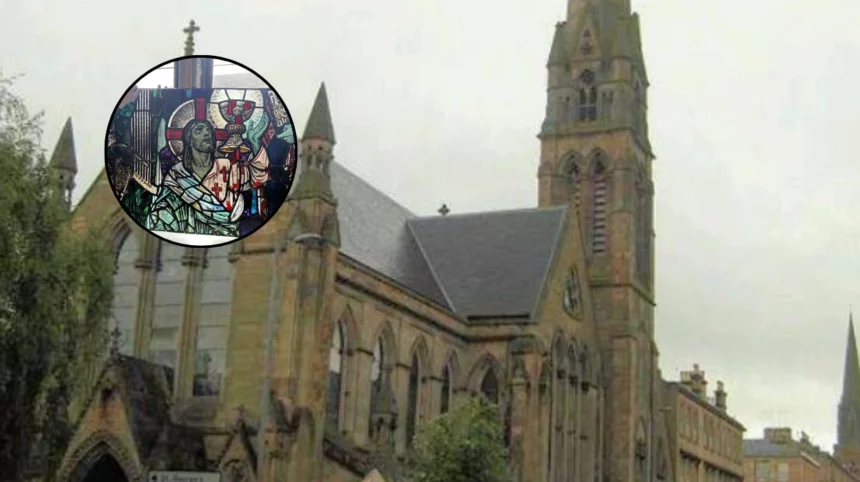
- The cultural attraction will be housed inside the former Lansdowne Church on Great Western Road at Kelvinbridge, occupying the gallery space above The Stand comedy club.
- The initiative is spearheaded by Fact Three, the charitable trust responsible for driving the building’s extensive restoration and conservation efforts.
- Funding for the first phase of the museum includes a £250,000 grant from The National Lottery Heritage Fund, £132,000 from Glasgow City Heritage Trust, and £15,000 from The Architectural Heritage Fund.
- Restoration work has successfully completed extensive repairs on 21 stained glass panels forming one of two major windows created by pioneering artist Alf Webster.
- A specialized system of secondary glazing has been installed to ensure the long-term conservation and protection of these fragile historic artworks.
Glasgow (Glasgow Express) October 7, 2026 — Scotland is preparing to welcome its very first museum dedicated entirely to the intricate craft and history of stained glass, breathing new life into one of the city’s most recognisable architectural landmarks.
What is Scotland’s first stained glass museum and where is it located?
The groundbreaking cultural venue will be situated within the gallery space directly above The Stand comedy club, which recently established its residency inside the historic former Lansdowne Church located on Great Western Road at Kelvinbridge. This ambitious project aims to celebrate the rich heritage of Scottish glass art, placing a primary focus on the pioneering and influential work of local artist Alf Webster.
The initiative is being driven forward by Fact Three, the dedicated charitable trust that has spearheaded the meticulous renovation and conservation of the B-listed landmark building. Transforming the spacious gallery into a public exhibition space allows visitors an unprecedented, close-up encounter with masterworks of Victorian and Edwardian ecclesiastical craft that have remained largely obscured from public view for generations.
How much funding has been secured for the museum project?
The realization of this cultural milestone has been made possible through a significant package of heritage grants and philanthropic investments. Fact Three successfully secured a total of £250,000 from The National Lottery Heritage Fund to kickstart the ambitious enterprise.
In addition to the National Lottery contribution, the project received crucial financial backing from local and specialist preservation bodies. This includes £132,000 awarded by the Glasgow City Heritage Trust alongside a further £15,000 grant from The Architectural Heritage Fund, ensuring that the necessary structural and conservation safeguards could be met.
What restoration work has been completed on the Alf Webster windows?
With the financial backing secured, the charitable trust has already completed extensive and delicate conservation work on a crucial section of the building’s artistic portfolio. Conservators successfully repaired and restored 21 individual stained glass panels.
These restored panels comprise one of two magnificent stained glass windows originally designed by the celebrated artist Alf Webster that adorn the historic structure. Furthermore, specialists have engineered and installed a sophisticated system of secondary glazing specifically designed to shield the fragile historic glass from environmental degradation and potential physical damage.
Background of the Particular Development
The establishment of Scotland’s first stained glass museum represents a major turning point in the preservation and public appreciation of Victorian decorative arts in Glasgow. The former Lansdowne Church, designed by renowned architect John Honeyman and opened in 1863, has long been celebrated for its striking Gothic Revival architecture and monumental spire. However, shifting congregation numbers over the decades led to the building’s redundancy as a place of worship, putting its architectural and artistic treasures at risk of neglect.
Alf Webster, whose work forms the centerpiece of the new museum, was a brilliant yet tragically short-lived stained glass artist who trained at the Glasgow School of Art. Active in the early 20th century, Webster revolutionized Scottish stained glass by introducing a vibrant, painterly realism and deep emotional resonance into ecclesiastical design, heavily influenced by the Arts and Crafts movement. The rescue of the Lansdowne Church building—first through its adaptation to accommodate cultural uses like comedy and now through dedicated museum spaces—reflects a broader urban conservation strategy in Glasgow to repurpose historic spaces for community and artistic engagement.
Prediction
The opening of this specialized museum is expected to have a profoundly positive impact on local historians, art enthusiasts, cultural tourists, and the broader Glasgow community. For visitors and residents alike, the development transforms a previously under-utilized architectural landmark into an accessible educational hub, boosting cultural tourism along the Great Western Road corridor.
Art historians and students of design will benefit from direct, close-up access to masterworks that were previously difficult to study in situ, potentially sparking renewed academic and public interest in Scotland’s rich decorative arts heritage. Furthermore, the integration of the museum alongside existing cultural tenants like The Stand comedy club fosters a vibrant, multi-use community anchor that demonstrates how heritage buildings can sustainably support contemporary creative industries without compromising historical integrity.