Key Points
- Long-Awaited Return: The Lemon Twigs made their return to Glasgow, Scotland, marking their first live performance in the city in nearly two years.
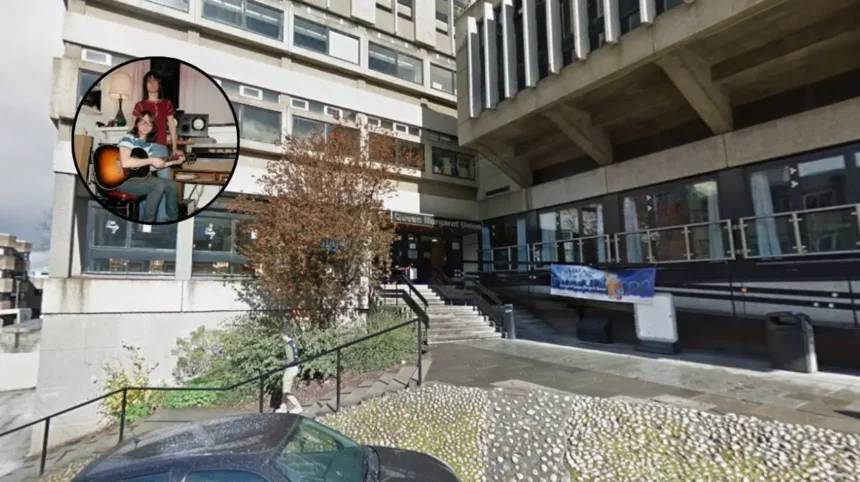
- New Ground Broken: The American rock band performed at the Queen Margaret Union (QMU), marking a major milestone as they moved to larger capacity rooms compared to previous appearances at Saint Luke’s and the TV Studio at SWG3.
- National Tour Scaling: The current tour itinerary includes high-profile appearances at major British musical landmarks, including the O2 Shepherd’s Bush Empire in London.
- Decade of Growth: Music critics and industry insiders highlight that scaling up to venues of this magnitude indicates the group is achieving wider institutional recognition after just over ten years of active touring and recording.
- Critically Acclaimed Setlist: The performance integrated signature vocal harmonies and multi-instrumental setups, leaning on an extensive catalogue that showcases their progression from underground pop perfectionists to a major touring act.
Glasgow (Glasgow Express) May 30, 2026 — The Lemon Twigs have made a spectacular return to Glasgow, breaking fresh performance ground by delivering a critically acclaimed, high-energy live set at the Queen Margaret Union. Marking their first live appearance in the city in almost two years, the performance served as a definitive statement of the band’s escalating commercial and critical trajectory within the United Kingdom.
- Key Points
- Why Is The Lemon Twigs’ Return To Glasgow Considered A Major Turning Point For The Band?
- How Did Music Critics And Journalists Document The Performance At The Queen Margaret Union?
- Background of The Lemon Twigs’ Musical Evolution
- Prediction: How This Development Affects Modern Indie Rock Audiences
The New York-born outfit, fronted by brothers Brian and Michael D’Addario, stepped onto the Queen Margaret Union stage as part of a broader, upscale national tour that features milestone bookings at historic venues such as London’s O2 Shepherd’s Bush Empire.
Industry analysts note that transitioning to venues of this footprint represents a substantial leap forward from the group’s previous Scottish appearances at Saint Luke’s and the TV Studio at SWG3.
Having spent just over a decade actively creating music, this shifting venue dynamic demonstrates that the band is systematically capturing the mainstream industry recognition that long-term followers argue has been overdue.
Why Is The Lemon Twigs’ Return To Glasgow Considered A Major Turning Point For The Band?
As documented widely across contemporary music media, the choice of venue for this leg of the tour carries significant weight regarding the band’s industry standing.
For a group that has built an exceptionally loyal, subcultural following over the past ten years, moving into larger student union spaces and historic theatres represents a conscious graduation from the traditional indie-club circuit.
According to live event reporting by contemporary music outlets covering the tour, the atmosphere inside the Queen Margaret Union reflected a clear shift in demographic scale.
The sheer capacity of the QMU required a level of staging, sonic projection, and production values that far outstripped their earlier, intimate klub-focused tours in the region.
Observers noted that the D’Addario brothers met this physical scale with an elevated level of showmanship, maintaining their trademark kinetic energy and intricate vocal layers while commanding a significantly wider room.
How Did Music Critics And Journalists Document The Performance At The Queen Margaret Union?
The response from the music press has focused intensely on the sheer technical execution of the performance, detailing a setlist that blended foundational catalog pieces with material from their latest studio recordings.
Journalists present at the event highlighted the group’s unique internal chemistry, which relies heavily on the brothers’ shared vocal ranges and frequent instrument swapping.
Writing for Dork Magazine, a staff reporter observed that the inclusion of the Queen Margaret Union on this specific touring cycle emphasizes a broader strategy of geographical and room-size expansion.
The publication recorded that the audience’s reception to the performance confirmed the band’s rising status, validating their transition to premium rooms across the country.
Furthermore, as reviewed by Pat Carty of Classic Rock / Louder Sound during the broader album and touring cycle, the musical prowess displayed by the D’Addario brothers continues to defy simple classification. Pat Carty stated that
“the records that the band surely do listen to themselves are all evident,”
adding that the intricate arrangements and rich vocal deliveries evoke the timeless, classic songwriting of historic pop-rock masters without falling into imitation.
The live configuration, which regularly features the brothers shifting between drums, bass, and lead guitar positions mid-set, was lauded by critics for maintaining absolute tight precision despite the complex logistics of their tracking.
The band’s live personnel—comprising core collaborators Danny Ayala and Reza Matin—provided a rock-solid rhythmic spine that allowed the frontmen to execute their high-kicking, classic-rock-infused stage antics without dropping a single vocal harmony.
Background of The Lemon Twigs’ Musical Evolution
To contextualise this development, it is essential to trace the decade-long journey of The Lemon Twigs from their origins in Hicksville, Long Island, New York. Founded by brothers Brian and Michael D’Addario, the group emerged into the public consciousness as teenage prodigies, releasing their debut studio album Do Hollywood in 2016 under the prominent independent label 4AD.
Raised in a highly musical household—their father Ronnie D’Addario is an accomplished songwriter and musician—the brothers developed a profound mastery over 1960s and 1970s pop-rock forms, specialising in baroque pop, power pop, and jangle rock.
The band’s early career was defined by a highly theatrical, maximalist approach to rock music, exemplified by their sophomore effort, Go To School (2018), a complex concept album concerning a chimpanzee raised as a human boy.
While these early records established them as critical darlings and earned them high-profile endorsements from legendary figures like Todd Rundgren and Elton John, the extreme complexity of their arrangements occasionally limited their broader commercial footprint.
A structural turning point occurred when the band signed with the independent label Captured Tracks. This partnership yielded a trilogy of highly refined records: Everything Harmony (2023), A Dream Is All We Know (2024), and their newest studio effort Look For Your Mind! (2026).
During this period, the brothers consciously shifted their production philosophy. Michael D’Addario noted that this era represented
“the beginning of making records that we would listen to ourselves,”
prioritizing pristine melodic construction, jangly guitars, and immaculate Beach Boys-style vocal harmonies.
The integration of touring members Reza Matin and Danny Ayala into the formal studio tracking process for Look For Your Mind! injected a vibrant, collective live-band energy into their recorded work.
This calculated refinement in sound directly correlates with their ability to fill venues like the Queen Margaret Union and the O2 Shepherd’s Bush Empire, as their recorded arrangements now translate seamlessly into powerful, room-filling live audio.
Explore More Local Glasgow News
Calvay Superstore Lease Saved: Barlanark 2026
Glasgow Classroom Assistants Rally on School Violence 2026
Prediction: How This Development Affects Modern Indie Rock Audiences
The successful scaling of The Lemon Twigs into larger UK venues is poised to exert a measurable influence on the broader independent rock audience, particularly those tracking the revival of guitar-driven pop music.
For the core audience—often colloquially referred to as “Twiglets”—this upward trajectory guarantees a higher level of tour sustainability, ensuring that the band can continue to mount international live operations with superior production values, better acoustic engineering, and more expansive stage setups.
Conversely, for long-term purists who value the intimacy of smaller venues like Saint Luke’s, this transition signifies a permanent shift toward major-circuit viewing, requiring audiences to adapt to larger crowd dynamics, reserved ticketing structures, and barrier-separated viewing spaces.
On an industry-wide scale, the commercial validation of a band so explicitly dedicated to analogue craftsmanship, intricate chord progressions, and un-quantized vocal performances offers a strong counter-narrative to the prevailing digital production trends in modern indie music.
This development signals to the wider concert-going audience that classic songwriting values and traditional musicianship retain a robust, expanding market share in the contemporary live music ecosystem.