Key Points
- A local resident living near St Enoch Square in Glasgow city centre has raised concerns over the recurring funfairs and carnival events hosted in the public space.
- The resident argued that because the attractions operate under temporary public entertainment licences granted in succession, the fairground setup has effectively become “permanent in all but name.”
- Concerns have been voiced regarding the impact of continuous temporary licensing on local residents who live in close proximity to the square, particularly concerning long-term noise, access restrictions, and public space availability.
- Under current licensing regulations administered by Glasgow City Council, temporary public entertainment licences permit commercial vendors to host seasonal attractions without triggering full planning permission processes for permanent structures.
- Community members are seeking clearer transparency and limits on how frequently temporary event licences can be granted back-to-back in high-density residential areas of Glasgow city centre.
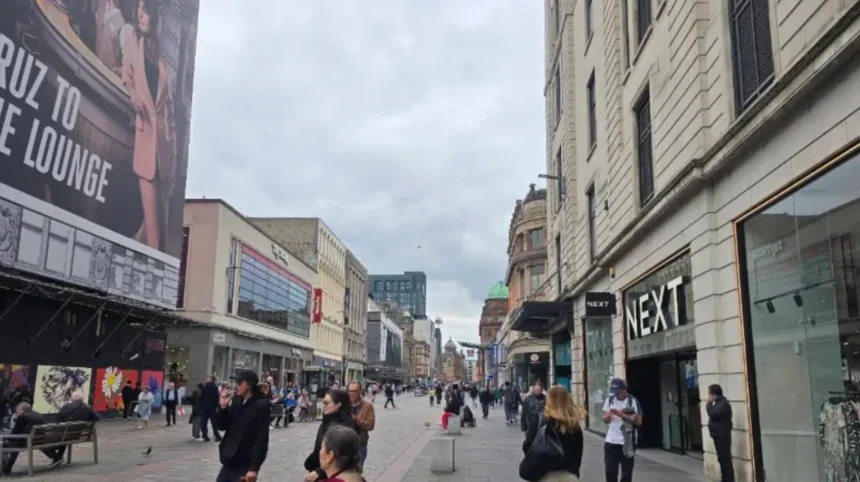
Glasgow (Glasgow Express) October 31, 2026 – A Glasgow city centre resident has expressed growing frustration over the continuous presence of funfairs in St Enoch Square, warning that the popular civic space has been turned into an amusement park that is “permanent in all but name.”
- Key Points
- Why Are Local Residents Expressing Concern Over St Enoch Square Licensing?
- How Does the Licensing System Operate for Public Spaces in Glasgow?
- What Impact Is the Continuous Funfair Presence Having on the City Centre Community?
- How Are Local Authorities Balancing Commercial Activity and Resident Rights?
- Background of the Particular Development
- Prediction: How This Development Can Affect City Centre Residents and Local Authorities
As reported by Nicole Mitchell of the Glasgow Times, the local resident, who lives directly adjacent to St Enoch Square, stated that the constant rotation of temporary public entertainment licences granted by Glasgow City Council allows commercial attractions to occupy the square almost continuously throughout the calendar year, bypassing standard permanent installation reviews.
Why Are Local Residents Expressing Concern Over St Enoch Square Licensing?
The dispute centers on how temporary public entertainment licences are being utilised by event operators in Glasgow city centre. Under local government guidelines, short-term licences enable carnival operators and event organizers to set up rides, food stalls, and entertainment booths for designated holiday periods, summer carnivals, and festive markets.
However, residents living nearby contend that when these temporary licences are issued consecutively across multiple seasons—ranging from spring fairs to autumn Halloween carnivals and winter Christmas markets—the line between temporary event hosting and permanent commercial occupation becomes blurred.
As reported by Nicole Mitchell of the Glasgow Times, the resident stated that “because the events are being given temporary public entertainment licences, residents are not being” afforded the standard consultation rights or environmental impact assessments typically required for long-term commercial developments.
How Does the Licensing System Operate for Public Spaces in Glasgow?
Public squares across Glasgow, including St Enoch Square and George Square, are routinely licensed for public events under the Civic Government (Scotland) Act 1982. Temporary public entertainment licences allow Glasgow City Council’s Licensing Committee to authorise commercial use of council-owned public realms.
When an application for a temporary public entertainment licence is submitted:
- Operators apply for permission covering specific start and end dates.
- The application is reviewed by municipal authorities, Police Scotland, and the Scottish Fire and Rescue Service to ensure safety compliance.
- Noise levels, structural stability of rides, and public safety corridors are checked prior to opening.
Because each application is evaluated individually as a short-term, temporary event, the cumulative duration of consecutive events throughout the year does not automatically trigger the statutory planning permission process that would apply to a permanent amusement facility.
What Impact Is the Continuous Funfair Presence Having on the City Centre Community?
City centre living in Glasgow has seen significant population growth over the past decade, with former commercial buildings converted into residential apartments surrounding key public hubs like St Enoch Square. This demographic shift has created heightened sensitivity around how civic spaces are shared between commercial operators, shoppers, and local households.
Residents living in the vicinity of St Enoch Square point to several key issues stemming from year-round event operations:
- Prolonged Noise Exposure: High volume sound equipment, generator noise, and crowd commentary associated with funfair rides operating late into the evening.
- Loss of Amenity Space: Reduced access to open civic space for pedestrian transit, sitting, and recreation when major portions of the square are enclosed by fencing and ride infrastructure.
- Disruption to Daily Routines: Increased footfall traffic, evening lighting, and commercial delivery vehicles operating immediately outside residential property windows.
How Are Local Authorities Balancing Commercial Activity and Resident Rights?
Glasgow City Council faces the complex task of balancing the economic vitality of the city centre with the living standards of local residents. Public events in St Enoch Square serve as significant economic drivers, drawing footfall to central shopping arcades, boosting local hospitality businesses, and providing vibrant seasonal attractions for visitors.
City leaders have repeatedly highlighted that events bring essential vibrancy and revenue to Glasgow’s central retail corridor, particularly as high streets recover and adapt to changing retail habits. However, community representatives maintain that commercial utilisation of public land must be balanced against the rights of taxpayers who reside in the immediate area.
Background of the Particular Development
St Enoch Square has historically served as one of Glasgow’s primary civic gateways, situated at the foot of Buchanan Street and directly connected to the St Enoch Underground station and shopping centre. Originally designed as a public square surrounding St Enoch’s Church in the 18th century, the space underwent major redesigns in the late 20th and early 21st centuries to serve as a pedestrianized plaza suitable for public gatherings and civic events.
Over the last decade, Glasgow City Council has expanded its commercial events calendar to revitalise city centre footfall. St Enoch Square became a focal point for seasonal events, hosting the annual Glasgow Christmas Market alongside spring and summer funfairs run by private carnival operators such as Funtime Carnivals.
As the volume and duration of these temporary events grew, local residential communities—formed primarily through the conversion of historic city centre commercial blocks into flatted accommodations—began raising formal objections. The ongoing debate over St Enoch Square reflects broader urban planning challenges facing major Scottish cities as municipal councils seek to generate commercial revenue from public land while preserving quiet enjoyment for an expanding downtown residential population.
Prediction: How This Development Can Affect City Centre Residents and Local Authorities
The growing pushback from Glasgow city centre residents regarding the continuous use of temporary licences at St Enoch Square is likely to trigger significant changes in municipal licensing policies and urban space management in the near future.
Impact on City Centre Residents
- Increased Formal Objections: Local residents are likely to form organized community groups to challenge individual temporary licence applications before Glasgow City Council’s Licensing Committee, demanding strict noise caps and restricted operating hours.
- Legal and Planning Appeals: Continued frustration over year-round temporary permits could lead resident associations to seek legal advice on whether repeated consecutive temporary licences violate statutory planning thresholds for permanent change of use.
- Enhanced Consultation Rights: Pressure from local voters could compel the council to establish mandatory public consultation periods specifically for residents living within a defined radius of major public squares prior to issuing event permits.
Impact on City Planning and Licensing Authorities
- Introduction of Annual Event Caps: Glasgow City Council may be forced to institute maximum annual limits on the number of days a single public square can be leased for commercial entertainment events in a calendar year.
- Stricter Environmental Conditions: Operators seeking permits for St Enoch Square will likely face tighter regulations on sound insulation, diesel generator use, and mandatory break periods between major events to allow public restoration of the square.
- Shift to Alternative Venues: To alleviate pressure on dense residential zones like St Enoch Square, municipal planners may gradually redirect large-scale funfairs and temporary carnivals toward non-residential civic areas or dedicated event spaces along the River Clyde corridor.