

Key Points
- More than 300 Canadian Army Reserve personnel will travel through Renfrew County for Exercise WOLF READY II.
- Convoys will head to Garrison Petawawa on November 20, 2026, with return traffic expected on November 22.
- Routes include Highways 7, 17, 26, 41, 55, 115, 401, 403 and 417.
- Planned stops will allow personnel to rest, refuel and complete scheduled maintenance.
- The military says soldiers will not carry weapons or ammunition during public stops.
- Drivers are being asked to use extra caution around military vehicles.
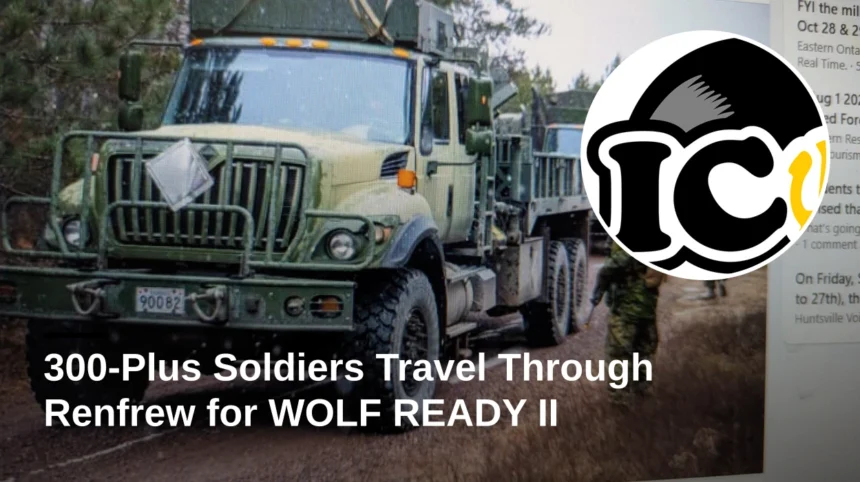
Renfrew (Glasgow Express) November 18, 2026 – More than 300 Canadian Army Reserve personnel from 33 Canadian Brigade Group will travel through Renfrew County and other parts of Ontario on November 20 for Exercise WOLF READY II at Garrison Petawawa. The convoys will transport soldiers and equipment in Department of National Defence vehicles and chartered buses as part of a major preparedness and readiness exercise. Similar traffic is expected on the return journey on November 22, with military vehicles using pre-planned routes and making short scheduled stops.
Which routes will the military convoys use?
As reported by CTV News in a report by Dan Bertrand, the convoys will operate between Sault Ste. Marie, Sudbury, North Bay, Peterborough, Kingston, Ottawa, Petawawa and surrounding communities. The Department of National Defence identified Highways 7, 17, 26, 41, 55, 115, 401, 403 and 417 as possible routes.
Inside Ottawa Valley reported that outbound traffic is planned for Friday, November 20, while return traffic is expected on Sunday, November 22. The military has not released individual departure times or vehicle counts for the convoys.
What is Exercise WOLF READY II?
Exercise WOLF READY II will run from November 20 to November 22 at Garrison Petawawa. According to the Canadian Armed Forces public service announcement cited by CTV News and The Quinteist, the annual exercise will involve simulated combat operations intended to support military preparedness and operational readiness.
Participating units include infantry, artillery and signals personnel from Canadian Army communities across Ontario. The exercise is separate from the public road movement, although the convoys are transporting personnel and equipment to and from the training location.
What should drivers and residents expect?
The military said short, planned stops will be made for rest, fuel and scheduled maintenance. Soldiers will not carry weapons or ammunition while making public stops on designated routes, according to the Department of National Defence statement reported by CTV News and Inside Ottawa Valley.
Residents may see increased military traffic around Renfrew, Petawawa, Ottawa and other communities along the routes. The public has been advised to take extra caution when approaching military vehicles and to allow additional space when travelling near convoys.
What is the background to the convoy movement?
33 Canadian Brigade Group is a formation of the Canadian Army Reserve comprising units in eastern Ontario. Its personnel are travelling from several Ontario communities to Garrison Petawawa for the annual WOLF READY II training event. The Department of National Defence described the exercise as a simulated combat operation supporting preparedness and readiness. The convoys are scheduled transport and supply movements rather than an emergency deployment. Return movements are expected to follow the same general routes after the exercise.
How could the convoy affect people travelling through Renfrew?
People travelling through Renfrew on November 20 and November 22 may encounter military trucks, Department of National Defence vehicles and chartered buses, particularly on routes connecting the community with Petawawa and Ottawa. The presence of more than 300 soldiers and their equipment could mean slower travel near planned convoy movements and short stops, although officials have not announced specific closures or delays. Drivers should remain alert, follow normal road rules and avoid passing or manoeuvring unpredictably around military vehicles. The exercise is expected to affect road users and local residents rather than the general public directly, and personnel will not carry weapons or ammunition during public stops.


