Key Points
- Glasgow City Council is introducing a new city centre bus gate and closing a key road beside George Square from 6am on Monday 11 May.
- The section of road between Cochrane Street and Queen Street, currently operating as a bus gate, will close to all vehicles until 30 August while building works are carried out.
- Works will focus on the southern edge of George Square, including installation of new granite setts to form a stone‑paved roadway.
- Pedestrian access will be maintained throughout the closure, with the footway remaining open.
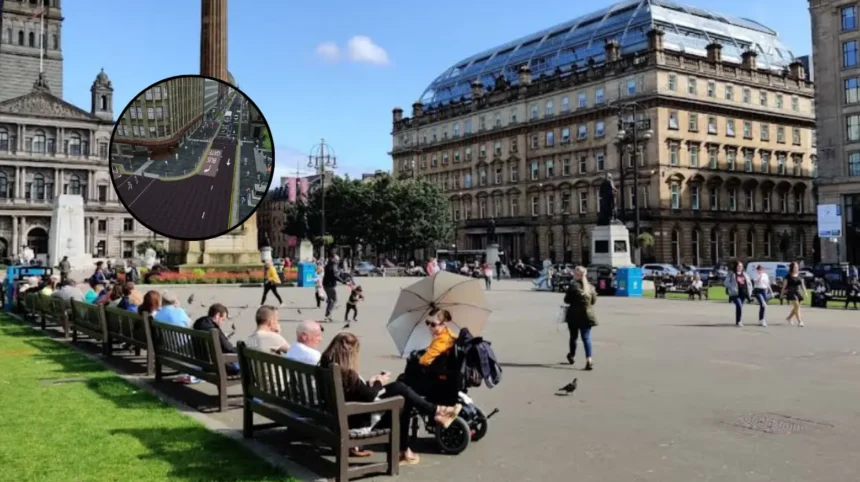
- The council says significant progress has already been made to “reimagine George Square”, including the planting of 49 new trees, repositioning of statue plinths, and completion of stone pavements on all sides of the square.
Glasgow City Centre (Glasgow Express) May 6, 2026 has announced adjustments to traffic flow in the city centre to coincide with the closure of the road on the southern side of George Square for building works, with the changes taking effect from 6am on Monday 11 May. The move follows ongoing plans to upgrade the historic square and manage vehicle movement in the heart of the city.
- Key Points
- Why is this road beside George Square being closed?
- How will this bus‑gate change affect traffic and buses?
- What pedestrian access and safety measures are in place?
- What broader changes have already taken place around George Square?
- Background of the development around George Square
- How might this development affect different groups in the city?
As reported by Glasgow City Council in a public notice, the stretch of road between Cochrane Street and Queen Street, which currently operates as a bus gate, will be closed to all vehicles until 30 August. The council explained that the closure is necessary to allow construction teams to carry out installation of granite setts on the southern edge of George Square, creating a stone‑paved roadway as part of wider surface‑upgrade works.
The council added that the footway will remain open throughout the works, and pedestrian access will be maintained. Local signage and traffic management will be put in place to direct buses and other permitted vehicles through alternative routes, though the council has not released a detailed map of revised bus‑gate access points for the phase‑two changes.
Why is this road beside George Square being closed?
The closure is linked to a broader programme to “reimagine” George Square, the principal civic square in central Glasgow.
As outlined by council communications officers in a statement, the southern edge of the square is being reworked to introduce a stone‑paved roadway using granite setts, which will alter how vehicles can traverse the area.
The council noted that such setts are intended to create a more durable, visually cohesive surface that aligns with the historical character of the square. By converting that section into a fully pedestrian‑focused or heavily restricted zone, the council aims to reduce through‑traffic in the immediate vicinity of the square while still allowing buses and authorised vehicles to use the designated bus‑gate infrastructure on adjacent routes.
According to the council’s own description of the project, the focus is on “enhancing the public realm” around George Square by integrating landscaping, improved paving, and clearer segregation between vehicles and pedestrians.
The works are scheduled to run through to 30 August, after which the council expects the amended layout to remain in place on a permanent basis.
How will this bus‑gate change affect traffic and buses?
The bus‑gate change will shift where general traffic can enter and exit the immediate area around George Square, while still allowing buses to pass through on designated routes.
As the road between Cochrane Street and Queen Street closes to all vehicles, private cars and non‑exempt vehicles will be required to divert via alternative streets, such as aspects of West Nile Street or the inner ring‑road routes, depending on directional travel.
The council has emphasised that the existing bus‑gate functions will continue on other nearby corridors, meaning licensed buses and exempt vehicles should still be able to reach key stops and interchange points in the city centre.
However, local operators and transport planners have been asked to review routing and timetable information in light of the closure, particularly for services that typically use the Cochrane–Queen Street section for short‑cutting or kerbside boarding.
City centre delivery drivers and taxi operators have also been alerted through the council’s transport‑planning bulletins.
They are advised to expect longer approach times and possible queuing on parallel streets, particularly during peak hours, as the new layout redirects flow away from the closed section.
Glasgow City Council advised the public and businesses to allow “additional travelling time” around the city centre during the work period and to monitor any temporary lane‑closures or signage updates published via the council’s traffic‑information portal.
What pedestrian access and safety measures are in place?
The council has stressed that the footway along the affected section will remain open, with pedestrian access maintained throughout the works.
Temporary barriers and signage will be installed to separate construction zones from public walkways and to guide pedestrians safely around work areas.
Council officials cited established health‑and‑safety protocols for urban construction, including the use of high‑visibility barriers, ground‑level lighting where necessary, and coordination with local policing partners to ensure clear sightlines and smooth movement of pedestrians, especially during busy shopping and events periods.
The authority also noted that the upgrades to the square’s paving and kerbs are intended to improve accessibility in the longer term, with level‑access routes and tactile guidance integrated into the new stone‑paved roadway.
These elements are being incorporated alongside the granite‑sett installation to align the square with modern accessibility standards.
What broader changes have already taken place around George Square?
The council says “significant progress” has already been made to redefine the character of George Square. According to the council’s latest public update, a total of 49 new trees have been planted around the square’s perimeter, contributing to greening targets and air‑quality improvements.
The statement also notes that statue plinths have been repositioned to create more open, legible circulation routes between key buildings such as the City Chambers and the concert halls on the square.
Stone road surfacing has already been installed on the north side of the square, giving that stretch a uniform, historic‑style appearance.
Additionally, stone pavements have been completed on all sides of George Square, meaning the perimeter footways now feature a consistent stone surface.
The council has described this as part of a wider effort to position the square as a high‑quality public space that can accommodate both civic events and day‑to‑day pedestrian movement.
Background of the development around George Square
The George Square upgrades form part of a long‑standing city‑centre regeneration strategy aimed at improving public space, reducing congestion, and enhancing the city’s image for residents, workers, and visitors.
Glasgow City Council has previously cited the square’s role as a key civic and events hub, hosting political gatherings, cultural festivals, and major public viewings, which places a strong emphasis on safety, accessibility, and clear traffic‑management measures.
The bus‑gate and road‑closure changes are framed within the council’s broader transport‑and‑environment agenda, which includes efforts to encourage active travel, restrict non‑essential through‑traffic in the city core, and support the use of public transport.
By gradually converting parts of the square’s surrounding road network into pedestrian‑friendly or bus‑priority zones, the council seeks to align the area with wider goals such as reducing emissions and improving air quality in densely built‑up parts of Glasgow.
How might this development affect different groups in the city?
The introduction of the new bus gate and the closure of the Cochrane Street–Queen Street road segment are likely to have distinct effects on local residents, commuters, delivery operators, and city‑centre businesses. Residents and office workers in the immediate vicinity may experience altered traffic patterns and potentially increased noise during the construction phase, although the council has indicated that works will be scheduled to minimise disruption outside peak hours where possible.
Commuters who rely on buses will need to monitor any route changes or temporary stop relocations, as the council and bus operators adjust timetables and access points in line with the amended layout.
Delivery drivers and taxi services may face longer journey times through the city centre, particularly during morning and evening peaks, as vehicles are diverted away from the closed section.
City‑centre businesses could see both short‑term inconvenience and longer‑term benefits. In the short term, the construction phase may lead to temporary congestion and reduced through‑traffic, potentially affecting customer access and delivery logistics. In the longer term, the council’s intention to create a more attractive, pedestrian‑oriented environment around George Square may increase footfall and support the viability of retail and hospitality venues in the area.