Key Points
- Community Discontent: Members of the Friends of Linn Park community group have expressed deep frustration over a lack of consultation regarding proposed housing developments on former parkland.
- Site Identification: A section of the former municipal golf course located within Linn Park in Glasgow’s southside has been earmarked by council authorities as a potential site for residential property development.
- Lack of Engagement: Local representatives report being left entirely out of the loop during the initial planning process, leaving residents feeling dismissed and unrepresented.
- Historic Amenity Lost: The land in question forms part of the former 18-hole Linn Park Golf Course, which closed permanently in March 2020 following municipal budget decisions and health restrictions.
- Council Position: Local government officials maintain that option assessments are ongoing for former municipal sites across the city, whilst community advocates demand formal consultation before any concrete allocation occurs.
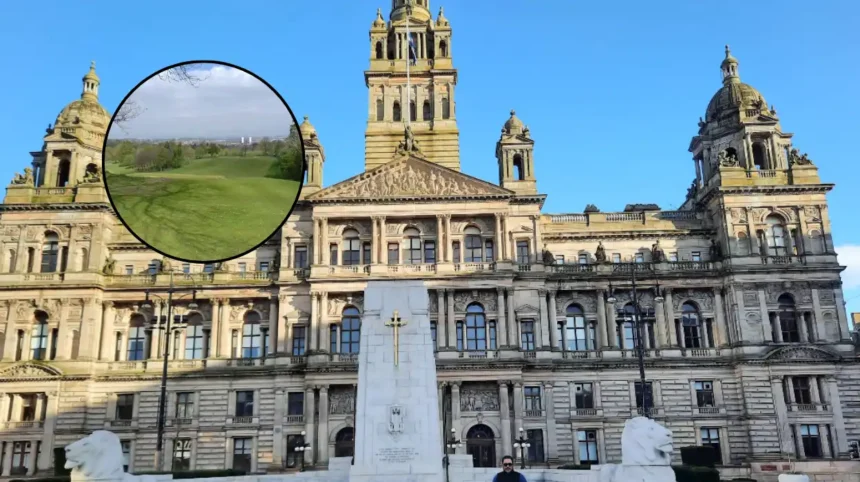
Glasgow (Glasgow Express) August 22, 2026 – A community group in the southside of Glasgow has claimed that local residents have been left feeling “ignored” by Glasgow City Council after plans surfaced showing that a section of a popular local park has been identified as a candidate site for new housing. Volunteers and representatives from the Friends of Linn Park stated that they had anticipated active engagement from local authority planners, only to discover that part of the former golf course inside the park grounds was being considered for residential development without prior direct consultation.
As reported by Glasgow Live, a spokesperson for the Friends of Linn Park stated:
“As a community and as a representative, we feel we’ve been ignored in the process.”
The statement highlights a growing friction between community preservation groups and municipal planners seeking land allocation across the city.
Why are local residents expressing frustration over the Linn Park housing proposals?
The dissatisfaction amongst residents centers around the prospective loss of open green space and what they view as a procedural failure in local governance. Linn Park, which spans approximately 200 acres and represents the third-largest parkland space in Glasgow, has long served as a key recreational amenity for surrounding neighborhoods including Cathcart, Muirend, Simshill, and Castlemilk.
According to local community organizers, the decision to designate a portion of the park’s former golf course for prospective housing came as a surprise.
Members of the community maintain that greenspaces should be safeguarded for biodiversity, active travel, and public recreation rather than reallocated for structural development. Representatives from the Friends of Linn Park have emphasized that while they understand the broader demands for housing across the city, the subtraction of public parkland directly undermines local environmental and social wellbeing.
Community members have raised concerns regarding how the site was chosen and whether environmental impact assessments were conducted prior to listing the site.
The group asserts that community-led initiatives and local feedback ought to be integrated into the early stages of spatial development frameworks rather than presented after initial assessments have already been recorded.
Explore More Local Glasgow News
Car Flips in Severe Crash on Clarkston Road, Cathcart, Glasgow 2026
Douglas Reid Avoids Jail in Second Paedophile Sting: Hamilton 2026
Background of the particular development
The land currently undergoing evaluation originally functioned as the Linn Park Golf Course, an 18-hole municipal facility established in 1925. For nearly a century, the public course provided low-cost sport access to thousands of local golfers and maintained extensive, managed turf within the park’s perimeter.
In February 2020, Glasgow City Council voted to withdraw operational funding from five municipal golf courses across the city as part of broader budgetary savings.
The onset of public health restrictions in March 2020 accelerated the immediate closure of the facility. Following its formal operational shutdown, ownership and management of the land remained with Glasgow City Council.
In the years following the closure, the unmaintained fairways naturally re-wilded, with local residents utilizing the expanse for walking, dog exercising, and informal leisure.
However, municipal land-use reviews have continually examined disused council assets to address city-wide requirements under the City Development Plan. As part of these strategic reviews, disused non-operational spaces—including decommissioned golf courses—have been catalogued for potential spatial re-purposing, leading directly to the current draft housing site identification.
Prediction
If the identified portion of the former Linn Park golf course is formally transitioned from parkland to residential housing, the impact on the local community will be twofold, reshaping both the physical landscape and civic dynamics in the southside of Glasgow.
- Impact on Local Residents: For the immediate neighborhood, the loss of open space will permanently reduce the available footprint of accessible public green space. Residents relying on the former course area for quiet recreation, nature access, and mental wellbeing will experience a curtailment of continuous park territory. Increased housing density in the immediate perimeter will also introduce additional pressure on localized infrastructure, including surrounding road networks, primary school admissions, and health service allocations in the Cathcart and Simshill areas.
- Impact on Council-Community Relations: The perceived lack of upfront dialogue risks deepening trust deficits between community groups and civic leaders. Should the development proceed without significant public consultation mechanisms, future council-led spatial planning initiatives may face heightened public resistance, legal challenges, or organized community campaigns.
- Impact on Housing Supply: From a broader city perspective, converting underutilized municipal land into residential zoning contributes directly to addressing Glasgow’s ongoing demand for housing stock. Depending on the proportion of affordable or social housing included in any final proposals, the development could offer new residential opportunities within an established suburb, balancing public open-space loss against municipal housing supply targets.