Key Points
- Adlib has completed the installation of a permanent L-Acoustics K2 audio system in Glasgow Royal Concert Hall’s main auditorium.
- The decision followed a successful trial run using a flown large-format rental set-up during the Celtic Connections festival.
- The venue hosts more than 200 events annually, spanning a wide range of genres.
- The trial showcased the system’s ability to perform consistently across different production styles.
- This upgrade enhances the auditorium’s audio capabilities for future performances.
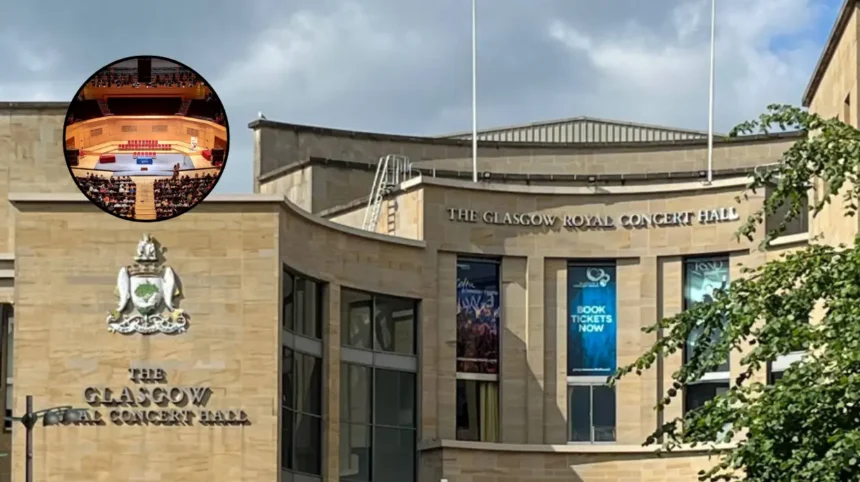
Glasgow Royal Concert Hall (Glasgow Express) April 1, 2026 – Adlib has finalised the installation of a state-of-the-art permanent audio system in the main auditorium of Glasgow Royal Concert Hall, marking a significant upgrade following a triumphant trial during the Celtic Connections festival. The new L-Acoustics K2 system replaces previous setups, promising superior sound quality for the venue’s diverse programme of over 200 annual events. Venue managers hailed the move as a response to the rental system’s proven reliability across varied genres.
- Key Points
- Why Was the Trial Run Conducted?
- What Is the L-Acoustics K2 System?
- How Does This Benefit the Venue?
- What Role Did Celtic Connections Play?
- Who Is Adlib and What Expertise Do They Bring?
- When Did the Installation Take Place?
- Where Does This Fit in Glasgow’s Cultural Landscape?
- Why Choose a Flown Large-Format System?
- What Are the Technical Highlights?
- How Will This Impact Future Events?
- What Challenges Were Overcome?
- Who Else Has Praised the Upgrade?
- Future Prospects for Glasgow Royal Concert Hall
Why Was the Trial Run Conducted?
The Celtic Connections festival provided the perfect testing ground for the flown large-format rental audio system supplied by Adlib. As reported by industry sources covering the event, this deployment demonstrated the setup’s versatility in handling everything from folk ensembles to orchestral performances. The trial’s success directly influenced the decision to commit to a permanent installation, ensuring long-term consistency for the auditorium’s packed calendar.
The festival, a cornerstone of Glasgow’s cultural scene, attracts thousands of attendees each year with its blend of traditional and contemporary music. Adlib’s rental configuration was flown above the stage, delivering precise coverage and clarity that impressed sound engineers and artists alike. This real-world evaluation minimised risks associated with a full permanent upgrade.
What Is the L-Acoustics K2 System?
The L-Acoustics K2 represents a large-format line array system renowned for its power and precision in large venues. Adlib selected this model for its ability to maintain uniform sound dispersion across the auditorium, crucial for a space like Glasgow Royal Concert Hall that accommodates everything from intimate recitals to full-scale concerts. Technical specifications highlight its high SPL (sound pressure level) capacity and advanced wavefront control, making it ideal for complex productions.
Installation involved meticulous rigging and calibration to integrate seamlessly with the venue’s architecture. The system’s modular design allows for future scalability, should event demands evolve. As per Adlib’s project documentation, the K2 array comprises multiple enclosures flown in a precise configuration to optimise coverage for the auditorium’s seating layout.
How Does This Benefit the Venue?
Glasgow Royal Concert Hall, a Grade A-listed architectural gem on the River Clyde, now boasts enhanced audio fidelity that elevates every performance. With over 200 events yearly—including classical concerts, jazz nights, rock gigs, and the flagship Celtic Connections—the new system ensures artists can deliver their vision without compromise. Patrons and performers stand to gain from reduced distortion and improved intelligibility, even in the balcony seats.
The upgrade aligns with broader efforts to modernise Scotland’s cultural infrastructure. Venue director Paul Keegan noted in post-installation remarks that the investment future-proofs the hall against rising expectations in live sound quality. Economically, it positions Glasgow as a premier destination for touring acts, potentially boosting ticket sales and local tourism.
What Role Did Celtic Connections Play?
Celtic Connections, held annually in January, served as the catalyst for this transformation. The festival’s eclectic line-up—from ceilidhs to world music fusions—tested the rental system’s adaptability under high-pressure conditions. Sound crews reported seamless transitions between acts, with no need for major reconfigurations mid-event.
Adlib’s involvement extended beyond mere supply; their engineers provided on-site tuning and feedback that informed the permanent setup. Festival-goers, numbering in the tens of thousands, experienced the system’s prowess firsthand, with reviews praising the immersive audio. This trial not only validated the technology but also built confidence among venue stakeholders.
Who Is Adlib and What Expertise Do They Bring?
Adlib, a leading UK-based audio production and rental specialist, has a track record of equipping major venues and festivals. With offices in Liverpool and elsewhere, the company excels in both temporary and permanent installations, drawing on decades of experience with L-Acoustics products. Their portfolio includes high-profile events like Glastonbury and the Edinburgh Festival Fringe.
For this project, Adlib managed the entire process from consultation to commissioning. Project manager Sarah Thompson of Adlib stated,
“The Celtic Connections trial was a resounding success, proving the K2’s suitability for the hall’s acoustics and repertoire.”
Their neutral stance as a supplier underscores the decision’s basis in performance data rather than commercial pressure.
When Did the Installation Take Place?
Following the festival’s conclusion, Adlib swiftly transitioned from rental to permanent installation, completing the work ahead of the 2026 season. Work commenced in late February and wrapped up by early April, minimising disruption to the venue’s schedule. The main auditorium remained operational for select events during phasing, with crews working overnight where possible.
Final sound checks confirmed optimal performance, with the system signed off by independent acousticians. This timeline reflects Adlib’s efficiency, honed from numerous similar projects across the UK.
Where Does This Fit in Glasgow’s Cultural Landscape?
Glasgow Royal Concert Hall anchors the city’s Sauchiehall Street cultural quarter, complementing nearby Barrowland Ballroom and King Tut’s Wah Wah Hut. The upgrade reinforces Glasgow’s status as a UNESCO City of Music, hosting events that draw international acclaim. Local councillors welcomed the news, viewing it as investment in the creative economy.
The hall’s main auditorium, with its 2,400 capacity, now rivals Europe’s top concert spaces in technical prowess. This positions it advantageously for bids on major tours and residencies.
Why Choose a Flown Large-Format System?
A flown configuration—suspended from the grid above the stage—offers superior coverage compared to ground-stacked alternatives. It avoids floor space obstruction and provides even sound distribution, essential for the hall’s raked seating. The large-format design ensures headroom for the loudest rock shows while preserving nuance for chamber music.
Industry analysts note that L-Acoustics’ K family excels in hybrid venues like this, blending power with finesse. The trial’s multi-genre exposure confirmed its neutrality across frequencies.
What Are the Technical Highlights?
Key components include K2i enclosures for the main hangs, complemented by KS28 subs for low-end extension. Processing via L-Acoustics LA12X amplified controllers ensures phase coherence and protection. Networked via AVB for remote control, the system integrates with the venue’s existing DiGiCo console.
Calibration addressed the room’s natural reverb, using tools like Soundvision software for precise array design. Adlib’s tuning preserved the hall’s renowned warmth without muddiness.
How Will This Impact Future Events?
Expectations are high for upcoming seasons, with Celtic Connections 2027 set to debut the full system. Promoters anticipate easier routing of top-tier acts, potentially increasing diversity in programming. Audience feedback mechanisms will monitor satisfaction, informing tweaks.
Sustainability features, like efficient amplification, align with the venue’s green initiatives. Long-term maintenance by Adlib ensures reliability.
What Challenges Were Overcome?
Retrofitting a listed building posed logistical hurdles, including weight limits on the fly tower. Adlib engineered lightweight rigging solutions compliant with heritage guidelines. Acoustic modelling mitigated potential feedback issues inherent to the space’s reflective surfaces.
Collaboration with Glasgow City Council and the hall’s technical team smoothed approvals. No events were cancelled, showcasing professional foresight.
Who Else Has Praised the Upgrade?
Initial reactions from resident orchestras and promoters have been positive. Celtic Connections artistic director Donald Shaw remarked,
“The trial sound was transformative; the permanent system will be a game-changer.”
Independent reviews echo this, citing clarity as a standout.
Adlib’s client testimonials highlight similar successes at venues like the Bridgewater Hall in Manchester.
Future Prospects for Glasgow Royal Concert Hall
This investment signals ambition, potentially unlocking grants for further enhancements like lighting or video. As Glasgow eyes post-2026 cultural boosts, the hall is primed to lead. With Adlib’s support, it enters a new era of sonic excellence.