Key Points
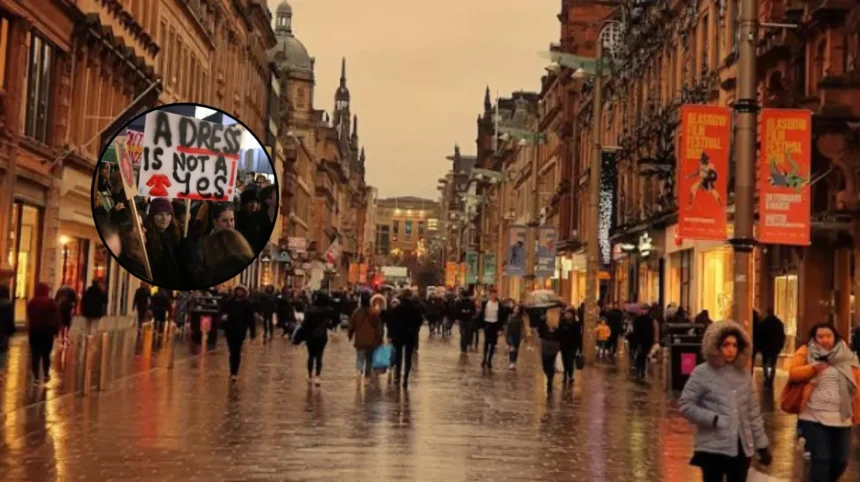
- Mobilisation for Safer Streets: Hundreds of university students, staff, and local campaigners in Glasgow are preparing to take part in the annual Fight for the Night demonstration to protest gender-based violence and demand safer urban spaces.
- Slogan and Demand: Carrying banners declaring “Glasgow girls just wanna walk home”, campaigners are highlighting the persistent anxiety and fear women experience when navigating city streets alone at night.
- Coordination Across Higher Education Institutions: The demonstration is being jointly organised by student representative bodies across the city, including the Glasgow University Students’ Representative Council (GSRC) and the Strathclyde Students’ Union (Strath Union), alongside citywide student partner organisations.
- Alignment with Global Activism: The march forms part of the international 16 Days of Activism Against Gender-Based Violence campaign, commencing in late November to advocate for structural solutions to male violence.
- Calls for Action: Campaigners are demanding systematic action from local authorities, educational institutions, and public bodies, including improved street lighting, reliable night transportation, and decisive measures to tackle misogyny.
Glasgow (Glasgow Express) November 3, 2026 — Student activists, campaigners, and university staff across the West of Scotland are preparing to take to the streets of Glasgow to demand an end to gender-based violence and urge civic leaders to make public spaces safer for women, non-binary, and trans residents. Under the rallying call “Glasgow girls just wanna walk home”, organizers are gearing up for the annual Fight for the Night march, set to take place across the city centre and West End. The protest aims to draw attention to the everyday safety concerns faced by women navigating urban spaces, while urging local authorities and educational institutions to implement concrete safety reforms.
As reported by Fahad Tariq of Glasgow Live, organisers and student leaders have emphasized that women, trans, and non-binary individuals, alongside those presenting as female, have a fundamental right to walk public thoroughfares at night without experiencing fear of sexual or gendered violence. The demonstration brings together student unions from across the region, including the Glasgow University Students’ Representative Council (GSRC) and the Strathclyde Students’ Union, creating a unified front across Glasgow’s major higher education campuses.
Why Are Glasgow Students Marching Against Gender-Based Violence?
The annual Fight for the Night demonstration serves as a direct response to ongoing concerns regarding public safety, street harassment, and systemic gender-based crime in urban environments. Student representatives maintain that despite repeated public pledges from authorities, female and gender-diverse students continue to report feeling unsafe when returning home late from classes, campus libraries, or night-shift employment.
According to statements issued by representatives from the Glasgow University Students’ Representative Council, the campaign seeks to channel collective frustration into organized advocacy. Spokespersons for the council publicly stated:
“Everyone deserves to feel safe walking the streets at night. Help us make our voices heard and stand together against gender-based violence.”
The march itinerary spans several key locations across the city, bringing together delegations from various academic hubs. Students from the University of Glasgow plan to gather at the iconic Memorial Gates on University Avenue before joining cohorts from other institutions, including the University of Strathclyde, whose contingent will convene near Richmond Street on their city-centre campus. The combined movement is scheduled to traverse major thoroughfares before converging in central Glasgow, symbolizing solidarity across campus boundaries.
As reported by reporting teams at the Glasgow Times, the upcoming march follows a series of public demonstrations throughout the city where grassroots groups have repeatedly characterized male violence against women and girls as a critical public health and safety issue. Campaigners have stressed that safety measures must go beyond individual vigilance and instead address wider structural failings in night-time transport, infrastructure, and public policy.
How Are Local Campaigns and Civic Bodies Responding to Night-Time Safety Issues?
The momentum surrounding the Fight for the Night event coincides with local media and civic initiatives designed to highlight street safety. The Glasgow Times recently launched its own ‘Action Not Words’ campaign, which advocates for concrete measures from public bodies, government agencies, and individuals to combat male violence against women, address misogynistic behaviors, and improve safety within the night-time economy.
Organisers have explicitly linked the demonstration to the international 16 Days of Activism Against Gender-Based Violence—an annual global campaign running from 25 November, the International Day for the Elimination of Violence Against Women, through to 10 December, Human Rights Day. During this period, local charities and support organizations intend to host a series of educational workshops, awareness sessions, and community support hubs across Glasgow.
As outlined by spokespersons for Glasgow Women’s Aid, the organization intends to focus its efforts throughout the campaign on raising awareness surrounding the diverse forms of abuse, aiding the public in recognizing early warning signs, and expanding access to specialist support services for women and girls affected by domestic and sexual abuse.
Additionally, student representatives have highlighted that the fight for night-time safety must remain inclusive. Official event notices from the participating student unions state that while gender-based violence disproportionately affects women, it also severely impacts trans, non-binary, and gender-diverse communities. Event organizers are working with student stewards to ensure the march route remains accessible to attendees with varying mobility requirements, integrating dedicated rest points along the route.
Background of Gender-Based Violence Initiatives in Glasgow
The Fight for the Night march, alongside related initiatives such as the Reclaim the Night movement, possesses deep historical roots within Glasgow’s student and feminist organizing communities. For decades, student unions across the West of Scotland have spearheaded annual night-time marches to protest street harassment, sexual assault, and inadequate civic infrastructure.
In recent years, the debate surrounding gender-based violence in Scotland has intensified significantly. National data and local surveys conducted across higher education institutions have consistently indicated high levels of street harassment, unwanted touching, and safety-related anxiety among young women and gender minorities. In response, local councils, transport operators, and university leadership teams have introduced various safety schemes, including enhanced CCTV coverage, night-bus trial runs, and active bystander training programs on campus.
Furthermore, civic organizations such as Glasgow Life and Glasgow City Council have previously launched multi-media awareness campaigns aimed at tackling misogyny and promoting cultural change among men and boys. Despite these initiatives, student organizations maintain that systemic gaps remain, particularly regarding late-night public transport availability, adequate street illumination in public parks such as Kelvingrove Park, and prompt police responses to reported street harassment. The persistent demand from grassroots campaigners reflects a ongoing gap between policy announcements and the everyday experiences of women walking home at night.
Prediction: How Will This Development Affect Glasgow’s Student and Civic Community?
This unified mobilization of university students, student representative bodies, and local advocacy groups is likely to exert significant pressure on Glasgow City Council, Police Scotland, and regional transport providers to accelerate tangible safety enhancements across the city’s night-time economy.
For the primary audience—namely university students, women, and gender-diverse residents across Glasgow—the Fight for the Night campaign will likely foster greater solidarity, heightened awareness of personal support services, and increased pressure on university administrations to expand safety measures, such as late-night campus shuttle buses and safe-space zones.
From a policy perspective, the high visibility of the march during the global 16 Days of Activism is expected to re-energise legislative and civic debates regarding urban planning and public transport infrastructure. Local authorities may face heightened public scrutiny regarding street lighting in park pathways, night-time transport availability, and the enforcement of licensing regulations for late-night venues. Consequently, this renewed push could accelerate localized policy commitments to tackle gender-based violence, forcing public sector bodies to transition from policy statements to measurable infrastructure and safety improvements across Glasgow.