Key Points
- Widespread Expansion: Glasgow City Council is planning a significant roll-out of new street-level “bin hubs” starting from April, aiming to improve recycling infrastructure across the city.
- Scale of Impact: The upcoming phase of the initiative is expected to benefit approximately 21,000 residential properties, expanding services to thousands of households living in flats and tenements. Glasgow Live
- Operational Progress: Reports confirm that 628 hubs have already been successfully installed across Glasgow as part of earlier pilot schemes and initial implementation phases. Glasgow Live
- Core Objectives: The strategic transition aims to make waste management easier for residents, enhance overall recycling rates, eliminate safety hazards for refuse crews, and reduce instances of missed collections. Glasgow City Council
- Neighborhood Enhancements: By moving communal waste collection points onto main road spaces, the local authority seeks to help residents clear back courts, keeping communal residential areas tidier and safer. Glasgow City Council
Glasgow (Glasgow Express) October 17, 2026 — Glasgow City Council is preparing to significantly expand its modernised waste management infrastructure with the introduction of further street-level bin hubs from next April, a new council report has confirmed. The upcoming phase of the environmental scheme is designed to enhance recycling accessibility and will benefit approximately 21,000 properties across the city, particularly focusing on high-density tenement flats and communal residential developments. The official documentation highlights that 628 bin hubs have already been erected in various pilot and initial target areas across Glasgow to date, establishing the foundation for a city-wide overhaul of domestic refuse collection.
How Will the New Bin Hubs Improve Household Recycling in Glasgow?
The primary objective behind the expansion of the bin hub initiative is to simplify waste segregation for local residents while driving up the city’s overall recycling capacity. Under the revamped scheme, the local authority is replacing traditional back-court collection setups with accessible, purpose-built street units positioned at the front of properties.
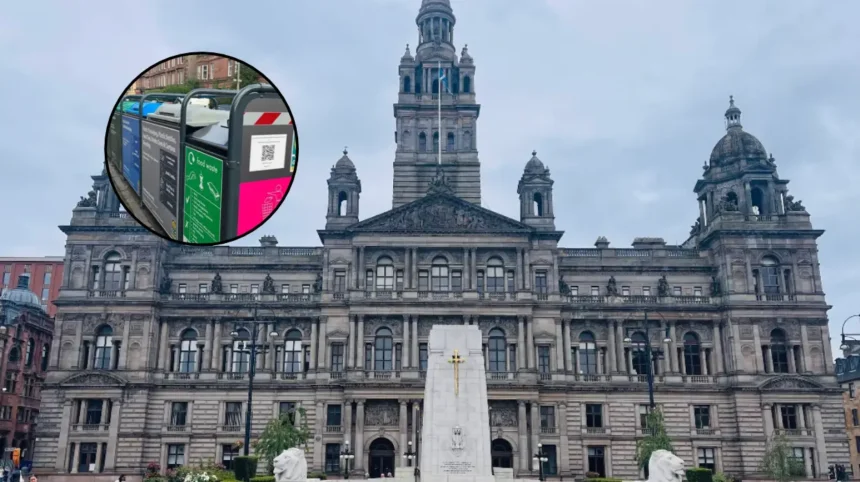
Each standardised hub is engineered to service an average of 40 flats. The strategic layout provides designated, color-coded bins dedicated to specific material streams: two green bins designated for general non-recyclable waste, one blue bin for paper and cardboard, one grey bin for metals, plastics, cartons, and plastic film, and a specialized grey unit for household food waste. By bringing these comprehensive recycling facilities directly onto public footpaths, municipal planners aim to remove barriers to sustainable waste disposal and encourage consistent household participation.
What Operational Benefits and Safety Improvements Does the Council Expect?
Beyond boosting domestic recycling rates, the municipal strategy addresses long-standing operational hurdles encountered by frontline collection teams. As reported by local news outlets covering municipal developments, local authority officials noted that moving collection points away from rear court spaces significantly mitigates acute health and safety hazards routinely faced by refuse crews.
Historically, operational staff have had to manually transport heavy waste containers through narrow tenement closes, dark alleyways, and steep staircases. The relocation of waste facilities to kerbside locations removes the necessity for workers to gain access to secured tenement buildings or navigate restricted rear lanes. Local authority reports emphasize that this structural shift will drastically reduce physical strain on workers, minimize structural property damage, and curtail the frequency of missed bin collections caused by locked access gates or blocked lanes.
Furthermore, council planners highlight that the system provides a major boost for resident living environments. Removing large, cluttered bins from communal back courts frees up vital private outdoor space for residents to use for recreation, food growing, or drying clothes, while simultaneously discouraging pest infestations and keeping communal properties tidy.
Background of the Particular Development
The push for dedicated on-street bin hubs in Glasgow originates from ongoing challenges surrounding waste management in high-density tenement areas, which constitute a significant proportion of the city’s housing stock. Historically, tenement residents relied on shared bins situated within private back courts or alleyways. This system frequently led to severe operational bottlenecks, including persistent bin access issues for council staff, severe back-court clutter, low recycling uptake, and recurring complaints regarding pest attractants and overflowing waste.
To address these systemic issues, Glasgow City Council initiated formal street-level bin hub trials, beginning with initial pilot projects in neighborhoods such as Pollokshields and Haghill. The trial tested specialized, enclosed street units supplied under long-term manufacturing tenders, incorporating customized artwork intended to complement local conservation aesthetics while clearly identifying waste streams.
Following initial evaluation phases and ongoing feedback from community stakeholders, municipal reports confirmed the successful installation of 628 hubs across pilot areas by mid-2026. The planned expansion commencing in April represents the next logical phase in the council’s broader statutory commitment to modernise urban sanitation, fulfill national recycling directives, and drastically cut the volume of domestic waste sent to costly landfill sites.
Prediction: How This Development Can Affect Glasgow Residents and Refuse Collection Services
The upcoming April expansion of the bin hub network is set to bring distinct practical changes for both local residents and municipal services across Glasgow:
- For Tenement Residents: Households included in the 21,000-property expansion will experience a major change in daily waste routines. Residents will no longer need to carry waste to back courts or deal with locked close doors blocking bin access. The availability of front-of-property recycling facilities for paper, plastic, metal, and organic food waste is expected to make daily recycling substantially easier. Additionally, households stand to gain cleaner, restored back-court spaces that can be repurposed for green community use. However, residents in dense areas may notice localized adjustments to kerbside parking spaces where on-street hubs are permanently anchored. Glasgow City Council
- For Collection Crews and Council Operations: The expanded footprint of kerbside hubs will streamline daily collection routes, permitting faster and more frequent collection schedules—such as four-day cycles for general waste and eight-day cycles for recyclables. Sanitation workers will benefit directly from safer, ergonomically improved working conditions, reducing workplace injuries linked to hauling heavy bins through narrow closes. Over time, the local authority predicts a marked decline in missed collection reports, lower land-tax penalties due to reduced landfill reliance, and cleaner overall streetscapes across target neighborhoods.