Key Points
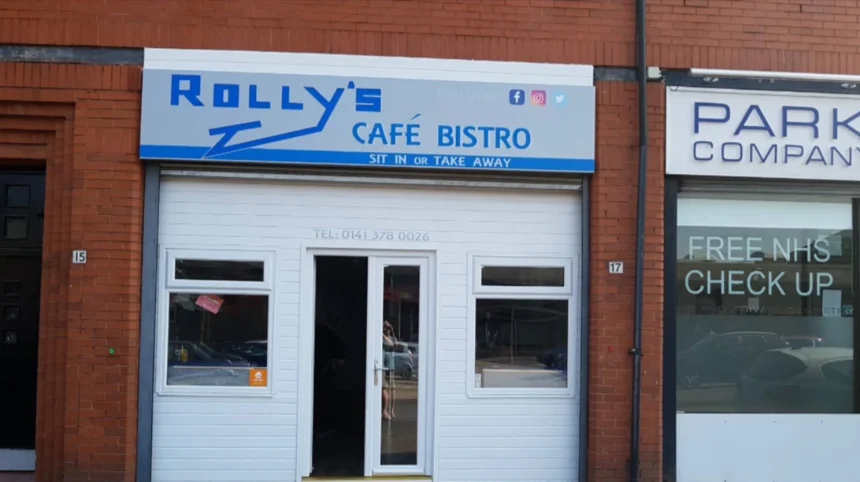
- A closure has been announced by Rolly’s Cafe for shutting down after operating for five years plus in the locality.
- The news was posted on social media platforms indicating that their final day of operation would be on Saturday.
- It was further indicated that it is still unsure whether the cafe will ever reopen again.
- Promotions were planned for the last day of operations to help in clearing out the left-over stock.
- This news has brought about many emotional reactions from people in the locality.
Glasgow (Glasgow Express) September 12, 2026 — A well-known local dining spot in Glasgow has officially announced its sudden closure after operating successfully for more than five years. As reported by Aidan Maxwell of the Glasgow Times, Rolly’s Cafe took to social media to break the news to its customer base, revealing that Saturday would serve as its final day of trading for the foreseeable future.
The decision has left regular patrons stunned, particularly given the establishment’s long-standing presence in the local community. In an emotional message published online, the business outlined its immediate shutdown while addressing the uncertainty of its long-term future.
As reported by Aidan Maxwell of the Glasgow Times, the café stated in its announcement:
“Hi everyone not a post we ever wanted to make but tomorrow will be our last day operating as a business for a while at least, we may or may not reopen our doors not sure what the future holds for Rollys”.
What will happen to the remaining stock and what did the owners announce for the final day?
As the team prepared to shut down operations, they informed patrons that special offers would be put in place to clear out existing inventory. According to the coverage by Aidan Maxwell of the Glasgow Times, the café added in its statement:
“We will be running specials tomorrow to get rid of all our stock be sure to get down and see us”.
Despite the abrupt nature of the closure, specific underlying causes or financial factors leading up to the decision were not explicitly detailed in the public announcement. The primary focus of the final communication remained centered on thanking patrons and managing the immediate cessation of daily operations.
How have local customers and the community reacted to the closure?
The unexpected announcement triggered an immediate and widespread outpouring of grief, surprise, and support from loyal patrons across social media channels. Many regular visitors expressed deep sorrow over the loss of a morning routine fixture.
As highlighted by Aidan Maxwell of the Glasgow Times, one distraught customer responded to the post by asking:
“What are we gona do with our selfs in the morning”.
Another local community member commented, as documented by the Glasgow Times:
“Aww that’s so sad hopefully get it back open soon guys”.
Further expressions of solidarity poured in from other patrons. As reported by Aidan Maxwell of the Glasgow Times, a third supporter wrote:
“Awe thays a shame good luck for the future”,
while additional comments reflected lingering optimism that the management might eventually find a way to resume business down the line.
Explore More Local Glasgow News
Flytippers Slammed Over Dumped Kittens in Easterhouse 2026
UKAD Protects Clean Sport in Glasgow 2026
Background of the particular development
The closure of Rolly’s Cafe mirrors ongoing pressures faced by independent hospitality businesses across urban centres in the United Kingdom. Independent cafés, bistros, and small eateries have increasingly navigated severe economic headwinds, including escalating energy costs, inflated supply chain expenditures, and shifts in consumer spending habits. Over the past five and a half years, establishments like Rolly’s have functioned not merely as commercial entities, but as vital social anchors within neighbourhoods. The sudden termination of such local mainstays underscores the fragile financial ecosystem governing small-scale hospitality ventures, where even established businesses with loyal customer followings can face sudden operational termination.
This development will likely impact local residents, regular morning commuters, and neighbourhood patrons who relied on the café as a daily social hub. Without this establishment, the immediate local community loses a familiar gathering space, forcing regular customers to seek alternative venues for their daily routines. Furthermore, the closure signals a continuous contraction within the local high street and independent food and drink sector, heightening anxieties among neighbouring small business owners who face similar economic pressures. For the regular patrons, the psychological impact involves the loss of a trusted community anchor, while the local economy absorbs another blow to independent commercial vitality.