Key Points
- Jodie Mullen, a former bus driver who operated routes in and around Glasgow, stated that dealing with local youths on service buses is significantly harder and more dangerous than handling prisoners on a prison transport bus.
- Mullen reported experiencing severe abuse while driving, including having knives pulled on her, empty drink cans thrown at her, and hearing of colleagues being spat upon.
- The remarks follow recent security escalations on First Bus route 240—connecting Glasgow city centre and North Lanarkshire—where services were temporarily halted due to anti-social behaviour, including youths tampering with running engines and accessing emergency engine stops.
- Mullen and local leaders have highlighted issues with free youth bus passes being exploited for daily joyriding, abuse, and repeated disruptions without immediate deterrents.
- Thorniewood Councillor Helen Loughran condemned the incidents as life-threatening and urged parents to intervene to prevent a tragedy.
Glasgow (Glasgow Express) September 30, 2026 — As reported by Calum Loudon of STV News, former bus driver Jodie Mullen stated that driving a prison transport vehicle is “a lot safer” than operating public service routes through Glasgow, following a series of violent and disruptive incidents involving young people. Mullen, who left service bus driving behind after enduring multiple attacks, explained that public drivers lack the protective environment and immediate authority found within penal transport settings.
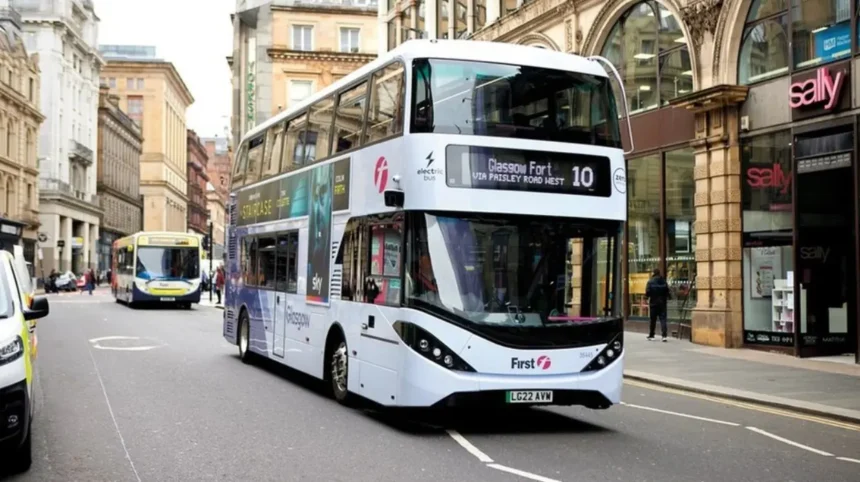
The public debate regarding transit safety intensified after First Bus temporarily withdrew its vital 240 service—which connects Glasgow city centre with North Lanarkshire—following coordinated attacks by youths, particularly centered around the Viewpark area. According to local reports, the disturbances involved groups using e-bikes and scooters, targeting moving vehicles, and creating severe hazards for passengers and staff.
What Specific Dangers Do Drivers Face on Glasgow Routes?
Detailing the severity of the workplace hazards, as reported by Calum Loudon of STV News, Jodie Mullen shared that she had experienced harrowing situations on duty, stating that she had “knives pulled on her, empty cans of drink thrown at her, and has heard stories of fellow drivers being spat on.”
Mullen noted that unlike structured environments, public bus drivers have limited legal or operational mechanisms to penalise disruptive passengers. She explained that drivers carry a duty of care towards children, meaning they cannot easily refuse boarding, which creates an environment where disruptive individuals realise they can repeatedly escape consequences.
How Are Free Youth Bus Passes Contributing to the Crisis?
The debate has turned heavily toward the misuse of national concessionary travel schemes. As reported by Calum Loudon of STV News, Jodie Mullen called for tighter restrictions on free bus passes for young people in Scotland, arguing that while the scheme was intended to help legitimate travelers, it is frequently abused.
Mullen elaborated on the daily cycle of disruption, stating:
“See when they’re able to use these cards to just go joyrides, because that’s all they do now. They just come on the bus, sit on it, go laps, give abuse, get kicked off and repeat the next day.”
Transport operators and community leaders have echoed these frustrations, noting that the inability to block or deactivate misuse-heavy cards leaves frontline staff vulnerable to sustained harassment.
What Are Local Officials and Operators Doing to Protect Services?
In response to the chaos on the 240 corridor, transport providers and local representatives have stepped up calls for urgent intervention. As reported by Kevin Maguire of the Glasgow Times, First Bus officials stressed that they “strongly condemn this behaviour,” adding that it “is completely unacceptable and puts members of the public and our colleagues at risk.”
Highlighting the immediate physical dangers posed to the buses, Thorniewood Councillor Helen Loughran detailed the severity of the disruptions. As reported by Calum Loudon of STV News, Councillor Helen Loughran stated:
“Quite simply, accessing the running engine and prompting an emergency engine stop, these young people are seriously risking their lives.”
Loughran further appealed directly to families, stating:
“If you have a youth who may be part of this life-threatening incident, for the sake of their and everyone else’s safety, stop your kids before they or someone else is killed.”
Background of the Particular Development
The recent escalation in Glasgow and North Lanarkshire reflects a broader, ongoing challenge regarding antisocial behavior on public transport networks across urban Scotland. Concessionary travel card schemes for individuals under 22 have provided valuable mobility access, but they have also coincided with localized friction points where groups congregate on specific suburban corridors—such as the 240 route. Transport operators have increasingly had to balance community connectivity against driver safety, occasionally resulting in temporary service withdrawals, increased police coordination, and calls for policy adjustments regarding card revocations for repeat offenders.
Prediction
This development highlights an escalating crisis in worker retention and public safety that could severely impact regular commuters, families, and elderly residents living in communities like North Lanarkshire and greater Glasgow. For the particular audience of daily bus passengers and frontline transit workers, continued attacks and subsequent route suspensions threaten social isolation, longer journey times, and unreliable access to employment, education, and healthcare. If operators are forced to permanently reroute or curtail evening services to protect staff, the local community will bear the economic and social cost of diminished public infrastructure.