Key Points
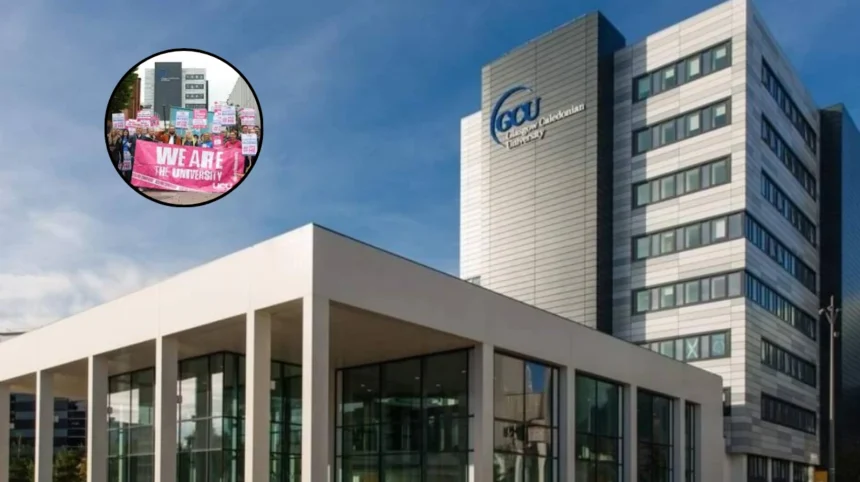
- Glasgow Caledonian University staff are set to strike on graduation days this summer in a dispute over planned job cuts and redundancies.
- The Educational Institute of Scotland University Lecturers Association says members have been left with “no alternative” after talks failed to produce a guarantee against compulsory redundancies.
- The union says the move follows an overwhelming ballot, with 95.9% of voting members backing strike action.
- The planned action is timed to have the “biggest impact” and to coincide with graduation ceremonies.
- The dispute centres on a proposed loss of 100 jobs, with the university seeking savings of around £10 million, according to union reporting.
- Further strike dates are planned later in the summer if the dispute is not resolved.
Glasgow (Glasgow Express) June 29, 2026 Caledonian University staff are set to strike on graduation days after a long-running dispute over job cuts escalated, with the first walkouts scheduled to disrupt ceremonies this summer. As reported by the Educational Institute of Scotland, members of its University Lecturers Association at Glasgow Caledonian University are taking industrial action after what the union describes as management’s refusal to rule out compulsory redundancies.
The union has said the strike is intended to place pressure on the university during one of its busiest and most visible periods, with graduation days chosen specifically to maximise disruption.
The EIS said staff had “great support” in their campaign against redundancies, while also insisting that the action was a last resort after negotiations failed to secure the outcome it wanted.
Why are staff striking?
The dispute centres on proposed job losses at the university, with union material saying management plans put 100 jobs at risk.
The EIS says the university launched a targeted voluntary redundancy scheme as part of efforts to address an expected financial deficit, and that the institution indicated compulsory redundancies could follow if savings were not achieved.
As reported in union material and later coverage, the EIS argues that talks with management have not produced a no-compulsory-redundancy guarantee.
The union says that failure left its members with no alternative but to move to strike action in defence of jobs.
What dates are affected?
The strike plan includes a series of one-day stoppages spread across the summer, beginning on Tuesday 30 June, Wednesday 1 July and Thursday 2 July.
Further planned strike dates include Tuesday 4 August, then Monday 7 September, Tuesday 8 September and Thursday 10 September.
The union has said these dates were selected to affect graduation days in particular, with the intention of making the action most noticeable at a key point in the university calendar.
Coverage of the dispute also notes that staff will walk out on three days this week, with more action planned later in the summer if the issue remains unresolved.
What has the union said?
According to the EIS, the ballot result was decisive, with 95.9% of those voting supporting strike action. The union says that result gives it a mandate to proceed and reflects the strength of feeling among staff over the proposed cuts.
EIS representatives have also argued that the university should return to negotiations and rule out compulsory redundancies. In union statements, the planned strike has been presented as a defensive response to job losses rather than an opening move, with the EIS saying it wants the dispute resolved through talks.
What is the university position?
The material available in the reported coverage focuses mainly on the union side of the dispute, while noting the university’s cost-saving plans and the risk of compulsory redundancies if savings are not found.
The university’s plans are said to be linked to an expected financial deficit and a drive to cut costs through voluntary redundancy.
At this stage, the publicly available reporting cited here does not provide a detailed direct response from Glasgow Caledonian University beyond the outline of the proposed cuts and the background to the dispute. The result is a confrontation centred on staffing levels, finances and the timing of graduation ceremonies.
Who could be affected?
Students attending graduation ceremonies are likely to face the most immediate disruption if strike action goes ahead as planned.
Staff involved in teaching and related academic duties may also be affected operationally during the strike periods, particularly if services around ceremonies are scaled back or delayed.
The dispute could also affect the university’s public image, because graduation ceremonies are among its most visible events and the union has deliberately chosen these dates for maximum pressure.
If the action continues into later planned dates, uncertainty could extend across several months of the academic calendar.
Explore More Local Glasgow News
Cygnet Dies in Fishing Line at Alexandra Park Glasgow 2026
ScotRail Diverts Trains as Lenzie Line Closes: Glasgow, 2026
Background to dispute
This dispute developed after Glasgow Caledonian University announced plans last month to reduce staffing costs, including a proposal that union material says could remove 100 jobs.
The EIS says its members sought discussions with management and wanted a guarantee that no staff would be made compulsorily redundant.
When that guarantee was not secured, the union moved to a statutory ballot and then announced strike action after receiving strong backing from members.
The row now sits within a wider pattern of tension in Scottish higher education, where concerns over funding, staffing and job security have been recurring themes.
What is the likely impact?
For students, the most likely effect is disruption to graduation plans, with ceremonies potentially overshadowed by walkouts and limited staffing.
For staff, the strikes may increase pressure on management to reopen discussions, especially if public attention grows around the timing of the action.
For the university, the dispute could make it harder to present a calm and celebratory graduation period, while also drawing attention to the financial decisions behind the cuts. If the two sides do not reach agreement, the planned later strikes suggest the disruption could continue into August and September.