Key Points
- Further delays have affected the major construction work on Duke Street in Glasgow, resulting in the continuation of temporary traffic signals until at least October 2026.
- As a result of the construction work, Duke Street has been reduced to a single lane traveling eastward between Bellgrove Street and Melbourne Street, leading to congestion on one of the key routes in the East End.
- From the information in previous council reports, these delays have been due to numerous technical problems, which include problems with Scottish Water, incorrect mapping of the water main, the discovery of an underground void below the road surface, and other utilities construction work.
- Politicians from the locality such as Councillor Anthony Carroll have expressed their frustration at the inconvenience that has been caused to the residents, commuters, and independent local businesses in the Dennistoun area.
- Although there has been an extension to the time schedule, officials from the Glasgow City Council claim that considerable progress has been made, with rain gardens and active travel cycle paths almost finished.
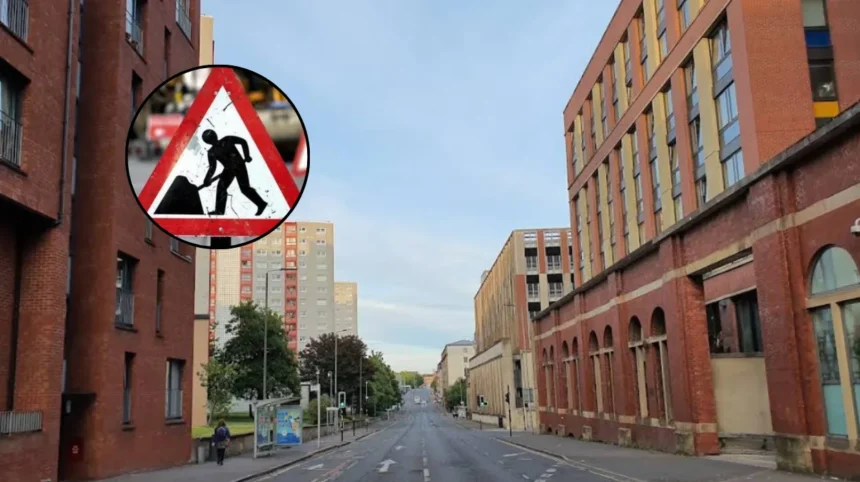
Glasgow (Glasgow Express) August 31, 2026 – Glasgow motorists, local residents, and commercial hauliers are facing prolonged travel disruption following confirmation that major roadworks on Duke Street have been extended yet again, pushing the presence of temporary traffic lights into at least October 2026. The major thoroughfare, which serves as a vital arterial link connecting the East End to Glasgow city centre, has been heavily restricted as part of the local authority’s broader active travel transformation scheme. The prolonged infrastructure project has significantly throttled traffic capacity, keeping the thoroughfare reduced to a single eastbound lane between Bellgrove Street and Melbourne Street.
As reported by Amy Myles of the Glasgow Times, the temporary signal controls and traffic restrictions were originally scheduled to be lifted much earlier in the summer, having previously been pushed back to June, then August, and subsequently early September. However, ongoing physical and underground complications beneath the surface of the carriageway have necessitated a further extension of temporary traffic management measures to ensure safety and allow engineers to complete complex sub-surface remediations.
What Issues Have Caused the Duke Street Delay?
The major infrastructure project, which initially commenced in January 2025, has encountered a series of unforeseen underground civil engineering obstacles that have repeatedly derailed construction timelines. As reported by the Glasgow Times, previous updates from project leaders confirmed that delays have been heavily driven by complex issues involving Scottish Water infrastructure. Chief among these was the unexpected discovery of an incorrectly charted water main directly within the path of planned excavations, alongside the identification of a massive underground void directly beneath the road surface that required urgent structural stabilization. Unrelated, overlapping utility works by third-party contractors in the surrounding area further compounded congestion and restricted site operations.
These physical constraints have forced contractors to proceed with extreme caution, slowing down the installation of new segregated cycleways, widened footpaths, and sustainable urban drainage systems. To manage the ongoing flow of vehicles safely around the active construction zone, three-way temporary traffic signals—complete with temporary pedestrian crossing facilities—will remain operational, particularly around the busy junction connecting Duke Street with Havannah Street.
How Are Local Politicians and Businesses Reacting to the Delays?
The repeated timeline revisions have drawn sharp criticism from local elected representatives and community stakeholders who argue that the East End is bearing an unfair operational burden. As reported by the Glasgow Times, Green Councillor Anthony Carroll called for significantly greater urgency in completing the long-running project. Councillor Anthony Carroll stated that residents and local businesses across Dennistoun have grown increasingly frustrated by the prolonged disruption, highlighting severe traffic congestion, acute parking difficulties, and daily negative impacts on trade and residential life.
Independent traders along Duke Street have reported reduced footfall as shoppers avoid the area due to vehicular gridlock and lost parking bays, while public transport operators have had to adjust schedules to accommodate peak-hour delays along the eastern bus corridors.
What Is the Progress on the Duke Street Avenues Project?
Despite the ongoing frustration from road users and civic leaders, municipal authorities maintain that tangible progress is being achieved on site. As reported by the Glasgow Times, Glasgow City Council officials insist that substantial progress is now being made across key segments of the development, with newly laid sections of active travel cycleways and sustainable rain gardens nearing full completion.
The Duke Street redesign forms a cornerstone of Glasgow’s multi-million-pound Avenues initiative, an ambitious urban regeneration scheme funded via the Glasgow City Region City Deal. The initiative aims to rebalance street space by shifting priority away from private vehicles toward active travel, public transport, and green infrastructure. Council spokespersons confirmed that most of the broader Duke Street Avenue transformation is expected to be substantially finished by November 2026, with full project completion targeted for early 2027.
Background of the Duke Street Development
The Duke Street development represents a core section of the Glasgow City Region City Deal “Avenues” project—a comprehensive £115 million infrastructure programme designed to overhaul the city’s urban core and surrounding district arteries. Duke Street, historically a industrial and commercial highway, was selected for transformation to better integrate the residential neighborhood of Dennistoun with the city centre, Strathclyde University, and the Merchant City.
Planning for the Duke Street and John Knox Street Avenue began as part of Glasgow’s strategic commitment to reach net-zero carbon emissions and promote sustainable active travel. The design specifications involve replacing excess vehicle lane capacity with high-quality, fully segregated two-way cycle lanes, widened pedestrian pavements, new street trees, and integrated rain gardens designed to manage surface water runoff and prevent urban flooding. Construction officially commenced in January 2025, with an initial target of completing major civil works within 18 months. However, like many heritage streetscape overhauls in historic Scottish cities, unmapped legacy utilities, Victorian-era drainage vaults, and conflicting third-party maintenance schedules have repeatedly disrupted the primary construction phase.
Prediction: How This Extended Delay Will Affect the Local Community and Road Users
The decision to push the Duke Street roadworks into October 2026—and the ongoing lane restrictions leading into early 2027—will have direct, multi-faceted consequences for several key demographic groups across Glasgow’s East End:
- Commuters and Motorists: Commuters traveling between eastern suburbs (such as Parkhead, Shettleston, and Baillieston) and the city centre will continue to experience localized bottlenecks, particularly during morning and evening rush hours. The single-lane bottleneck between Bellgrove Street and Melbourne Street is expected to push excess traffic onto secondary residential streets, including Alexandra Parade and London Road, heightening neighborhood congestion.
- Local Businesses and Retailers: Independent shops, cafes, and service providers along Duke Street face continued economic pressure. Extended temporary signals and reduced kerbside loading space hinder commercial deliveries and discourage passing trade, potentially squeezing profit margins during the vital autumn trading period ahead of the winter holidays.
- Public Transport Passengers: Bus services operating along Duke Street will likely face ongoing schedule volatility and minor delays. Delays along this corridor risk cascading across inter-city routes, requiring transport providers to allocate extra buffer time for journeys traversing the East End.
- Active Travel Users and Pedestrians: While cyclists and pedestrians will ultimately benefit from safer, modernized infrastructure upon final delivery in early 2027, the interim period presents temporary navigation hazards. Pedestrians will need to rely on temporary signalized crossings, while cyclists must continue negotiating narrowed lanes alongside commercial traffic until the segregated cycle paths are formally commissioned.