
Key Points
- Glasgow city centre will host filming for The Batman: Part II from August into September 2026, with over 20 streets facing restrictions and closures.
- Robert Pattinson returns for the production, which also stars Zoe Kravitz, Scarlett Johansson, Colin Farrell and Sebastian Stan.
- Glasgow City Council has set out a long list of measures covering waiting, loading, unloading, vehicle movements and pedestrian access on affected streets.
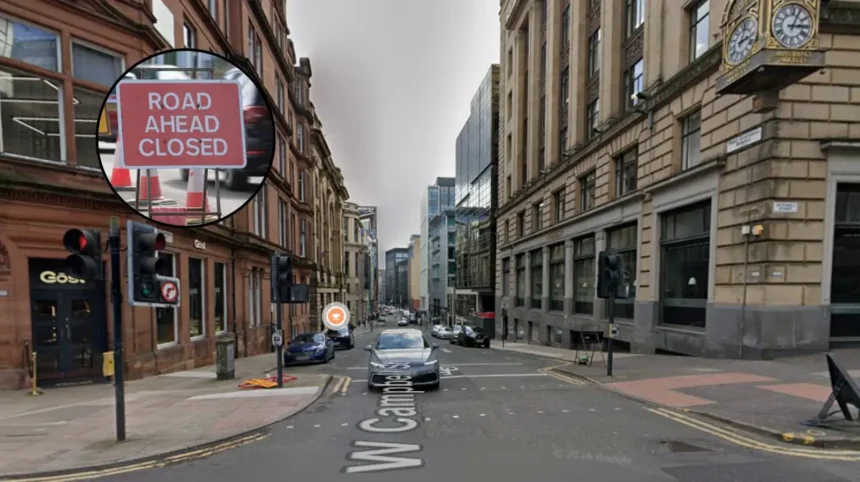
- The main areas affected include Bothwell Street, St Vincent Street, Wellington Street, West Campbell Street, Pitt Street, Douglas Street, Blythswood Street, Broomielaw, Newton Street, North Street, Clyde Place, Glasgow Bridge and Washington Street.
- During filming “action”, pedestrian movements will be prohibited on the affected streets and vehicle movements will be restricted except for emergency vehicles.
- The film is due for release in 2028.
City Centre (Glasgow Express) July 28, 2026, is set for a fresh wave of traffic disruption as filming begins for The Batman: Part II, with road restrictions stretching across August and September.As reported by Glasgow Live, the biggest block of restrictions begins on 2 August 2026 and continues through to 29 September 2026, with over 20 streets affected at different times.
The same report says drivers are being warned in advance because the measures cover a broad area around the uk/local/city-centre/">city centre, including both day-time and night-time restrictions. In addition, The Herald said Glasgow is once again being transformed into Gotham City for the production.
According to Glasgow Live, the council-backed list includes waiting, loading and unloading bans on roads such as Bothwell Street, St Vincent Street, Wellington Street, West Campbell Street, Pitt Street, Douglas Street, Blythswood Street, Broomielaw, Washington Street and Newton Street car park.
The same report also notes separate pedestrian restrictions on streets including Wellington Street, Bothwell Street, Pitt Street, North Street and Newton Street on multiple dates in August and September. Vehicle movement bans are also scheduled for roads including Glasgow Bridge, Clyde Place, Broomielaw, North Street and Newton Street.
Which streets are affected most?
The most heavily impacted corridor appears to be the stretch around Bothwell Street, Wellington Street, St Vincent Street and West Campbell Street, where several overlapping closures are planned. Glasgow Live lists repeated overnight pedestrian restrictions on these roads between 20 August and 30 August, along with vehicle movement bans across the same period.
The report also shows traffic restrictions extending to Kingston Bridge off-ramp access to Bothwell Street and to roads around the Broomielaw.
The list published by Glasgow Live also includes longer-running restrictions on North Street and Newton Street between Broomielaw and the A814 Expressway, with pedestrian movement bans running from 17 August to 31 August and vehicle movement bans continuing into early September.
Separate restrictions are set for Washington Street between Broomielaw and Balaclava Street, as well as Broomielaw, Clyde Place and Glasgow Bridge. The effect is to spread disruption across several adjoining routes rather than a single filming zone.
Why is Glasgow being used again?
Glasgow has repeatedly stood in for major film locations, and this project continues that pattern. Glasgow Live says several sequences for the first The Batman film were also shot in the city, including scenes around the Glasgow Necropolis.
The Herald’s coverage also makes clear that the city is being used again to create Gotham City for the sequel.
That use of the city for major film production has created a familiar cycle of short-term disruption and international attention.
The current restrictions follow a long line of previous filming-related closures in Glasgow’s centre and west end. For this production, the council has again prioritised public safety, with pedestrian bans in force during filming “action” and emergency access preserved.
How are motorists and pedestrians affected?
The practical impact for road users is likely to be significant, especially during the busiest filming windows in late August.
Glasgow Live states that vehicle movements will be restricted on affected streets, while pedestrian movements will be prohibited during action sequences. It also says emergency vehicles will remain exempt from some of the restrictions.
That means drivers may face route changes, delays and reduced access in the city centre, particularly around the commercial core and the riverfront roads near the M8 and Kingston Bridge approach. Pedestrians may also be diverted or temporarily stopped at certain times while scenes are being filmed.
For businesses and commuters, the most immediate issue is likely to be access management rather than a total citywide shutdown.
What have the councils and media said?
Glasgow Live said the closures were shared by Glasgow City Council and published as a detailed list of restrictions.
The report frames the measures as part of the process of turning the city centre into Gotham City for filming. The Herald likewise reported that the city is being transformed again for The Batman: Part II.
The Glasgow Chamber of Commerce has also been publishing filming restrictions updates, noting that pedestrian movement bans can be imposed during action for safety reasons.
That aligns with the wider pattern in the council’s event and filming guidance, which uses temporary restrictions to manage public movement around productions and other large events.
Together, these sources show that the closures are being handled as a structured traffic-management operation rather than an ad hoc response.
Explore More City Centre News
Scotland and Wales Sporting Mural Unveiled in Glasgow 2026
Protest backs Glasgow tenant over bathroom disrepair, Glasgow 2026
Background of the development
Glasgow has become a regular location for major film shoots because its streets can double convincingly for other cities. The first The Batman film used parts of Glasgow, and Glasgow Live says the sequel is now following that same pattern.
BBC coverage from earlier filming in the city also showed how blockbuster productions can require temporary closures around landmarks and central routes.
This latest round of filming is part of a broader trend in which Glasgow’s urban layout makes it attractive to producers, while local authorities manage the traffic consequences through formal road orders.
The city has previously hosted other large-screen productions with extensive access changes, showing that this kind of disruption is not unusual for major shoots.
In this case, the scale is notable because the restrictions are spread across a long period and across several high-traffic city-centre streets.
Prediction
For commuters, the most likely effect is slower journeys, detours and reduced parking or loading access in the city centre during August and September.
For local businesses, especially those relying on passing trade, the closures may temporarily affect customer flow, deliveries and taxi access.
For film fans and the wider city economy, the production could bring short-term inconvenience but also renewed visibility for Glasgow as a filming destination.
The disruption is likely to be heaviest around the specific overnight and late-evening filming windows listed by the council-backed reports.
Because pedestrian and vehicle restrictions are phased across different streets and times, the impact should vary by neighbourhood rather than hit the whole city equally.
That means people who work, live or travel through the central business district, the Broomielaw corridor and nearby riverfront routes are likely to feel the changes most strongly.