Key Points
- Glasgow’s city centre dispersal zone, initially approved until June 20, is officially extended until December to support ongoing operations.
- Police report that dispersal powers have been utilized 1,362 times since the initial implementation of the strategy in March.
- A total of 75 individuals have been formally reported to the Procurator Fiscal for returning to the restricted zone after previously being ordered to leave.
- Greater Glasgow Police Chief Superintendent Emma Croft confirmed that the continuation aims to bolster wider operations, tackle anti-social behaviour, and combat street-level drug dealing.
- Law enforcement agencies are also exploring the possibility of establishing permanent or semi-permanent police premises directly within the high-traffic Four Corners area.
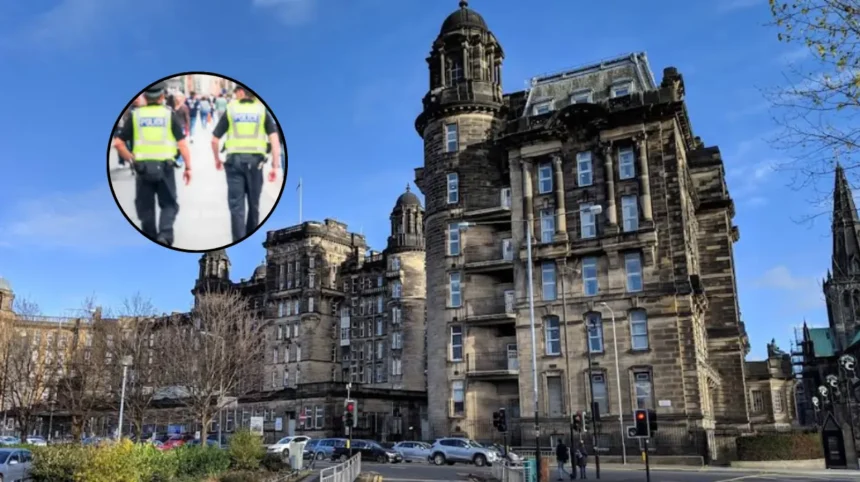
Glasgow (Glasgow Express) September 23, 2026 – Glasgow Live reported that Glasgow’s dispersal zone is set to continue until December as police look at establishing premises in the Four Corners area.
Why Has Glasgow’s Dispersal Zone Been Extended Until December?
As reported by reporter of Glasgow Live, Greater Glasgow Police Chief Superintendent Emma Croft stated that the decision has been taken to extend the dispersal zone until December to support work underway across the city centre. Initially approved with an expiration date of June 20, the temporary powers have proven central to law enforcement strategies targeting persistent criminality, public drug dealing, and anti-related disorder.
Official police data outlined in operational briefings indicates that these targeted dispersal powers have been deployed precisely 1,362 times since the measure was first introduced in March. Furthermore, enforcement metrics show that 75 people have been directly reported to the Fiscal after breaching orders by returning to the designated zone despite being explicitly instructed to leave.
What Are the Plans for the Four Corners Area?
As detailed by Glasgow Live, alongside the extension of emergency dispersal powers, local law enforcement authorities are actively investigating the logistics of establishing dedicated police premises within the notoriously busy Four Corners area. The junction, where major downtown thoroughfares converge, has historically experienced high volumes of public calls relating to street crime, anti-social behaviour, and illicit narcotics trade. By setting up physical premises, police aim to maintain a constant, visible deterrent and streamline response times for officers patrolling the commercial hub.
How Have Police Powers Impacted City Centre Crime Rates?
As outlined in police performance evaluations cited across regional coverage, the deployment of heightened legislative powers is designed to give frontline officers the authority to direct groups of two or more individuals away from specified boundaries if there are reasonable grounds to suspect anti-social behaviour. Chief Superintendent Emma Croft emphasised that the extended timeline will provide necessary operational stability, allowing partner agencies to consolidate safety improvements, disrupt local drug supply chains, and reassure the public as footfall fluctuates through the winter months.
Background of the Particular Development
The implementation and subsequent extension of the Glasgow city centre dispersal zone stem from years of documented escalation in low-level disorder, street-level drug peddling, and public nuisance complaints clustered around major transport hubs like Glasgow Central Station, St Enoch Square, and the Four Corners. Historically, police divisions faced intense pressure from local business owners, residents, and municipal leaders to curb persistent anti-social behaviour that threatened nighttime economies and public safety. Under the Anti-Social Behaviour (Scotland) Act, authorities possess the framework to introduce temporary exclusion zones. Following the initial rollout in March, which targeted specific spikes in criminality, the measurable volume of enforcement actions—including over 1,300 dispersal directives—highlighted both the scale of the underlying disruption and the active utilisation of these legal tools by Police Scotland.
Prediction: How This Development Can Affect Residents and Business Owners
The decision to prolong the dispersal zone through December will directly reshape the day-to-day environment for local residents, retail workers, commuters, and visitors navigating downtown Glasgow. For the local community and business operators, the continued police presence and potential establishment of a permanent Four Corners base promise a heightened sense of security, lower instances of public disorder, and a visible reduction in open street-level drug dealing during peak commercial seasons. However, regular patrons and vulnerable groups may also experience stricter police scrutiny, as officers utilize sweeping stop-and-move powers. While displacement remains a recognized operational risk—whereby offenders may simply shift illicit activities to adjacent neighborhoods—the overarching impact is projected to foster a more controlled, regulated urban space, safeguarding public well-being through the winter period.