
Key Points
- A Victorian egg brick sewer on Cathedral Street in Glasgow city centre collapsed, causing voids beneath both sides of the carriageway.
- The road was initially closed on 31 March or 1 April 2026 following signs of potential voids and a CCTV survey confirming the damage.
- Initial repair estimate was up to four weeks, but excavations revealed numerous cables, pipes, significant concrete, heavy clay soil, leading to a revised timeline of up to 12 weeks.
- Scottish Water is conducting emergency repairs; the sewer is over three metres deep.
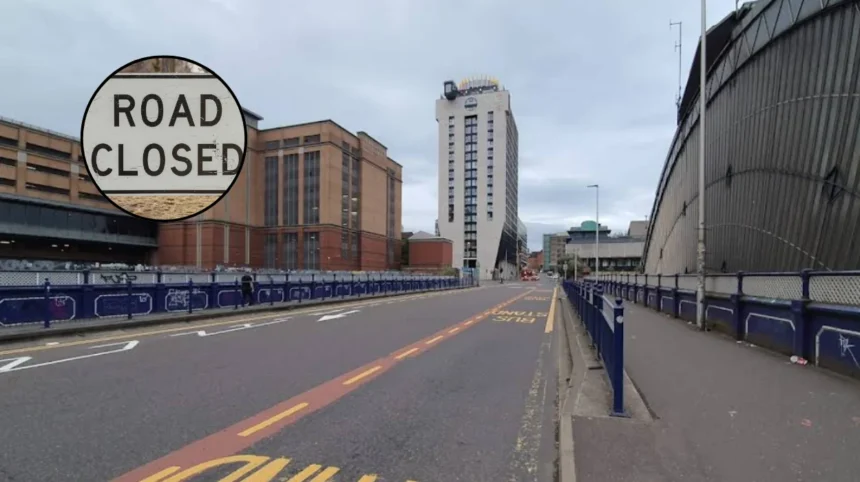
- Cathedral Street closed between North Hanover Street and Montrose Street (or near North Frederick Street/North Hanover Street junction); signed diversions in place, local access maintained to North Frederick Street, North Frederick Path, Martha Street, and John Street.
- Temporary Bus Gate suspension at Cathedral Bridge; 24-hour traffic control operatives on site.
- Challenges include heavy clay soil, concrete that must be carefully removed due to possible encased utilities, and multiple excavations needed.
Glasgow (Glasgow Express) April 8, 2026 – A sewer collapse on Cathedral Street has extended the road closure in Glasgow’s city centre to up to 12 weeks, far beyond the initial four-week estimate, due to complex underground conditions discovered during repairs.
- Key Points
- What Caused the Collapse of the Victorian Sewer on Cathedral Street?
- Why Have Repairs on Cathedral Street Been Delayed to 12 Weeks?
- What Is the Current Status of Cathedral Street Closure?
- How Did the Incident Unfold from Initial Detection?
- Background of the Development
- Prediction: Impact on Glasgow City Centre Road Users and Businesses
What Caused the Collapse of the Victorian Sewer on Cathedral Street?
The incident began with signs of voids beneath the carriageway near the junction with North Hanover Street or North Frederick Street. As reported by STV News, Scottish Water closed the road on April 1 after a CCTV survey revealed that a Victorian egg brick sewer had collapsed, washing away soil beneath the road surface.
A spokesperson for Scottish Water stated:
“The results clearly show damage to the sewer and the soil beneath the road surface having been washed away. It wouldn’t be safe to allow any vehicles to use the road, so we will keep the closure in place and carry out the repair as quickly as possible, which we anticipate will take about four weeks.”
This was the initial assessment from early April.
BBC News detailed that the road was first closed on March 31 for safety reasons, with ground-penetrating radar and CCTV confirming the failure, leading to voids on both sides.
Why Have Repairs on Cathedral Street Been Delayed to 12 Weeks?
Excavations uncovered more complications than anticipated. According to STV News, the dig revealed “numerous” cables and pipes, as well as a significant amount of concrete.
A Scottish Water spokesperson explained in detail to STV News:
“The damaged Victorian egg brick sewer is more than three metres deep, but unfortunately, because of the heavy clay soil and presence of numerous cables and pipes, progress has been significantly slower than expected. We have also found a significant amount of concrete in the excavation site, which must be carefully broken out and removed, as there may be other power cables or other utilities encased inside.
There is always a degree of chance when breaking ground in the city centre, but in this case, we have been hit by a triple whammy of clay, concrete and cables. Given these challenges and the necessity for multiple excavations, it is clear the work will take significantly longer than we first thought.
We will do everything we can to complete the repairs and reopen the road as quickly as possible, and would like to thank everyone affected for their continued patience and understanding.”
BBC News reported that engineers found the repair more complex than expected due to substantial amounts of concrete, clay, and cables beneath the surface.
Glasgow Times, as cited by Tom Benny in The Glasgow Wrap Substack, first noted the potential sewer collapse shutting Cathedral Street near North Hanover Street on 1 April.
What Is the Current Status of Cathedral Street Closure?
Cathedral Street remains fully closed between North Hanover Street and Montrose Street. STV News confirmed a signed diversion is in place, with local access maintained to North Frederick Street, North Frederick Path, Martha Street, and John Street.
A temporary Bus Gate suspension operates at Cathedral Bridge. Traffic control operatives are on site 24 hours a day to monitor the situation.
Yahoo UK News quoted a Scottish Water representative from early April:
“There will be delays for drivers, but we encourage everyone to adhere to the diversion signs and to plan for extra travel time. We appreciate the patience and understanding of all affected.”
BBC News added that diversion routes have been established, and motorists are asked to follow signage for safety.
Go Radio on X (formerly Twitter) noted the voids under the carriageway at the junction with North Frederick Street, with repairs underway.
The Scottish Sun on X reported the major city centre street closed for a month after the collapse, reflecting early coverage.
How Did the Incident Unfold from Initial Detection?
The sequence started with an emergency closure. BBC News reported on 31 March that Scottish Water shut both lanes of Cathedral Street due to suspected sewer failure, planning a CCTV inspection overnight and ground-penetrating radar on Wednesday (1 April).
By 2 April, STV News updated that the CCTV confirmed the collapse of the Victorian egg brick sewer.
Aidan Maxwell of Glasgow Times, referenced in The Glasgow Wrap, highlighted the closure for potential voids.
Beth Oliver of Glasgow Times was mentioned in related local coverage, though focused on other city news.
Background of the Development
The collapse involves a Victorian-era egg brick sewer, typical of Glasgow’s ageing infrastructure in the city centre. Scottish Water, the publicly owned utility, initiated investigations on 31 March 2026 after detecting surface signs of voids near North Hanover Street or North Frederick Street junctions.
Initial CCTV and radar surveys confirmed structural failure over three metres deep, with soil erosion. Early plans for four-week repairs shifted following excavation findings of heavy clay, concrete, and utilities, necessitating careful work to avoid further damage. This reflects ongoing challenges with historic sewers in urban areas like Glasgow.
Prediction: Impact on Glasgow City Centre Road Users and Businesses
Extended closure to mid-June 2026 will increase travel times for motorists, bus passengers, and pedestrians reliant on Cathedral Street, a key route linking Merchant City to George Square. Commuters and delivery services may face daily delays, amplifying congestion on diversions like Ingram Street or High Street.
Local businesses on adjacent streets, including offices and shops with access via North Frederick Street, could see reduced footfall from disrupted traffic flow. Public transport users benefit from the Bus Gate suspension but may experience longer routes. Residents in nearby areas like Martha Street will retain access, minimising direct residential impact, though overall city centre vitality may dip during peak hours.