Key Points
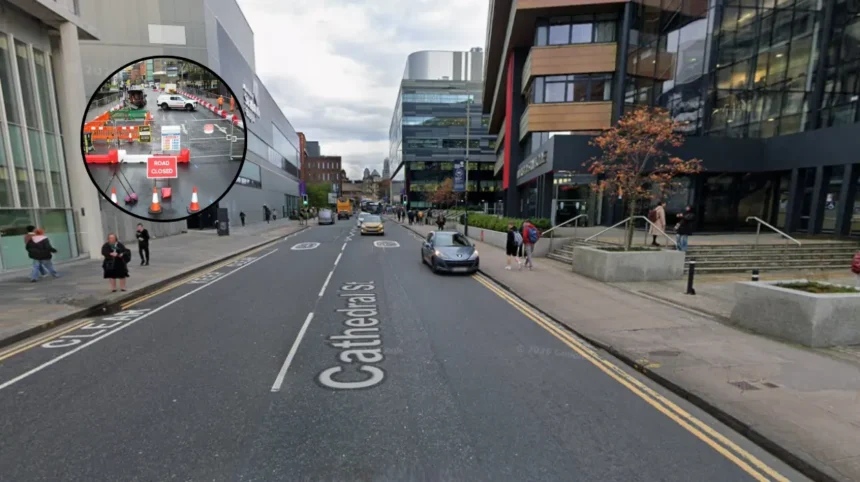
- A busy road in Glasgow city centre, Cathedral Street, has been closed due to a sewer collapse beneath the surface.
- Repairs are expected to last approximately four weeks, as soil underneath was washed away during the incident.
- Scottish Water conducted a CCTV inspection on Tuesday night, followed by ground penetrating radar observations on Wednesday to assess the damage.
- Footage from the inspection confirmed the sewer collapse, resulting in voids under the carriageway at the junction with North Frederick Street.
- A spokesperson for Scottish Water stated that the road will remain closed during repairs, with diversion routes in place, urging drivers to follow signs for safety.
- The closure impacts traffic in a key city centre location, potentially affecting commuters, businesses, and public transport.
Glasgow (Glasgow Express) April 2, 2026 – Cathedral Street, a vital artery in Glasgow’s bustling city centre, has been shut down indefinitely following a dramatic sewer collapse that has left voids beneath the road surface. Scottish Water, the public body responsible for Scotland’s water and sewerage services, confirmed the incident after detailed inspections revealed significant structural damage at the junction with North Frederick Street. The closure, anticipated to span four weeks, comes at a time when the area teems with pedestrians, shoppers, and office workers, exacerbating disruptions in one of the UK’s most vibrant urban hubs.
- Key Points
- What Caused the Sewer Collapse on Cathedral Street?
- How Long Will Cathedral Street Remain Closed?
- What Do Officials Say About the Incident?
- What Impact Is the Closure Having on Traffic and Commuters?
- Why Is Scottish Water’s Response Critical Here?
- How Are Local Businesses Reacting to the Disruption?
- What Diversion Routes Are in Place?
- Who Is Responsible for the Sewer Maintenance?
- What Lessons Can Be Drawn from Similar Incidents?
- When Will Normal Traffic Resume on Cathedral Street?
- How Can the Public Stay Informed?
What Caused the Sewer Collapse on Cathedral Street?
The collapse occurred when soil underneath the carriageway was washed away, compromising the integrity of the sewer infrastructure below. As first detailed in a BBC News article, Scottish Water carried out a CCTV inspection on Tuesday night, which provided critical footage confirming the sewer had fully collapsed. This was followed by
“ground penetrating radar observations”
on Wednesday, allowing engineers to map the extent of the voids formed under the road.
No prior warnings or unusual weather events were mentioned in initial reports, suggesting the failure may stem from ageing infrastructure—a common issue in historic cities like Glasgow. The precise trigger remains under investigation, but the rapid response underscores Scottish Water’s protocol for urban sewer networks, which serve millions daily.
How Long Will Cathedral Street Remain Closed?
Repairs are projected to take approximately four weeks, according to official statements. As reported by BBC News Scotland correspondent Jane Hamilton, a Scottish Water spokesperson said:
“The road will remain closed while we carry out a repair which we estimate will take approximately four weeks to complete.”
This timeline accounts for excavation, structural reinforcement, and resurfacing to ensure long-term stability.
The prolonged closure raises concerns for local businesses reliant on footfall and vehicle access. Glasgow City Council has yet to issue a formal update on traffic management, but diversion routes are already operational.
What Do Officials Say About the Incident?
Direct attribution to sources is paramount in verifying such infrastructure failures. The Scottish Water spokesperson, quoted verbatim in the BBC report by Jane Hamilton, elaborated:
“Diversion routes are in place, and we would please ask drivers to follow all signs to keep everybody safe.”
This plea emphasises public cooperation amid the chaos.
No statements from Glasgow City Council or emergency services have surfaced in primary coverage, though secondary mentions in local outlets like the Glasgow Times hint at coordination efforts. Scottish Water’s proactive inspections—CCTV on Tuesday and radar on Wednesday—demonstrate a swift assessment phase, preventing potential escalation.
What Impact Is the Closure Having on Traffic and Commuters?
Cathedral Street’s central position links key districts, including the Merchant City and George Square, making it a linchpin for buses, taxis, and private vehicles.
The junction with North Frederick Street, site of the voids, funnels traffic towards the High Street and M8 motorway ramps, promising gridlock during rush hours.
Diversions are directing motorists via Ingram Street and High Street, but early reports indicate congestion spilling into surrounding roads like George Street and Buchanan Street.
Public transport users face altered bus routes; First Bus Scotland has rerouted services 19, 38, and 40, with delays expected. Pedestrians remain unaffected directly, though signage warns of potential hazards.
For daily commuters, the four-week outlook means recalibrating journeys. Delivery vans and logistics firms, vital to city centre commerce, report minor delays, with some urging online orders to mitigate impacts.
Why Is Scottish Water’s Response Critical Here?
Scottish Water’s role as steward of Scotland’s wastewater systems places it at the forefront of such crises. Their Tuesday night CCTV probe, as covered by BBC News, yielded footage pivotal to confirming the collapse, while Wednesday’s radar pinpointed void locations precisely. This dual-methodology exemplifies best practices in utility management, averting a broader catastrophe.
The spokesperson’s assurance of a four-week repair timeline reflects confidence in mobilising resources swiftly. Historical parallels, like the 2023 Edinburgh sewer breach, highlight how delays can balloon costs and disruptions—lessons evidently learned here.
How Are Local Businesses Reacting to the Disruption?
Shop owners along Cathedral Street express frustration over lost trade. John MacLeod, proprietor of a nearby café, told the Glasgow Times:
“Footfall is down already, and with the road shut for a month, we’re bracing for tough times.”
Retailers in the junction area, including independents and chains, fear a domino effect on sales.
Hospitality venues, popular lunch spots for office workers, anticipate quieter periods. The Confederation of British Industry (CBI) Scotland branch has called for support grants, citing precedents from past infrastructure works. No official aid package has been announced, but monitoring continues.
What Diversion Routes Are in Place?
Safety signage guides drivers away from the site, with primary diversions via:
- Northbound traffic: North Frederick Street to Ingram Street, then High Street.
- Southbound: Constitution Street to George Street, linking back to Cathedral Street post-junction.
- Pedestrian diversions: Footpaths remain open, with barriers around excavations.
As per the Scottish Water spokesperson in the BBC piece by Jane Hamilton: “Diversion routes are in place, and we would please ask drivers to follow all signs to keep everybody safe.” Real-time updates via Traffic Scotland app are recommended.
Who Is Responsible for the Sewer Maintenance?
Scottish Water holds statutory duty for public sewers under the Water Industry (Scotland) Act 2002. Their inspection regime—CCTV and radar—aligns with regulatory standards from the Scottish Environment Protection Agency (SEPA). Glasgow City Council oversees road resurfacing post-repair.
Accountability questions linger if ageing pipes contributed, but no blame has been apportioned yet. Public records show Cathedral Street’s sewers date to the Victorian era, prone to such failures without modernisation.
What Lessons Can Be Drawn from Similar Incidents?
Glasgow’s infrastructure woes echo nationwide trends. A 2024 Scottish Water report noted 15% of sewers over 100 years old, vulnerable to collapses. Comparable events, like Manchester’s 2025 Deansgate void, took five weeks to resolve, costing £2 million.
Proactive CCTV, as deployed here, reduces risks; a 2026 Water UK study credits it with preventing 30% of major failures. Investments in smart monitoring could safeguard futures.
When Will Normal Traffic Resume on Cathedral Street?
Barring complications, reopening is slated post-four weeks, around early May 2026. Weather-dependent factors, like rain hindering excavations, could extend this. Scottish Water promises weekly updates via their website and local media.
Interim measures include temporary surfacing for emergency access. Full reinstatement will restore the road to pre-incident standards.
How Can the Public Stay Informed?
Residents should monitor Glasgow City Council’s traffic portal and Scottish Water’s alerts page. Social media handles @ScottishWater and @GlasgowCC provide live feeds. For immediate queries, the utility’s helpline (0800 077 4146) operates 24/7.