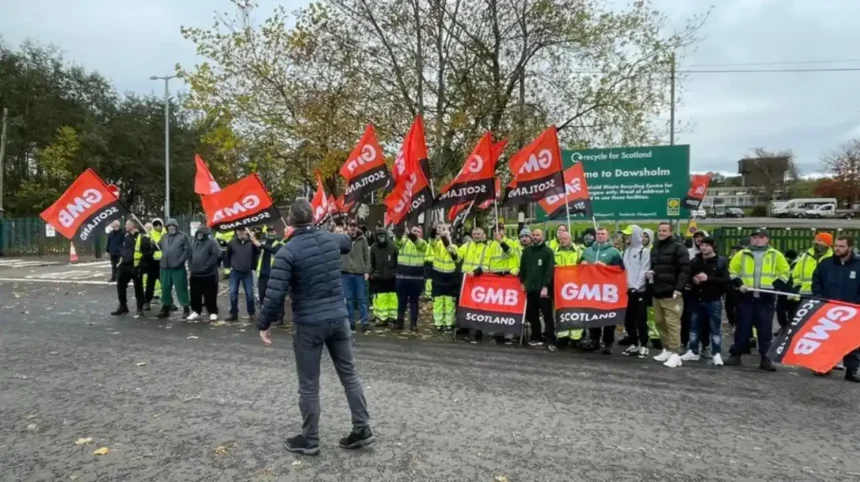
Key Points
- Call for Military Intervention: GMB Scotland convenor Chris Mitchell has called for the deployment of the British Army on the streets of Glasgow to deter widespread illegal fly-tipping and rubbish dumping.
- Historical Precedent: Mitchell cited the military interventions of the 1970s, when armed forces were deployed to tackle severe public health hazards and municipal sanitation crises, as a historic template to handle Glasgow’s current operational pressures.
- Overwhelmed Municipal Services: The union representative highlighted that local cleansing services are severely struggling to manage the escalating volume of illegally deposited waste across urban neighborhoods.
- Equal Pay Conference Platform: The remarks were made during a GMB trade union conference focused on equal pay, held in Manchester, where regional municipal challenges were raised.
- Reclaim Our Lanes Campaign: The call follows the launch of GMB’s ‘Reclaim Our Lanes’ initiative, which demands deep-cleaning, commercial waste enforcement, and regeneration of back streets across Glasgow city centre.
Glasgow (Glasgow Express) November 10, 2026 — Trade union chief Chris Mitchell, convenor for refuse and cleansing workers at GMB Scotland, has proposed deploying the army to the streets of Glasgow to halt an escalating municipal fly-tipping crisis that local cleansing services are struggling to contain. Speaking at a GMB conference on equal pay held in Manchester, Mitchell argued that extreme enforcement measures are required to combat widespread illegal rubbish dumping across the city. He drew direct parallels to military interventions used during severe public sector disruptions half a century ago, stating,
- Key Points
- Why Is the GMB Union Calling for Military Involvement in Municipal Sanitation?
- What Is the Status of Glasgow’s ‘Reclaim Our Lanes’ Campaign?
- How Have Local Authorities and Communities Responded to the Waste Crisis?
- Background of the Particular Development
- Prediction: How This Development Can Affect the Audience
“This happened in the 1970s to deal with a similar situation.”
As reported by Donald Erskine of the Glasgow Times, the union head warned that Glasgow’s back streets and residential corridors are becoming overwhelmed by illegally dumped commercial and household refuse. The trade union’s radical proposal follows its ongoing ‘Reclaim Our Lanes’ campaign launched last year, which called for the city centre’s neglected alleyways to be cleared of commercial waste and given deep cleans to support broader city regeneration efforts. Mitchell maintained that the sheer scale of illicit dumping has outstripped standard municipal enforcement capacity, necessitating a visible deterrent on the ground.
Why Is the GMB Union Calling for Military Involvement in Municipal Sanitation?
According to GMB convenor Chris Mitchell, the decision to request military assistance stems from a structural collapse in civic deterrence. Addressing union delegates in Manchester, Mitchell explained that Glasgow’s municipal cleansing department lacks the personnel and enforcement machinery needed to keep pace with chronic fly-tipping. By bringing in armed forces personnel to patrol high-risk zones, Mitchell suggested that the city could establish an immediate, high-visibility deterrent against rogue operators, commercial fly-tippers, and persistent offenders who unload waste in public alleyways.
As reported by Amanda Keenan of the Glasgow Times, Mitchell has repeatedly pointed to severe environmental degradation across various parts of the city, citing sites where massive piles of refuse create public health hazards. In his address in Manchester, Mitchell reiterated that the precedent for utilizing armed forces to preserve public sanitation was clearly established in the 1970s, when troops were deployed during major industrial and municipal emergency crises to clean streets and prevent public health catastrophes.
What Is the Status of Glasgow’s ‘Reclaim Our Lanes’ Campaign?
The call for armed forces deployment represents an escalation of the ‘Reclaim Our Lanes’ initiative launched by GMB Scotland last year. As covered by Donald Erskine of the Glasgow Times, the campaign was established to target the severe neglect of Glasgow city centre’s secondary streets and service lanes, which union officials warned had become rat-infested hazards due to uncollected commercial bins and illegal dumping. The initiative demanded strict enforcement against private businesses that fail to manage their commercial waste, along with dedicated local authority resources to deep-clean back lanes and return them to public utility.
As reported by Ben Borland of the Scottish Daily Express, Mitchell previously described specific areas of the city as suffering from relentless illegal dumping, calling for radical change to prevent widespread infestation and disease outbreaks. Union representatives argue that while municipal workers continue to perform routine cleaning duties daily, the ongoing presence of rogue waste disposal companies and uncollected commercial bins requires measures far beyond standard council operations.
How Have Local Authorities and Communities Responded to the Waste Crisis?
Glasgow City Council has consistently maintained that street cleansing teams operate daily across all sectors of the city to manage waste and respond to reported incidents of illegal dumping. Local authority spokespersons have emphasized that fly-tipping remains an environmental crime that damages communities and drains civic budgets. Municipal officials have also highlighted that where dumping occurs on private land or within privately owned back lanes, statutory notices are issued requiring landowners to clear the waste at their own expense.
However, community organizations have echoed union concerns over the sheer frequency of violations. As reported by Ben Borland of the Scottish Daily Express, Marion Nisbet of the Crosshill and Govanhill Community Council noted that residents face continuous fly-tipping on a daily basis, pointing toward private landlords and unmonitored commercial contractors as primary contributors to the problem. While local authorities have increased the number of Commercial Waste Enforcement Officers operating across the city, union figures argue that administrative fines and statutory enforcement notices have proven insufficient to halt the trend.
Background of the Particular Development
Glasgow’s struggle with waste management and fly-tipping has been a central point of friction between trade unions, local government, and residents for several years. Following budget realignments and operational restructuring within municipal services, cleansing workers represented by GMB Scotland have frequently raised alarms regarding reduced staffing levels, inadequate equipment, and rising workloads.
The issue came to wider public attention following the COVID-19 pandemic and subsequent economic pressures, during which back lanes and residential green spaces saw a significant increase in dumped household items, construction debris, and commercial refuse. In response, GMB Scotland launched targeted public awareness drives, culminating in the ‘Reclaim Our Lanes’ campaign. This initiative called on local government to bring commercial waste collection under stricter municipal control and reintroduce dedicated lane-cleaning teams. Mitchell’s invocation of the 1970s military deployments—referencing historical instances where the UK Government deployed troops under Military Aid to the Civil Authorities (MACA) to maintain basic sanitation services during widespread labor disruptions—marks a significant turn in union rhetoric surrounding civic governance.
Prediction: How This Development Can Affect the Audience
The proposal to deploy military personnel to enforce public sanitation standards on Glasgow’s streets carries direct implications for several key stakeholder groups across the city:
- Glasgow Residents and Local Communities: If emergency enforcement measures or increased security presences are introduced, residents in heavily affected neighborhoods could see an immediate reduction in severe fly-tipping, mitigating public health risks related to rodent infestations and noxious odors. Conversely, a military presence on civilian streets could spark debate regarding civil liberties, local governance, and the appropriateness of armed forces fulfilling domestic municipal roles.
- Commercial Businesses and Landlords: Heightened focus on fly-tipping and lane management will likely result in significantly stricter regulatory oversight for business owners and property managers. Commercial operations could face increased scrutiny over waste disposal contracts, higher municipal enforcement fines, and strict legal obligations to maintain private rear access lanes.
- Cleansing Service Workers: For municipal cleansing personnel, the deployment of external support or high-visibility enforcement could alleviate safety hazards associated with clearing toxic or hazardous illegal dumpsites. However, it may also escalate political tensions between trade unions and municipal leaders over long-term public sector funding, staffing numbers, and the sustainable management of public services.
- Local Authorities and Policy Makers: The union’s call puts additional political pressure on Glasgow City Council and the Scottish Government to allocate dedicated funding toward civic infrastructure, waste management enforcement, and urban renewal programs to prevent further calls for extraordinary intervention.